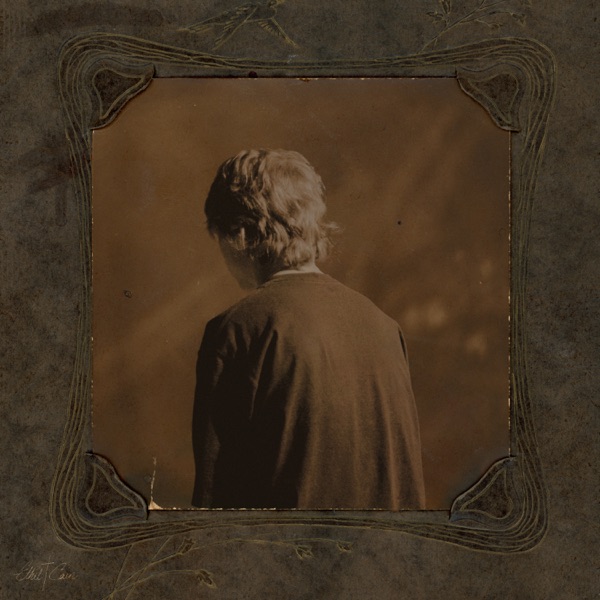


Ethel Cain has left listeners with a gut-wrenching goodbye.
“Willoughby Tucker, I’ll Always Love You,” the 27-year-old singer-songwriter’s latest studio album, was released Aug. 8 and features 10 heartbreakingly beautiful songs. Cain, the stage name for Florida-born Hayden Silas Anhedönia, has haunted the music scene with her angelic voice and tormenting lyrics since 2018, taking true flight with the release of her 2021 EP “Inbred.” Four years later, Anhedönia has decided to lay the infamous Cain to rest, as the persona’s saga was completed with the latest hour-long album. “Willoughby Tucker” does not quite reach the heights of Anhedönia’s previous works, primarily due to its sonic spaciness, but where it falters in tempo, it makes up for in melodic force.
A storywriter as much as she is an artist, Cain’s music – classified as alternative rock but also deemed dark ambient and dream pop – is often arranged in chronological order. This is especially apparent in her most popular record, “Preacher’s Daughter,” released May 2022. This was the origin story of Ethel Cain, a dark tale of a girl trying to find a sense of belonging in life while being held by the traumas of her religious past.
According to Anhedönia, the persona of Ethel Cain came from the “intersection between (her) experiences in the heavily religious American South and (her) dreams of the wild and free American West,” embodying the trope of the “unhappy wife of a corrupt preacher,” which she was familiar with first-hand from growing up in Florida. While “Preacher’s Daughter” is roughly the same length as “Willoughby Tucker,” the new album shifts towards an instrumental emphasis while maintaining similarly devastating lyrics of desolation and heartbreak – notably in tracks “Janie” and “Tempest.” In a Popcast interview with The New York Times, Anhedönia said “Willoughby Tucker” embodies her insecurities, fears and inadequacies in love, marking the end of Ethel Cain.
Leaving with a grand flourish, the singer’s newest album is sonically coherent and lyrically pained, an immaculate finale for idolized Cain. As the prequel to “Preacher’s Daughter,” listeners experience familiar storylines taking on new forms, including themes of sickness and melancholic loyalty to a dying love. An album that bleeds into itself, shifting through songs with novel linkage and unabashed ingenuity, “Willoughby Tucker” is yet another piece meant to be listened to sequentially, as it recounts Cain’s haggard romance with Willoughby.
[Related: Music preview: Summer to bring span of anticipated new entries from indie, pop artists]
The primary drawback to this unified aspect of the LP is that some songs lose impact when removed from the whole and played individually. This is due to the fact that at least 25 minutes of the album’s total 73 minutes are completely instrumental, with nearly no vocal backing to add dimension. Admittedly, several songs deserve such expansive musicality given the depth and bravado of their content – yet it is disappointing that Cain’s unearthly vocal capacity is not given more airtime.
The album’s lead single, “Nettles,” is the crown jewel – or more accurately the crown of thorns – of “Willoughby Tucker.” As the third-longest song, lasting a mighty eight minutes, listeners will want to start measuring time in Nettles rather than seconds. Describing her fear of losing a loved one, Cain revealed both “Nettles” and the last track, “Waco, Texas” were written in the house in Alabama where she finished “Preacher’s Daughter.” The timing of these creations seems to confirm fans’ suspicions that the track’s lyrics, “Tell me all the time not to worry / And think of all the time I’ll, I’ll have with you” refer to Willoughby’s death in the song “American Teenager” – “The neighbor’s brother came home in a box / But he wanted to go so maybe it was his fault.”
A tale of suffering and dissociation, pondering the ruthless dynamic between love and pain, “Nettles” is one of Cain’s best songs to date. Although its length is daunting, every minute of the song feels crucial to its build and impact, with a pairing of violins and drums that cry in full force by the end. Coupled with track three, “Fuck Me Eyes,” and sandwiched between two instrumental respites – “Willoughby’s Theme” and “Willoughby’s Interlude” – it is clear why these two powerful songs were initially released as singles earlier this summer.
With “Nettles” as the gnarled heartbeat of Cain’s second studio album, the collection does not seem to follow a chronology but is divided into “before” and “after” an immense loss in Cain’s life. For instance, the agonizing opening track “Janie,” begins with ominously slow guitar and mourns with the lyrics “I still shake / Just by nature / Easy to hate, easy to blame,” reflecting on a love she no longer has. The closest thing to a title track, “Janie” is an “after” song – emotionally vulnerable and thick with somber guitar.
[Related: Book review: ‘Not Quite Dead Yet’ is filled with suspense, heavy exposition]
Further, brother and sister tracks – “Dust Bowl” and “Fuck Me Eyes” respectively – are “before” songs, each featuring young lovers whose immaturity and childhood trauma keep them from forming healthy connections. In the former, Cain sings, “With your eyes all over me / watching, hoping the wind blows slowly / So I can keep you / A moment” which might refer to the latter’s lyrics, “And all the boys wanna love her when she bats her / Fuck me eyes … Nowhere to go, she’s just along for the ride … She’s just tryna feel good right now.” The sixth track on the album, “Dust Bowl,” has finally found its place in Cain’s discography after she originally teased it on her Childish Behaviour Tour in 2024.
The production of “Willoughby Tucker” is its most notable weakness, with so much of the record consisting of tiring, long guitar solos or echoing interludes – a technique significantly more experimental than Cain’s previous music. However, these dispersed moments, mimicking the feeling of a silent car drive home, allow for heavier songs like “Tempest” to really shine through. Violent, honest and raw with torment, this second-to-last track matches the deranged mania of Cain’s most disturbed hits, such as “A House In Nebraska” and “Hard Times.”
The equally extensive song, “Waco, Texas,” brings Willoughby’s story to a close with a piano melody that transitions gracefully into the first seconds of Ethel Cain’s epic, “Preacher’s Daughter.” If there is one thing Cain is best at – made resoundingly clear by this album – it is her unique juxtaposition of heartbreak and heaven. The same can be said for her time as Ethel Cain, as she noted, “If I’m the good ending, she’s the bad one.”
“Maybe you’re right and we should stop watchin’ the news / ‘Cause, baby,” I’d rather just listen to “Willoughby Tucker” on repeat.





Comments are closed.