This post was updated Aug. 24 at 7:45 p.m.
The Trump administration must restore over a third of the research grants it froze from UCLA, a federal judge ordered Tuesday.
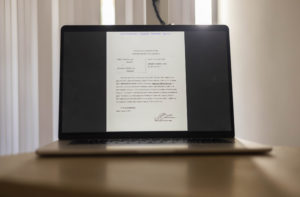
Rita F. Lin, a California federal district court judge, issued a preliminary injunction in June in response to a lawsuit filed by UC researchers which contested the legality of the National Science Foundation cutting 114 UC research grants on the basis of alleged diversity, equity and inclusion violations. Lin ordered the federal government to explain in a hearing Tuesday why its move to freeze around 300 NSF grants at UCLA did not violate the injunction.
Lin said in the Tuesday order, which was issued following the hearing, that the suspensions “differ from a termination in name only” – and therefore violate her June order which blocked the NSF from terminating more of the UC’s grants.
“The harm experienced by the researchers subject to suspension is identical to the harm caused by termination: research grinds to an immediate halt and may eventually be wasted, staff and graduate students lose jobs and valuable experience, and critical work goes unpublished,” she said in the ruling.
Roger Wakimoto, UCLA’s vice chancellor for research and creative activities, confirmed that the NSF grants were reinstated following the ruling. The university is “working” to restore grants from the National Institutes of Health and the Department of Energy that remain suspended, he added.
“We remain committed to doing everything in our power to protect the interests of our faculty, students and staff — and to uphold the values and principles that define us,” Wakimoto said.
The NIH, NSF and Department of Energy suspended around 800 research grants to UCLA on July 30 and July 31, totalling over half a billion dollars in funding. The agencies cited the university allowing antisemitism, affirmative action and “men to participate in women’s sports” as reasoning for the freeze.
[Related: About 800 NIH, NSF research grants suspended following UCLA federal funding cuts]
Attorneys from the Department of Justice representing the NSF argued during the hearing that the federal government has not violated the temporary injunction because it suspended – rather than terminated – the grants.
“Our position is that it would not have violated the injunction to have suspended the previously terminated grants,” said Jason Altabet, a United States Department of Justice attorney. “Our understanding, as we’ve laid out in the briefing, is that the court’s order does not apply to suspensions versus terminations.”
Erwin Chemerinsky, an attorney for the researchers and the dean of the UC Berkeley School of Law, said during the hearing that the federal government’s argument that suspensions and terminations are functionally distinct makes a “mockery out of the court’s order.”
“The government can simply take every termination, call it a suspension – but you look at it from the perspective of researchers, suspension has exactly the same effect as the termination,” Chemerinsky said. “The research has to stop. Labs will be closed, graduate students, postdocs will lose their jobs. Papers won’t be published.”
Michael Velchik, an attorney for the U.S. Department of Justice, said the federal government has not treated UCLA differently than the Ivy League universities it withheld funding from, noting that all cases began with an initial suspension. He added, though, that like Brown University, Columbia University and the University of Pennsylvania did, UCLA has the option to settle to restore the grants.
Columbia University and Brown University said they would pay $200 million and $50 million settlements, respectively, and make policy changes to restore their frozen federal research funding. The University of Pennsylvania – which had its funding suspended after allowing a transgender swimmer to compete in line with their gender identity – settled with the federal administration by removing the athlete from its swimming records.
Velchik said UCLA can contest the suspension of certain grants that “really do merit continued funding” – which he compared to the federal government restoring one of Harvard University’s grants related to national defense and security following its initial suspension.
The NSF analyzed the grants it cut and created a “bucket” of critical grants that it would not suspend, Altabet said. However, he added that the NSF did not look closely at the effects of suspending every grant – including looking at how long the research had been conducted, the likelihood that graduate students would be laid off or that the researcher could publish the findings without the funding.
The federal government is seeking $1 billion from UCLA to restore the university’s research funding, according to a letter acquired by CNN that was sent from the U.S. Department of Justice to UCLA. The settlement would also require UCLA to end its race- and ethnicity-based scholarships, hire a resolution monitor to oversee the school, stop offering gender-affirming care and audit its policies surrounding protests.
[Related: Proposed UCLA settlement from federal government seeks $1 billion, policy changes]
The UC Board of Regents held an emergency meeting Monday “to discuss a path forward” with regards to the funding suspensions and settlement proposal from the federal government. Meredith Turner, the UC’s senior vice president of external relations and communications, said in a statement following the meeting that UC leadership has “spent recent days evaluating the demand, updating the UC community, and engaging with stakeholders.”
The UC Office of the President did not provide detailed responses to requests for information about what was discussed at the meeting, which was not open to the public.
UC President James Milliken said in a written statement the federal government’s $1 billion ask would “completely devastate” the University.
“As a public university, we are stewards of taxpayer resources,” Milliken said in the statement. “A payment of this scale would completely devastate our country’s greatest public university system as well as inflict great harm on our students and all Californians.”