This post was updated Sept. 6 at 12:08 p.m.
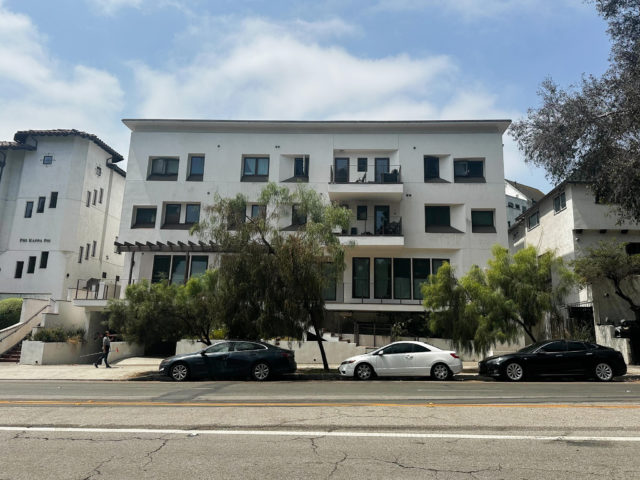
UCLA has suspended the campus’s chapter of Kappa Sigma until May 2030 for violating policies relating to hazing, alcohol and safety.
Lindsey Goldstein, the director of the Office of Fraternity & Sorority Life, announced the suspension in an email Wednesday to UCLA fraternity and sorority members. Goldstein said in the email that the fraternity was found June 18 to be responsible for multiple Student Group Conduct Code violations.
Goldstein said in the email that Kappa Sigma “completed the adjudication process through the Office of Student Conduct,” adding that the university “takes all allegations, and any subsequent findings of responsibility, very seriously.” Kappa Sigma was initially placed under an interim suspension Dec. 8, 2023, according to the email.
Goldstein’s email did not indicate if the suspension was lifted at any point between December 2023 and June 2025, though the fraternity advertised its fall 2024 rush – a recruitment process for new members – on Instagram in September. The UCLA Kappa Sigma Instagram was private as of Thursday afternoon.
“We are working closely with Kappa Sigma’s national office and the remaining members as the chapter undergoes suspension and prepares for closure,” Goldstein said.
According to the Student Group Conduct Code, hazing that poses “above the reasonable risk encountered in the course of participation in the institution of higher education or the organization” for physical or psychological harm is prohibited, as is conduct that poses a risk to an individual’s health or safety.
A spokesperson for UCLA’s Kappa Sigma chapter said in an emailed statement Thursday that the chapter did not support the conclusion that it was responsible for the conduct violations, adding that it expelled members who violated the fraternity’s internal conduct guidelines.
“We maintain a strong and respectful brotherhood,” the spokesperson said. “The majority of our members were not involved in the incident and were unaware of it until after it occurred.”
The code defines suspension as “exclusion from University privileges and activities” or the university ceasing to recognize an organization’s status as a student group.
According to the Student Group Conduct Code, if someone files a report alleging a conduct violation, the dean of students or another official must inform the accused group if the official moves forward with the disciplinary process. Following a meeting between a designated reviewer and a representative for the organization, the reviewer may impose sanctions – which may be appealed to the dean – on the organization if the group acknowledges responsibility for the violations.
If the group denies responsibility for the alleged violation, the student-majority Group Conduct Board may make a determination as to whether the group was responsible for the alleged violation, according to the code.
The spokesperson for the chapter said in the statement that the chapter has exhausted its appeals under the Student Group Conduct Code’s disciplinary process but added that the chapter and national organization “are exploring any and all additional avenues separate from UCLA’s appeals process.”
They also said Goldstein informed the chapter that it may not operate off campus during the suspension and added that the chapter will follow the guidelines of the suspension.
According to the national organization’s website, “Kappa Sigma strictly forbids hazing,” though its chapters at other universities, such as the University of Virginia and the University of Houston, have recently faced sanctions due to hazing allegations.
A spokesperson for the Office of Fraternity & Sorority Life said in a written statement three weeks after The Bruin’s initial request for comment that the chapter is no longer recognized by the office or the Interfraternity Council. They added in the statement that – to its knowledge – neither the office nor the chapter is facing legal proceedings.
The national organization did not respond in time to a request for comment on the suspension and the Student Group Conduct Code violations.