This post was updated Aug. 31 at 9:58 p.m.
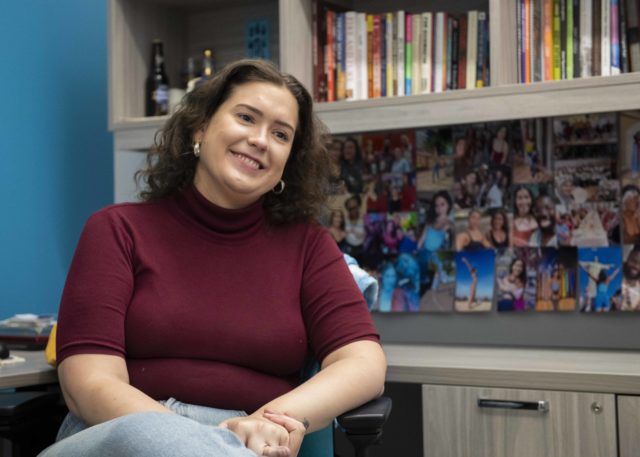
Vanessa Aviva González-Siegel, a transgender woman, could not obtain hormone replacement therapy when she first asked as an undergraduate student.
Her campus medical center did not have the treatment – making González-Siegel one of the first people to later receive estrogen therapy at her college, she said.
Now, as the director of UCLA’s LGBTQ Campus Resource Center, González-Siegel said she is doing everything in her power to help students get the care they need.
“I’m helping people process and navigate, and creating a space where folks can be themselves authentically,” she said. “That’s so rare, and that’s so powerful and impactful.”
González-Siegel has overseen the center’s external relations – ranging from student and staff support to communications with the UC Office of the President – for about a year, she said. Bringing over a decade of experience providing LGBTQ+ student resources at Rutgers University and Columbia University, she added that she tries to ensure support for students remains consistent regardless of changes in government and UC-wide policy.
The Trump administration suspended about 800 of UCLA’s research grants from the National Institutes of Health, the National Science Foundation and the United States Department of Energy last week. The administration’s proposed settlement to restore the university’s research funding would mandate that the Ronald Reagan UCLA Medical Center and David Geffen School of Medicine end gender-affirming care, create single-sex housing for women and “ensure athletic recognition for female athletes in women’s sports,” according to CNN.
The ability to influence UCLA’s response to executive orders is what motivates González-Siegel.
“I can’t control what happens in D.C., but I can control what happens in Westwood,” she said.
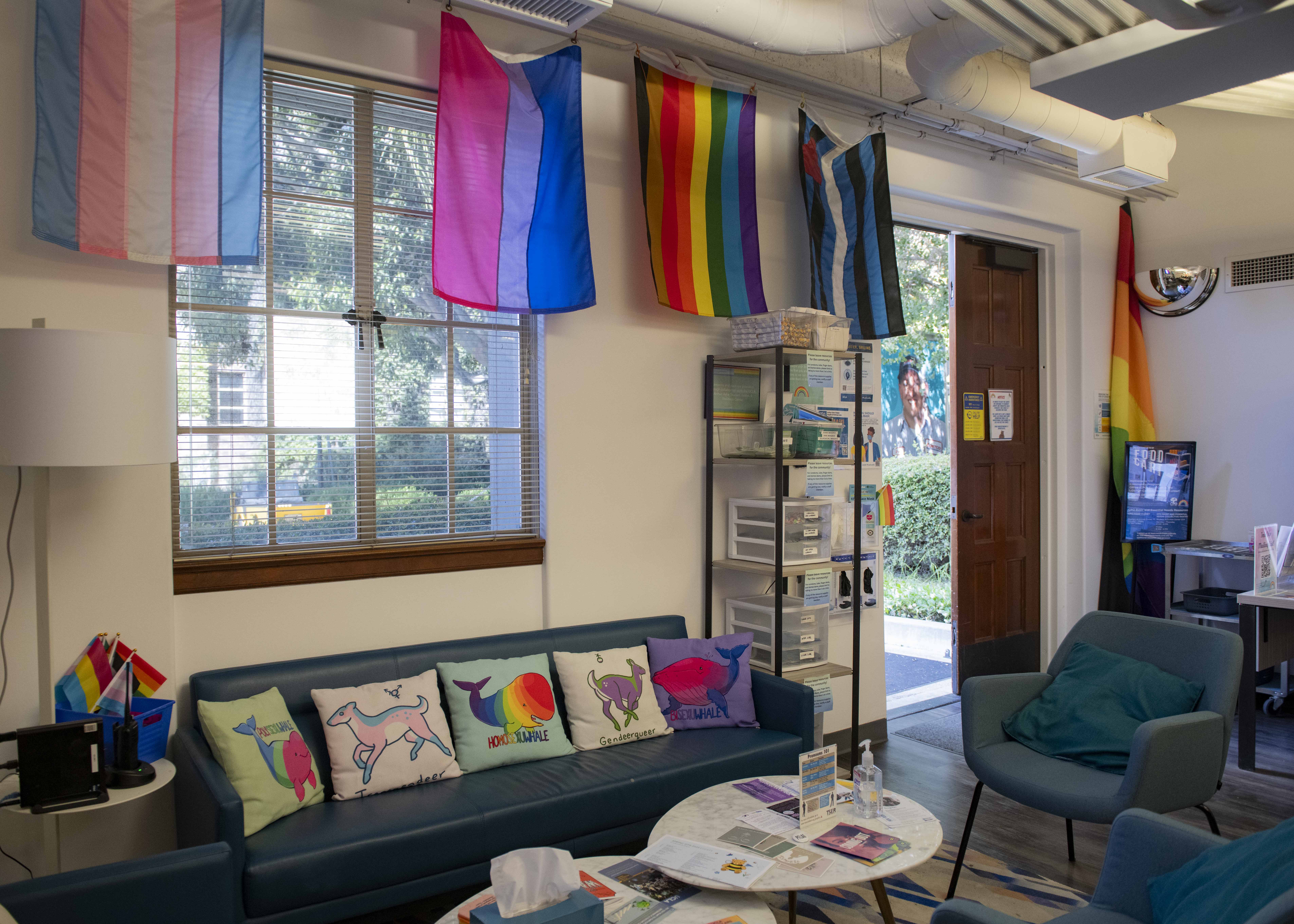
González-Siegel said she often “translates” the urgency of LGBTQ+ issues to campus administrators in order to reach a shared understanding and approach to addressing students’ needs. If a student’s family cuts them off after coming out, for instance, she conveys to administrators that the situation can likely lead the student to underperform academically and transfer out unless the student receives financial aid, healthcare and housing, she added.
The center operated without a permanent director for about nine months prior to González-Siegel’s onboarding, said Jaime Estepa, the resource center’s interim assistant director.
González-Siegel’s arrival brought stability and support to the center’s staff, said Minerva Esquivel Gopar, the administrative coordinator at the center. The day after Donald Trump won the 2024 presidential election, González-Siegel mobilized the center’s staff to provide dinner and a post-election processing space at the center – with over 100 students, staff and faculty turning out, Gopar said.
Students felt overwhelmed by the election results and bringing them together over food was González-Siegel’s way of taking action, she added.
“I really got to see the type of leader that Vanessa is and how much she cares about making sure that our students know that they have support on campus,” Estepa said. “Even in the hard times, the center will be there.”
When González-Siegel transitioned as a college student, she said her family kicked her out. She fought to graduate on time and remembered panicking at the financial aid office after she changed her legal name.
These experiences, González-Siegel said, now fuel her support for students struggling to advocate for themselves.
González-Siegel said her experience transitioning showed her that universities can serve as an avenue for people to find their identity, but only if the institutions provide the necessary resources to do so. Reminding students that they have agency over their lives and bodies is at the center of her “radically honest” communication style, she added.
“A student doesn’t have to trauma dump to me to get what they need,” González-Siegel said. “I just innately understand.”
An increasing number of UCLA students have felt nervous about existing as their authentic selves because of a national rise in anti-LGBTQ+ legislation, Estepa said.
Over 500 anti-LGBTQ+ bills were introduced in state legislatures in 2023 – over three times as many as the year before, according to CNN.
President Donald Trump announced in June that he would shut down the national suicide hotline for LGBTQ+ youth, according to the BBC. He also issued a January executive order defining “gender identity” as subjective and false, and subsequently required all federal agency forms that ask for an individual’s sex – including the Free Application for Federal Student Aid – to list male and female as the only options.
Trump’s January order required all government-issued identification documents – including passports, visas and global entry cards – to reflect a person’s assigned sex at birth.
González-Siegel herself is not exempt from the impact of new federal policies. Her passport and social security data are now marked with her sex assigned at birth – a gender marker that she said she has not used in 15 years.
When a student is upset by these policy changes, González-Siegel said she assures them they are not alone by sharing her personal experiences navigating the same issues. Her goal is to be transparent about realistic solutions and to empower them to prioritize their mental health, she added.
“The point is for us to feel attacked – crash out, burn out, go quiet,” González-Siegel said. “I remind students that you have so much agency and you have so much power.”
Estepa said González-Siegel reminds the employees of the resource center’s importance, as other university LGBTQ+ resource centers – including those at Harvard University and the Georgia Institute of Technology – have closed across the country since 2023.
State level anti-DEI directives have caused closures of gender and sexuality-based resource centers and cancellations of gender and sexuality-related graduation ceremonies – among other LGBTQ+ initiative rollbacks – in about 30 college campuses, according to the Chronicle of Higher Education. Trump also issued a January executive order calling for the dismantling of diversity, equity and inclusion programs in federally funded schools.
“I think that this work matters, and it’s beneficial to every single student regardless of their identities because everyone deserves agency, respect, autonomy and the ability of choice,” González-Siegel said.
While some people perceive these developments as a recent rise in anti-LGBTQ+ sentiment, González-Siegel said she believes “antagonism” of the LGBTQ+ community has always existed. She added that the community must stay vigilant, even if California may have more policies that are accepting and supportive of the LGBTQ+ community than other states.
Being able to both speak to UCLA administration and be on-the-ground with students is a privilege, she added.
“If you say you’re a student advocate, you have to put yourself out there,” González-Siegel said. “That’s how it works.”


Comments are closed.