This post was updated Sept. 7 at 8:22 p.m.
UC faculty are proposing the creation of a multi-billion-dollar fund to support UC researchers in the wake of the federal funding suspension to UCLA.
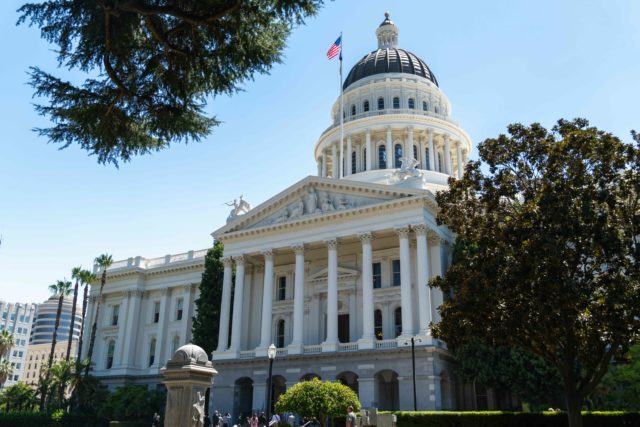
The proposal, known as the California Futures Fund, envisions a state-level, pooled fund designed to support UC research, teaching and community service, according to a press release from the Save Our Science Initiative. The fund, which UC faculty rallied in support of at the California State Capitol on Aug. 18, would ensure the safety of the University from ”federal attacks” and promote long-term stability, representatives from the initiative added in the press release.
Advocates of the CFF suggest that in the short term, funding for the CFF could come from the UC by leveraging its endowment, as well as the UC Blue and Gold fund, said Anna Markowitz, the president of the UCLA Faculty Association, in a written statement. She added that a new source of funding would likely be needed in the long term.
“There are several ways the state could get that new source of revenue – we have noted that a relatively small tax on a broad base of Californians could provide a vast new revenue source, as well as a targeted tax on the wealthiest Californians who did also just receive a tax cut from the federal government,” she said in a written statement.
The initiative proposed the fund in response to the federal suspension of over $500 million in research funding to UCLA in late July. In letters announcing the frozen funds, the United States Department of Justice said they were suspended because the university allegedly engaged in illegal affirmative action practices, permitted antisemitism in its research environments and allowed “men to participate in women’s sports.”
Members of the UCLA Faculty Association and the Save Our Science Initiative – which advocates to protect research and education in California against cuts by the federal government – met with State Senator Scott Wiener on Aug. 18 to deliver a legislative brief in support of the CFF proposal. In February, Wiener co-introduced State Senate Bill 829, which proposed a “California Institute for Scientific Research” to provide additional funding for California researchers – which could potentially serve as a framework for the CFF, Markowitz said.
Markowitz, an associate professor of education, said the fund was proposed not only in response to the major suspensions but also due to grants being “canceled for political reasons” across the country beginning in January. She added that after seeing the demands the Trump administration made to other universities to restore their research funds, the Faculty Association began identifying how the UC could maintain academic integrity and independence.
The Trump administration sent a draft proposal to the UC on Aug. 8, which seeks $1 billion in installments and a $172 million claims fund for those the administration says have been impacted by violations of Title VII of the Civil Rights Act of 1964, according to CNN. The proposal would also mandate that the David Geffen School of Medicine and Ronald Reagan UCLA Medical Center stop providing gender-affirming care, alongside policy changes pertaining to gender identity and existing university protest policy.
[Related: Proposed UCLA settlement from federal government seeks $1 billion, policy changes]
“We really believe that the sort of academic and clinical freedom that our investigators, professors, lecturers, faculty, everybody has is what makes this institution excellent,” Markowitz said. “It became clear why we had the set of federal demands, and this $1 billion fine is an attempt to remove that independence from the UC.”
Markowitz added that without additional funding to turn to, researchers would struggle to operate their labs, pay graduate student salaries and further scientific breakthroughs.
“We don’t know what sort of treatments are either not going to be discovered or were going to have a pause,” Markowitz added. “We don’t understand exactly what kind of scientists will be leaving the state of California or leaving our country if they aren’t able to do the kind of work that they’ve been pursuing for their whole careers.”
The Trump administration’s overall attempts to institute “massive” cuts to federal funding, as well as implement greater partisan control over the grant approval process, demonstrate the need for longer-term funding over the next three years, she said.
The CFF would also serve as a temporary funding measure supporting research as legal challenges to the funding suspension progress through the courts, said Michael Chwe, a professor of political science.
“At this moment, it’s really about getting through this attack. We just have to make sure that we can survive in this next six months,” Chwe said. “If we can just buy some time, give us our ability to fight legally, which is always slow, give us the ability to kind of raise awareness and try to convince the people, the American public at large, how important it is to support science and education research.”
Chwe also said he believes the suspension is likely to be found illegal or reversed following litigation, adding that the power of the Trump administration’s actions came from the short-term pressure that pushes universities to settle.
A federal judge ordered the reinstatement of roughly $81 million in NSF grants to UCLA on Aug. 12 following a ruling that the grant suspensions violated a June injunction issued in response to a lawsuit filed by UC researchers challenging the legality of earlier NSF grant cuts. The same judge said Tuesday that she would hear arguments Sept. 18 on whether to grant a preliminary injunction temporarily restoring NIH funding to the university.
The fund would also allow the UC to continue research in alignment with its own values and priorities in fields opposed by the Trump administration, such as gender-affirming care, abortion, vaccines and mental health for LGBTQ+ youth, Chwe said.
“(The) suspension is not just about grants or research. It’s really an attack on the way we do things in California, an attack on our values,” he said. “It’s an attack on one of the most important assets we have in our state.”
The funding freeze will most heavily affect junior researchers, said Steve Shoptaw, a professor emeritus of family medicine, by limiting their ability to gain research experience in functional labs, progress in their scientific careers and receive compensation. He added that the freeze will limit the university’s capabilities for both undergraduate research and teaching.
Shoptaw, the vice chair for research in the Department of Family Medicine, said he believes the UC Board of Regents and other funding sources cannot close the financial gap created by the suspensions without new state-level solutions.
“There’s no big bolus of money out there that’s going to save us,” Shoptaw said. “What we’re going to have to do is to work with our Californians to figure out a solution that actually keeps the University of California whole, especially regarding its research mission.”
He added that the UC has been sustained as the “best” public university by “generations of investment” from California residents with their taxes. The fund is an investment in protecting the stability, discovery and innovation of the state, he said, with the personal futures of many Californians at risk due to threats faced by the UC.
“Cuts to federal research funding would cause significant harm to every Californian, potentially disrupting the state’s economy on a devastating scale,” a UC Office of the President spokesperson said in a written statement. “Thousands of students, staff, and faculty depend on federal research funds that are becoming increasingly scarce. UC will need additional resources if California wants to preserve critical research jobs and projects that support our communities.”
Shoptaw said advocates of the CFF are planning to continue visiting the State Capitol, reach out to local state representatives, hold “listening sessions” for the public to join and learn about the concerns of UCLA faculty. They also plan to bring the issue to political coalitions in order to build further support and awareness for the fund, he said.
“The long-term strategy, if the California Futures Fund works, is that we build a firewall around innovation and discovery that fuels our economy,” Shoptaw said. “It preserves our jobs. That’s great. And if we have that sort of resource here, and have that assured stability, we in California will continue to attract the best and the brightest.”


Comments are closed.