This post was updated Sept. 4 at 8:14 p.m.
For students at Bruin Student Teaching and Research Scholars Academy, learning in the lab is more than a research opportunity.
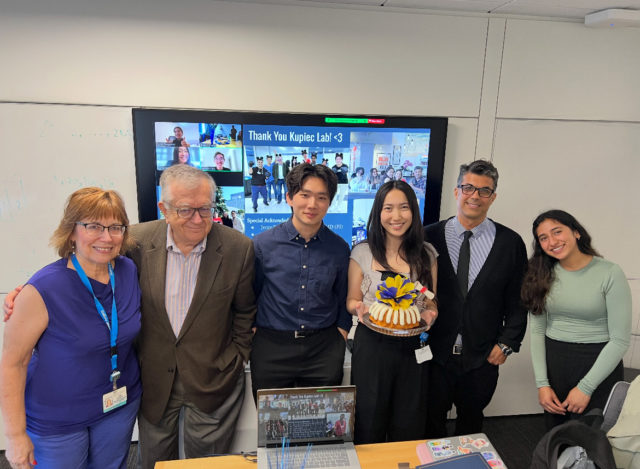
The Bruin STARS Academy consists of a group of students who work in the lab of Dr. Jerzy Kupiec-Weglinski, the Paul I. Terasaki chair in surgery and director of the Dumont-UCLA Transplantation Research Laboratories. Kupiec-Weglinski said he oversees the academy alongside Kenneth Dery, a UCLA alumnus and associate adjunct professor in the David Geffen School of Medicine.
“This is a state university, and we have those clinicians, which we should educate because some of them want to become clinician scientists,” Kupiec-Weglinski said. “We jointly decided that it’s a good idea to reserve some of his (Dery’s) effort towards more official teaching, not just fellows who are coming.”
But the future of the academy’s research may be threatened by federal funding cuts, Kupiec-Weglinski said, which could jeopardize the lab’s ability to pay staff members and conduct experiments.
Kupiec-Weglinski said the cost alone of maintaining the colony of lab mice is about $10,000 per month.
“This is a nightmare to tell you the truth,” Kupiec-Weglinski said. “We had five NIH grants and three of those five were suspended. The only ones not suspended is the program project grant, which is one of ten in the country devoted to organ transplantation.”
Kupiec-Weglinski added that interrupted funding can discourage students, and it is the responsibility for major research institutions like UCLA to support future leaders despite these obstacles.
The program began with one undergraduate student, Brian Cheng, and then added Megan Wei and Zeriel Wong, Dery said, but has since grown to about eight undergraduate students. Most students join the team in the summer, he added, and have to write an abstract and give a presentation at the end of the summer. Dery said he provides the students with constructive feedback for improving their skills in the lab and their teaching techniques with peers.
The science studied in Kupiec-Weglinski’s lab centers around the liver, Dery said. The group’s research investigates how to protect hepatocytes – the main type of liver cell – from attacks by host immune cells after moving a donor liver during transplantation while also exploring possible strategies for rejuvenating damaged liver tissue to make it eligible for transplantation, he added.
The study of transplantation is critical for helping provide life-saving surgeries for patients, Kupiec-Weglinski said, and more than 7,200 liver transplants have been performed at UCLA since the 1980s. Many of these patients have gone on to live decades longer post-surgery, and he added that it is important for students to understand the direct impacts that their results can have on patients.
Kupiec-Weglinski said both his and Dery’s mentorship of undergraduate students eventually grew into the formal STARS program, helping them gain the necessary skills to become clinician-scientists. He added that this program has allowed undergraduates to co-author major publications and present at international conferences.

The academy’s origins can be traced back to the challenges Dery said he encountered while trying to become involved in research as a UCLA undergraduate. Dery said he prioritized teaching and student exploration while pursuing his doctorate and decided he wanted to continue mentoring undergraduate students if he pursued a professional career in higher education.
“I was observing lots of really, let’s call them like motivated students, undergraduate students, but they were really just interested in the research component,” Dery said. “I feel like the teaching component should be hand in hand with the research component.”
Dery’s first pupil was Cheng, who said he is a current mentor for the academy’s sixth generation of members and joined when he was a rising third-year human biology and society student. Dery guides students through unfamiliar tasks and encourages them to think outside the box when finding possible solutions, Cheng added.
A typical visit to the lab includes an introduction from Dery, Cheng added, with the scientist providing updates on developments in the lab or giving an overview of a new research goal or skill.
“Sometimes, if he can sense that we really don’t know what’s going on – even after we walk through the protocol together – he does it side by side with you,” Cheng said. “Starting off in the lab, there’s a much stronger mentorship relationship with the head investigator of the lab, automatically, because he’s very experienced, and he passes on this knowledge to us.”
As Dery’s teaching helps students master various skills – from pipetting without contamination to hepatocyte isolation of mice cells – Cheng said it is the responsibility of the more experienced students to mentor newcomers.
Now as a medical school student, Cheng said his appreciation for medicine and research began with his time in the Bruin STARS Academy, which sparked his interest for learning about the origins of and developments in treatments for patients.
Dery said any lab can adopt the academy’s collaborative strategies and techniques if it is equipped with empathetic students who are eager to learn. The academy has helped students build confidence in the lab and feel that they are helping contribute to a better community, he added.
“I realized that I could help more students if I have the students helping the other students,” Dery said. “(It) unexpectedly created this very powerful learning peer group – this peer network group – that I’m sure that we will all keep in touch for many years to come.”
While in search of new students to join the program last year, Dery said he and Kupiec-Weglinski provided lab opportunities to students who would be graduating soon but had not had the chance to be involved in research.
Alondra Echeverria, a UCLA alumnus, was one of those students. Echeverria, who joined the academy without prior research experience, said her lack of experience had previously been an impediment to being accepted to other labs.
Dery said Echeverria’s work ethic made her immediately successful within the group, adding that she is now on the path to becoming a paid student research assistant. Echeverria said the encouragement from Dery and her peers helped her feel a sense of belonging and accomplishment while building skills such as pipetting and polymerase chain reaction.

“Just because I didn’t have any lab experience didn’t mean that the things that I did weren’t valuable to the team, right?” Echeverria said. “It was that constant reminder of Dr. Dery and Brian and the other students who would just encourage me and would be like, ‘Hey, you’re doing such a great job.’”
Echeverria said her experience with the academy strengthened her interest in pursuing a doctorate degree and allowed her the opportunity to find a different calling from her original plan of going to medical school.
“I think it’s his (Dery’s) love and his passion for science that encourages us to also love and have passion for science as well and pursue these types of careers,” Echeverria said. “Nowadays, we really need more scientists, we really need more researchers.”
Dery said he hopes to expand the academy’s career development opportunities and slightly increase the size of the group.
Kupiec-Weglinski said he hopes for the lab’s research to continue to inspire students to pursue careers as physicians and scientists.
Dery added that he hopes for other labs to apply the academy’s strategies of community-building and cooperation to their own areas of scientific inquiry to increase collaboration across fields at UCLA.
“The STARS Academy is not a place for students to just come and do great science – it’s more,” Dery said. “It’s a place where they can come and find that they’ve learned collaborative skills. They’ve learned how to be compassionate leaders, which is what I think science for them needs.”

Comments are closed.