
This post was updated Sept. 24 at 9:39 p.m.
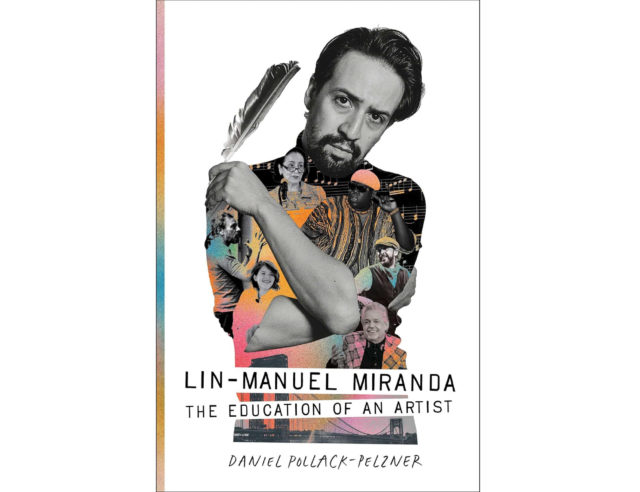
Daniel Pollack-Pelzner’s biography of Lin-Manuel Miranda is an absolute win for “Hamilton” enthusiasts, artists and those curious about education.
Miranda’s professional achievements could be an entire discussion of its own. He won the 2008 Tony Award for Best Score for his work on “In the Heights,” won two Tony Awards in 2016 for Book and Score of a Musical for his essential role in creating “Hamilton” and was awarded a MacArthur Fellowship in 2015, referred to by some as the “genius grant.” It could be tempting for some biographers to fixate on Miranda’s successes and focus solely on the positive aspects of his life. Pollack-Pelzner not only avoids this temptation but instead fully investigates Miranda’s painful failures and struggles just as much as he celebrates Miranda’s wins.
In the acknowledgements section of the book, Pollack-Pelzner informs the reader that he interviewed 150 people, and he mentions in the epilogue that he spent three years writing Miranda’s story. His extensive efforts to describe Miranda and his journey from academic, professional and personal perspectives clearly pays off. Pollack-Pelzner interviewed Miranda himself a dozen times and spoke with his mentors, colleagues, family and more. Through including insight from these interviews, the author is able to comprehensively craft an informative and empowering story of Miranda’s public successes and lesser-known mistakes.
Pollack-Pelzner offers an eye-opening opportunity to get to know Miranda before he became a well-known artist. For example, for his senior project during his undergraduate education at Wesleyan University, Miranda adamantly wanted to tell a story involving time travel, yet he failed to explain how time travel was possible, and the concept did not resonate with the viewers. During the show, at an essential plot reveal intended to be a heart-wrenching moment, the audience laughed. Pollack-Pelzner attributes this failure to Miranda forcing his ideas and ignoring constructive criticism from his collaborators. Miranda said he still feels sick when thinking about the audience’s reaction. For artists still at the beginning of their journey, they are likely to feel comforted and understood when Miranda reflects on the flaws of his earlier works.
Additionally, Pollack-Pelzner explores another aspect creatives struggle with: comparison. After the failure of his senior project, Miranda watched the thesis of another senior at Wesleyan University. Both had the same advisor and were known for their imaginative works. Miranda called the other senior’s thesis “the best piece of theater I have ever seen.” Miranda’s girlfriend at the time described the look on Miranda’s face after watching the project as “gut-punched.” Pollack-Pelzner includes a compelling confession from Miranda, where the artist described himself as wasting his university’s resources. This brutal reflection creates a realistic depiction of Miranda’s education as an artist, one that is deeply appreciated.
For some, the beginning of the biography and some other sections may feel disheartening and heavy. The author is unafraid to delve into solemn topics such as how boys threw sand at him when he would read during recess. Pollack-Pelzner expertly presents the reader with Miranda’s works and situates it within his life. One of Miranda’s earlier attempts at rhyming verse includes the lines, “I am a very bad poet / and soon everyone will know it.” “Hamilton” fans may find this reminiscent as being the opposite version of a line said in the musical. In “Take a Break,” Hamilton’s son sings the lines “I am a poet / I wrote this poem just to show it” in an enthusiastic and proud tone. Readers may be surprised that Miranda felt the opposite when he was younger.
If the more discouraging sections of the biography are too much for the reader, the section about Miranda’s creative process for “Hamilton” makes the book a win on its own. Some readers will be shocked to learn it took Miranda two and a half years to write two songs for “Hamilton.” A touching moment of the writing process that the author explores is Miranda’s last-minute write up of Eliza Schuyler Hamilton’s and the musical’s final song. He wrote it the same morning the cast was expected to read through all of “Hamilton,” and he sobbed in between writing couplets. By reading Pollack-Pelzner’s biography, the reader feels like a first-hand witness to a written masterpiece.
The section about “Hamilton” is full of insight about the collaborative process. Stephen Sondheim, a composer who revolutionized American stage musicals, advised Miranda to prioritize variety in sound during the early writing stage. Miranda’s implementation of his advice is evident in the happy jazz song “What’d I Miss?,” the aggressive and confrontational “Meet Me Inside” and the heartbroken solo “Burn” Schuyler Hamilton sings in the aftermath of betrayal.
After reading this outstanding explanation of Miranda’s education, success and failures, readers can understand the impressive man with a grounded perspective.



Comments are closed.