President Donald Trump’s tariff policies are expected to increase the cost of everyday goods, impacting consumers differently based across socio-economic boundaries.
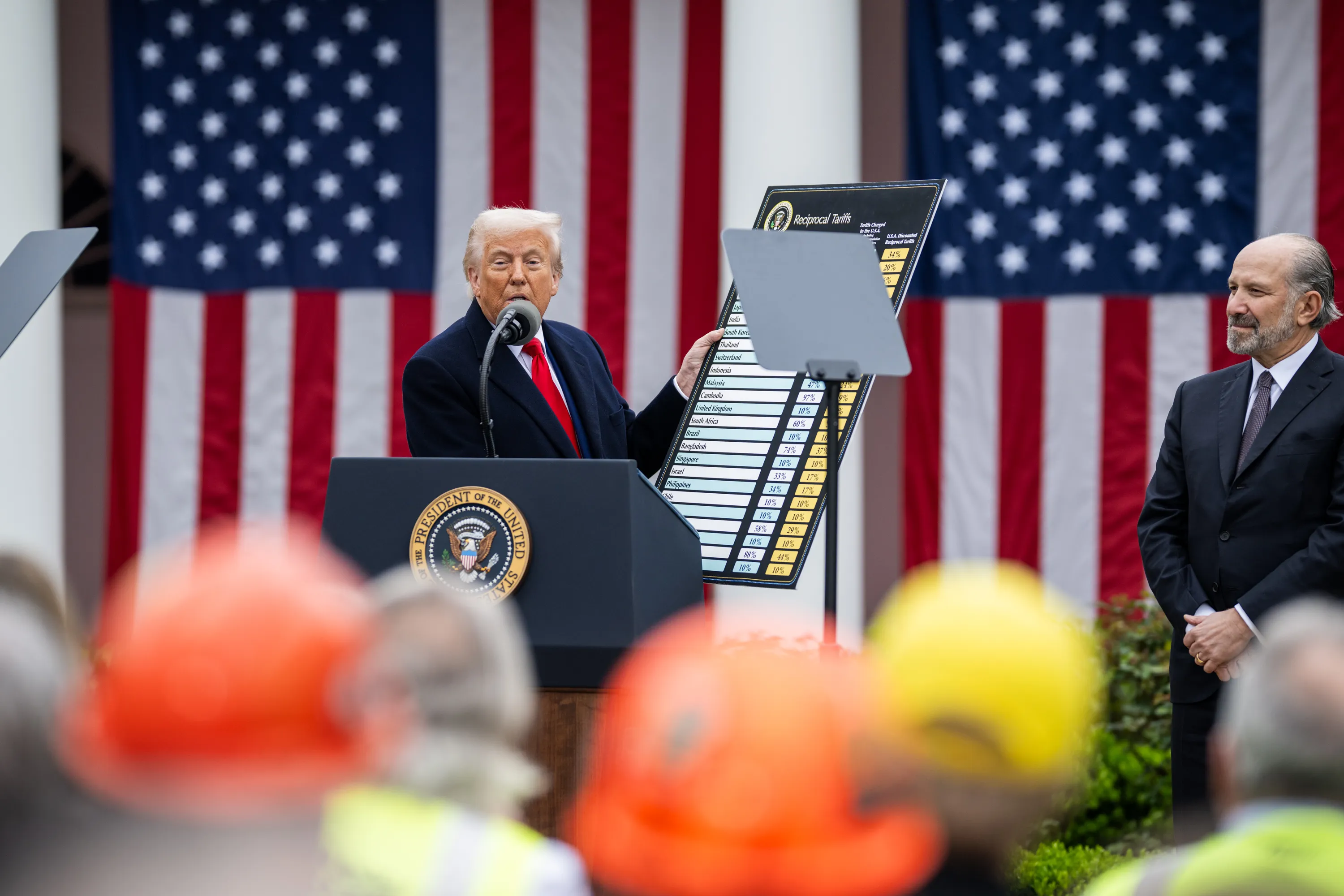
Apr. 2, a day Trump declared “Liberation Day,” he announced his wide-scale reciprocal tariffs, setting a baseline tariff of 10% on all imported goods. While the president has been negotiating with several countries, altering and postponing his tariff policies, economists have grown concerned about the potential impact of these tariffs on the economy and the inflated cost of goods and services, CBS reported.
Economics Professor Lee Ohanian said businesses and consumers will have to wait to see how these tariffs will affect the economy over time.
“The government plays a very complex role in the economy,” Ohanian said. “The President has declared tariffs outside of Congress, which could have a temporarily large effect on inflation.”
Tariffs function as an economic tax imposed on imported goods. The Trump administration announced these tariffs as a means to correct the imbalanced United States foreign trade deficit. These tariffs are designed to dissuade American consumers from purchasing imported goods and instead promote the purchase of American-made products, according to the BBC.
In doing so, these tariffs create additional costs for businesses, which are often passed onto American consumers through higher prices for goods and services. Over time, the International Monetary Fund found that these additional costs contribute to rising inflation across the broader economy.
Gabriel Rossman, a sociology professor, said a healthy and growing economy will naturally have some inflation.
The Federal Reserve sets a 2% target rate for inflation, which promotes higher employment rates and stable prices within the economy. This target rate allows consumers and businesses to expect a relatively low and stable level of inflation, which they can use as a basis for financial decisions such as borrowing, saving and investing.
This month, the New York Times reported that inflation rose by 2.9% over the last year, exceeding the target rate created by the Federal Reserve. This increase was reported to be the highest pace of growth the economy has seen since Trump first took office in January.
The Budget Lab at Yale University, a nonpartisan research center, reported that Trump’s tariffs are projected to cost the average consumer an additional $2,300 in 2025, while lower-income households are projected to face an additional cost of $1,300.
Despite these cost differences, the Budget Lab still found that lower-income households are burdened by tariffs to a greater extent in comparison to higher-income households. According to the same source, this disparity is caused by the regressive nature of tariffs and differences in household expenditures.
The Bureau of Labor Statistics reported that lower-income households spend a greater proportion of their income on essential goods and services in comparison to higher-income households who spend a greater proportion of their income on other, nonessential categories.
Rossman said these differences in expenditures have the potential to exacerbate social inequality.
“Inferior goods are goods that are especially consumed by poor people. Superior goods are goods that are mostly consumed by rich people,” Rossman said. “If inflation is higher for inferior goods, that’s going to effectively increase inequality.”
Inferior goods, as defined by Investopedia, are goods that drop in demand when income increases. These goods are often essential to lower-income households due to their affordability as opposed to luxury goods.
Experts at UC Davis’ Center for Poverty and Inequality Research found that – when the cost of goods increases – higher-income households who spend a greater percentage of their income on luxury goods have a bigger buffer when it comes to budgeting for necessities and relying on savings.
Economics Professor Pablo Fajgelbaum said consumers from lower-income households, who spend a greater portion of their income on cheaper, imported goods, are more likely to be affected by changing economic policies.
The Budget Lab found that, when the costs of goods increase and purchasing power decreases, lower income households may fall below the poverty line. Their analysis projects that Trump’s tariff policies may push more than 600,000 Americans into poverty.
The rising costs of goods may also affect students from lower-income families who already experience difficulties affording their education, according to the Higher Ed Dive. As students who have limited opportunities to earn money, Forbes reported that they are generally affected to a greater extent by inflation in comparison to non-student adults.
Ohanian said some students may need to reassess their finances in order to afford school and the cost of living if the rate of inflation continues to rise.
“Students coming from lower income households are going to have a more difficult time,” he said. “You may need to borrow a little bit if things are getting tight or perhaps work a little bit more.”
For students and non-students, understanding and tracking inflation can be a way for individuals to better respond to economic uncertainty, according to The DePauw. Inflation trackers provided by the BLS may help consumers inform their budget to better navigate the impact of inflation and adjust household expenditures.
Ohanian said individuals should be patient in light of the uncertain economy.
“Don’t make any hasty financial decisions,” said Ohanian. “If there are some financial decisions you can possibly postpone or wait on, then it’s probably wise to do so.”



Comments are closed.