
This post was updated Sept. 30 at 9:49 p.m.
Warning: spoilers ahead.
The LA Opera’s “West Side Story” is in the right place at the right time.
Originally brought to Broadway in 1957 by a legendary creative team including Jerome Robbins and Stephen Sondheim, the classic musical has arrived at Los Angeles’ Dorothy Chandler Pavilion with a modern spin. Running through Oct. 12, director Francesca Zambello’s production was designed specifically for an opera house, amplifying its Shakespearean roots on an impressively large scale. Complete with commanding vocals, dazzling choreography and lavish sets, “West Side Story” still shines bright almost 70 years later with a piercing and undeniable relevance.
When the curtain rises, audiences are pulled in long before the first words are spoken. Scenic designer Peter J. Davison takes full advantage of the Pavilion’s vast stage, boasting three-story scaffolding for the show’s iconic balcony scenes and an open floor with ample room for sweeping choreography. With a captivating opening dance routine, viewers can quickly understand the intensity of the show’s central gang rivalry between the white Jets and Puerto Rican Sharks.
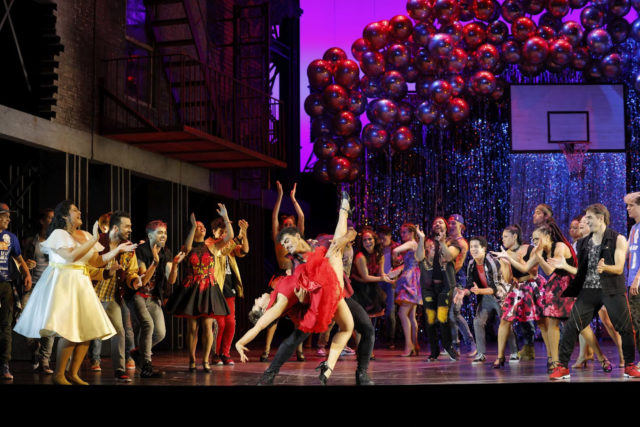
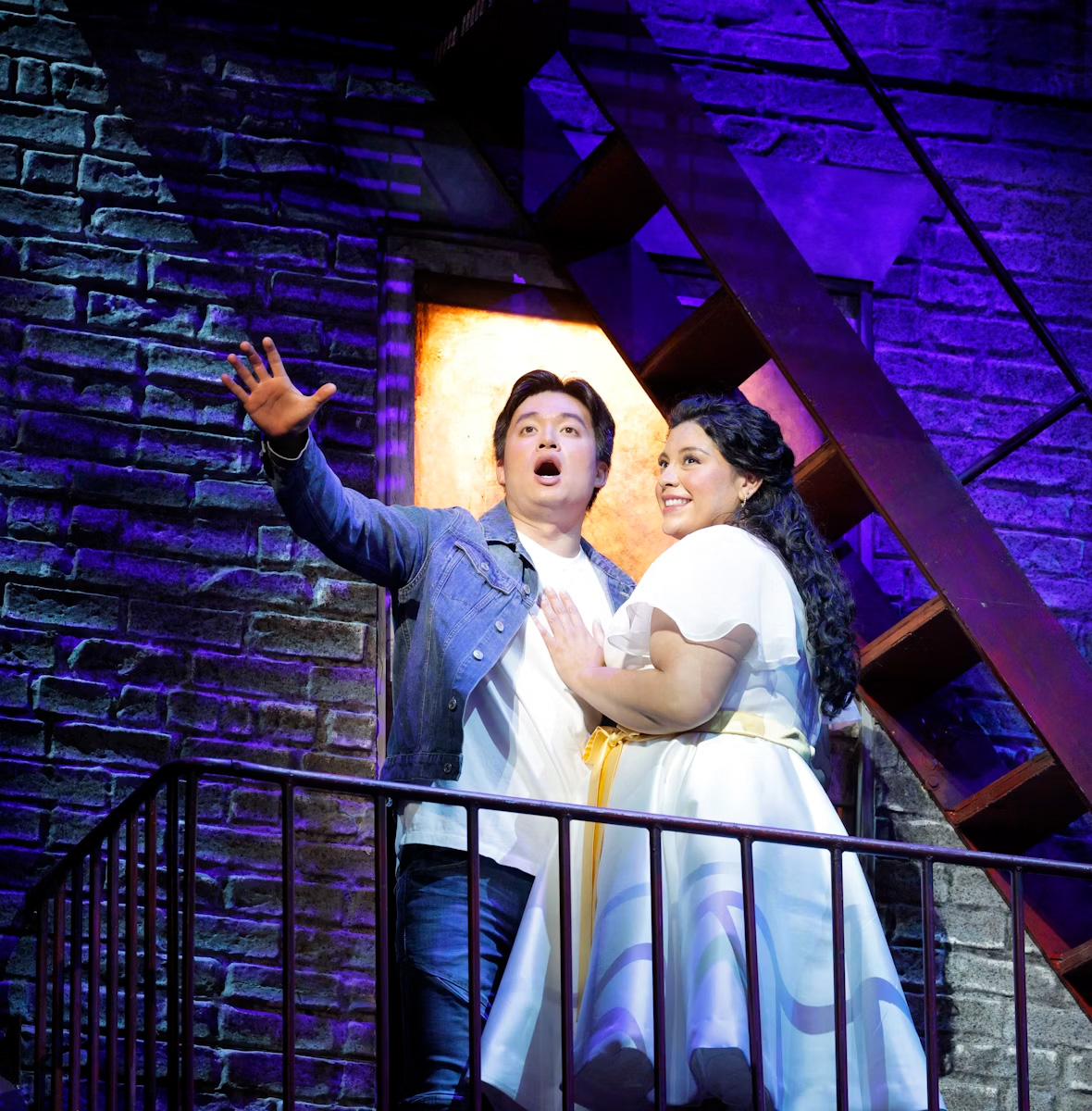
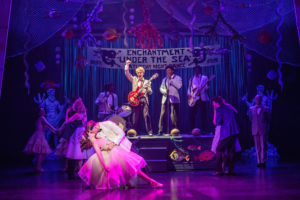
Soon after, the feud reaches a turning point at the neighborhood dance. Zambello underscores the scene’s importance with a grand visual shift, as bundles of balloons and glittering streamers descend from the ceiling to transform the cityscape. As the full ensemble takes the dance floor for a beautifully synchronized Latin routine, swirling skirts fill the stage with vibrant colors. Amid all the commotion, protagonists Maria (Gabriella Reyes) and Tony (Duke Kim) find each other, which kicks off the story’s fateful romance in a tender moment of contrast.
Reyes plays Maria, younger sister of the Sharks’ leader, with genuinely infectious charm and warmth, making Tony’s instant infatuation with her feel believable. On the other hand, Kim’s portrayal of Tony, a reluctant Jet, occasionally feels forced, not quite matching in emotional depth. However, any acting concerns melt away once he begins to sing. Kim truly puts the “opera” in this production, casting a spell over the crowd with his soaring, controlled vibrato – most notably in the lovesick ballad “Maria.”
[Related: Student theater company Out of the Blue embraces experimentalism, originality]
Another musical standout in the first act is found in “America,” one of the show’s most iconic numbers. Led by Anita (Amanda Castro), girlfriend of the Sharks’ leader, the song is crucial not only because it’s delightfully catchy, but also because it keeps the characters’ immigrant perspectives at the forefront of the story. Castro carries the number with incredible humor and star quality, backed by dynamic street dancing and a lively orchestration.
The fun does not persist, however, as the story’s tone quickly darkens by the end of Act 1. In a nail-biting rumble scene, the Jets and Sharks have a catalytic brawl that unfolds as a dance, intelligently choreographed with smooth lines, swinging fists and palpable intensity. As intermission leaves the audience to sit with the deaths of both gang leaders, the stakes are raised with heavy weight.
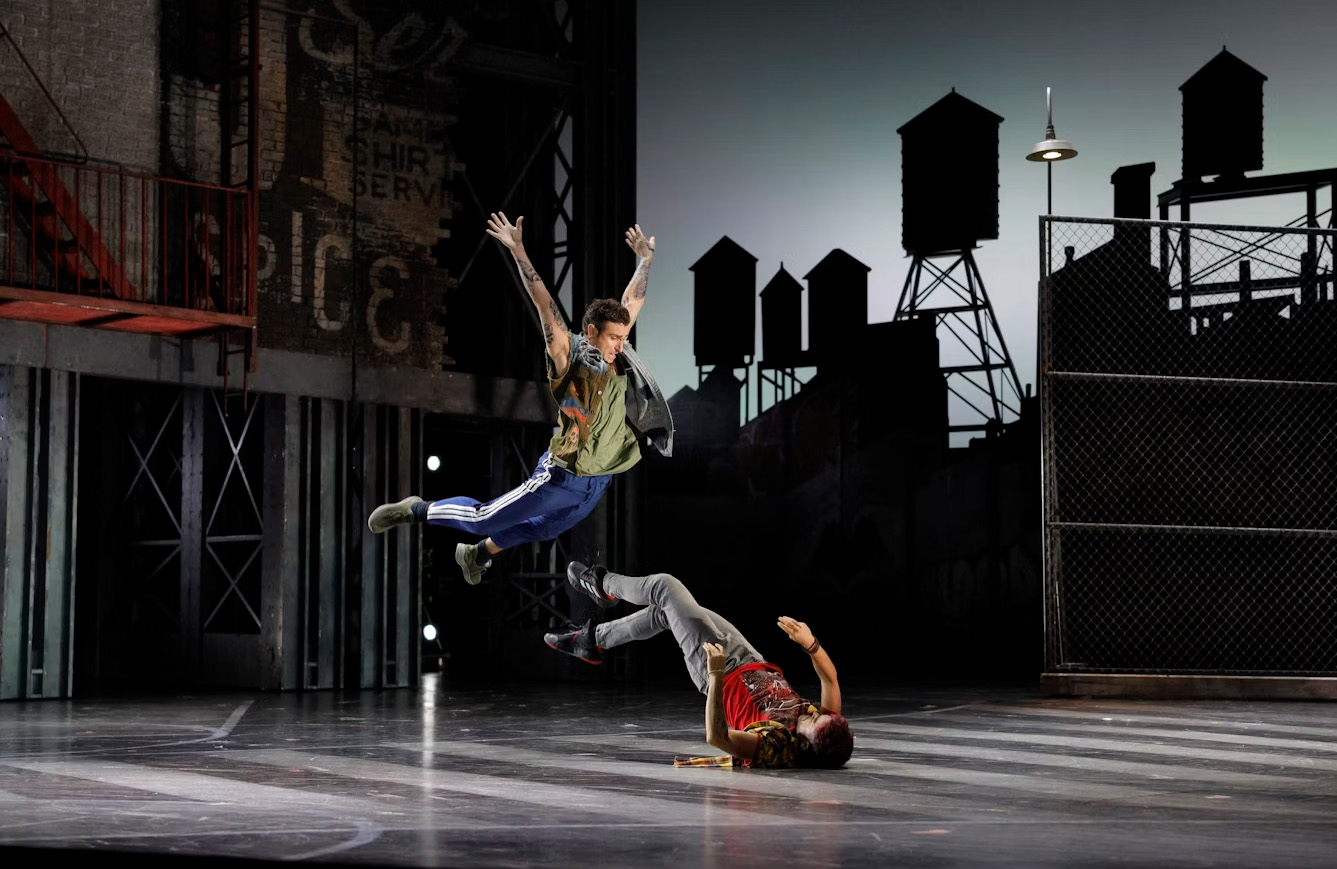
As a direct adaptation of “Romeo and Juliet,” “West Side Story” unfortunately shares many of its plot flaws, a fact most evident in its second act, as the conflict is brought to completion. Maria and Tony’s impulsive and blind love makes less and less sense as Maria reacts with unnatural calmness upon learning Tony killed her brother. Yet even amid the characters’ delusions, the exceptional cast keeps viewers on their side. As Maria and Anita fight over love and death in “A Boy Like That / I Have a Love,” their strong portrayals of anger and grief create one of the musical’s best moments.
[Related: Theater review: Corny comedy “Shucked” offers curious commentary, charms all ears]
Fortunately, Maria and Tony’s romance doesn’t need to be logical for “West Side Story” to work – what matters is the reason their love is forbidden. In this production, immigration and exclusion emerge as its most urgent themes. Today, as immigrant rights are continuously eroded by the Trump administration, the musical’s message rings louder than ever. Lives are lost as a result of the white Jets’ baseless fear and prejudice, who fail to realize the irony of their own descent from immigrants.
The timing isn’t a coincidence – Zambello makes a point of setting the musical in contemporary America through every visual element: Some characters have brightly dyed hair, others wear Adidas tracksuits and Maria keeps a Bad Bunny poster on her wall. And while the story takes place in New York, the Dorothy Chandler Pavilion stands tall in downtown LA, a city where federal immigration enforcement increased this summer.
Truthfully, the LA Opera is far from accessible. While the furthest possible seat is $32, tickets are more generally between $100 and $321. On opening night, the crowd was predominantly white adults. But one can hope “West Side Story” reaches those who need it most and serves as a powerful reminder for those with social and economic influence in a period of injustice.
After 150 minutes, the cast of “West Side Story” took their bows without music, supported only by the sound of a lengthy standing ovation. Following countless adaptations – from a Tony-winning Broadway run to an Oscar-winning Spielberg film – isn’t an easy feat, but this production is worthy of the praise. It is not only easy on the eye and delicious to the ear, but it is heavy on the heart in a way that is right on cue.
It’s a timeless tragedy, but the LA Opera makes “West Side Story” feel brand new.

Comments are closed.