This post was updated Oct. 30 at 10:17 a.m.
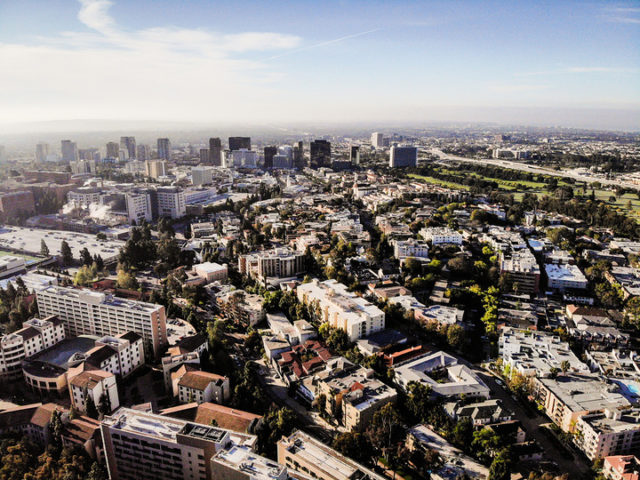
With more than three million people, 472 square miles of city and 50.7 million tourists in 2019, Los Angeles is one of the most prominent urban centers in the United States.
But beyond the flashy shine of Hollywood and the aesthetic world of social media influencers lies years of rich, diverse history and geography that are often ignored.
UCLA students, especially those not from LA, have a responsibility to learn about the city’s geography and history. As new residents of this beautiful city, students have a duty to preserve its stories and dive deeper into its full character, rather than just reaping the surface level benefits.
LA is more than a college town to me.
I grew up in Highland Park, an LA neighborhood that borders Pasadena, which UCLA students may know as the home of the Rose Bowl stadium.
But the Highland Park I grew up in is far different to what it was 20, 10 or even five years ago due to rapid gentrification or the process of neighborhood change caused by an influx of high-income residents.
Highland Park, which like the rest of LA was originally part of Mexico, became one of the city’s first neighborhoods in 1895. Originally a predominantly white neighborhood, Highland Park now houses a majority Latino community. This was the result of white flight, or the exodus of white families to richer neighborhoods after World War II.
White flight continued throughout the 1950s and 1960s following the construction of the Arroyo Seco Parkway – today part of the 110 Freeway.
My mom was born in the mid-1960s in a predominantly Latino Highland Park. My grandparents, both Mexican immigrants, found a rich, vibrant community in the neighborhood. My mom still tells me stories of this time: making friends across the neighborhood, riding bikes together and stopping at the convenience store down the street to buy paletas.
Simultaneously, however, the neighborhood experienced a rise in gang violence. As housing prices decreased in the 2000s, a wave of mostly affluent residents moved to Highland Park.
Growing up, it felt like a different store closed every week. Slowly but surely, prices rose and housing got competitive. Businesses were replaced rapidly by other more expensive ones and people moved.
Sadly, this story is not unique to Highland Park. Occurring across LA, gentrification has several harmful consequences – like the creation of spaces that exclude people of color and the gradual, forced displacement of these original populations.
It is one example of the multifaceted history – and current state – of LA that often goes unnoticed and undiscussed by UCLA students.
I am not asking my peers to memorize maps of the city or to know every date something significant happened in LA.
Instead, I urge fellow students to remember we go to school in one of the most diverse cities in the world – diversity that goes beyond the people that live here and seeps into the fabric of this city and its history.
LA is chic, glamorous and luxurious – but beyond that, it is a testament to resilience, shaped by the experiences of people of color.
When we only make an effort to know the names of a few cities here and there, or only explore within the bounds of Westwood, we actively disregard and ignore the true character of LA.

Comments are closed.