This post was updated Oct. 8 at 1:05 a.m.
UCLA professors expressed support for state laws limiting the amount of authority immigration enforcement officers can have and questioned the legality of the Trump administration’s crackdown on immigration.
Federal immigration enforcement officers arrested over 5,000 undocumented immigrants in Los Angeles between June and Aug. 27, according to the United States Department of Homeland Security. Protests pushing back on the deportations erupted throughout LA in early June, which the Trump administration responded to by deploying the National Guard – and later, the Marines – to the sanctuary city until late July.
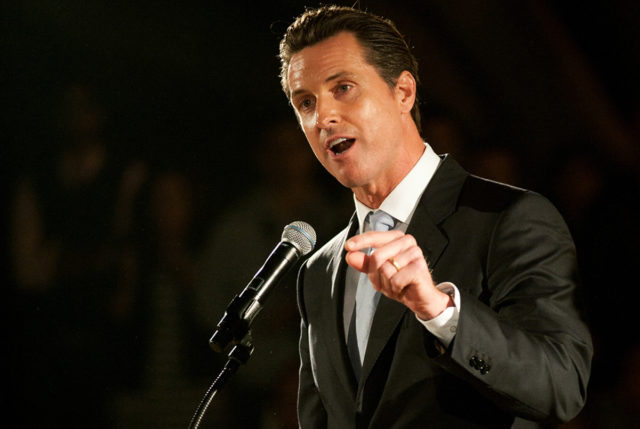
Gov. Gavin Newsom claimed Trump caused chaos by mobilizing the California National Guard, accusing Trump of violating the Constitution.
Newsom signed five bills into law Sept. 20, restricting the actions of immigration enforcement officers. In accordance with the new laws, immigration enforcement officers will not be able to enter schools or restricted health facility areas without a warrant or court order. Additionally, schools and higher education institutions will be required to inform their communities if immigration enforcement officers enter their campuses.
The University is currently reviewing potential impacts and implementation details of the law requiring higher education institutions to notify their communities if immigration enforcement officers enter their campus, said Omar Rodriguez, a spokesperson for the UC Office of the President, in an emailed statement. UCLA administrators previously said in an April meeting that the university would not send out a BruinAlert if immigration enforcement officers came to campus, according to meeting minutes obtained by the Daily Bruin.
[Related: Students who had visas revoked were previously arrested, USAC meeting reveals]
U.S. Immigration and Customs Enforcement agents will also no longer be able to wear face coverings while on duty, with some exceptions, including if an officer is assigned to special weapons and tactics units and performing SWAT duties or is subject to exemptions laid forth in the government code. Senator Scott Wiener, who introduced the bill, alleged that facial coverings have allowed immigration enforcement officers to get away with “kidnapping” and racially profiling Latinos.
The DHS told immigration enforcement officers not to comply with the face mask ban in a Sept. 22 Twitter statement, citing safety concerns.
Four of these laws went into effect Sept. 20, and the ban on face masks will go into effect Jan. 1.
Ingrid Eagly, a professor of law, said the Trump administration has further intertwined the criminal legal and immigration system, adding that she believes the number of people in detention centers in the U.S. has reached unprecedented levels, and there has been a rise in the number of deportations – sometimes without due process.
“The Trump administration’s immigration policies are deeply troubling,” Eagly said. “They affect not just immigrant rights, but they affect all our rights and liberties.”
Prior to the second Trump administration, immigration enforcement officers were federally prohibited from entering sensitive locations – including schools, hospitals and places of worship, she added. However, on Trump’s first day in office, the DHS released a directive giving ICE agents the power to conduct raids in these once-protected areas.
[Related: Local churches voice concern over potential raids following new immigration policy]
Newsom’s new laws will make some of these spaces safe again and uphold the Fourth Amendment, which prevents unreasonable searches and seizures, Eagly said.
“These changes are important, and they show the power of state and local government to shape how immigrants are treated,” she said.
Talia Inlender, the deputy director of the Center for Immigration Law and Policy – a center in the UCLA School of Law dedicated to studying and influencing immigration law and policy – said it is important for individual states to advocate for immigrants.
“We have felt very strongly that states have an important role to play in protecting immigrant communities, defending immigrant communities and advancing immigrants’ rights,” she said.
[Related: ‘This shouldn’t be happening’: Students react to troops, ICE raids in LA]
She added that California is a leader in advancing immigrant rights, and the new laws reflect this mission. While states have a role to play in advancing immigration policy, some of these laws are likely to face legal challenges on the grounds that states are deemed to be overstepping their jurisdiction, Inlender said.
Inlender added that she believes the federal government will likely challenge Senate Bill 627 – the bill prohibiting immigration enforcement officers from wearing masks – in court due to pushback from the DHS.
The laws Newsom signed concerning protected spaces are likely to be upheld if brought to court because a similar law was upheld during the first Trump administration, she added. In 2018, the Trump administration challenged a law that limited the use of state and local resources for immigration enforcement. A judge ultimately rejected Trump’s case, and the law remained in effect.
Amada Armenta, a director of the Latino Policy & Politics Institute, said tension between state and federal governments regarding immigration laws is normal, but immigration enforcement efforts under the Trump administration are “outside of the norm.”
“The tension between the federal government and the state government’s authority over immigration law – that tension is a tension that’s existed since the United States has existed,” the associate professor of urban planning and sociology said. “But I will say, what the federal government is doing on immigration enforcement right now is really outside of the norm.”
Raúl Hinojosa-Ojeda, the chair of the Chicana/o and Central American Studies department, said the movement of people across borders has been transformative and a powerful tool for economic development – especially in California and the U.S., making the new laws significant for the economy.
He commended state lawmakers, adding that these laws display “their strong majority of will” in combating the federal government’s anti-immigrant practices.
“The pushing of immigrants further underground through this type of really unconstitutional and nonsensical and racist attacks on certain types of immigrants is really, completely counterproductive economically,” Hinojosa-Ojeda said.
With these changes, Armenta said she believes it is important for UCLA to support students amid constantly shifting laws.
Armenta added that the university should provide legal services and work opportunities to undocumented students. In 2024, the UC considered amending a policy prohibiting undocumented students from working campus jobs, but the UC Board of Regents decided against changing the policy, as they believed it did not comply with state law.
[Related: UC rejects plan to hire undocumented students, halts consideration for a year]
A UCLA alumnus and a campus lecturer then sued the UC over the policy, and in August, a three-panel judge ruled the University must reconsider the policy.
[Related: Court rules UC barring undocumented students from campus jobs is discriminatory]
Hinojosa-Ojeda said the federal government’s actions have caused significant fear among his students and their families. However, he said UCLA provides a space to study discriminatory practices against immigrants, making the university “one of the best places to be” amid the threats to immigration.
“I tell my students in Chicano Studies, being at the university right now is probably the best place from where we should be understanding and critiquing and rethinking these types of laws,” Hinojosa-Ojeda said.

Comments are closed.