This post was updated Oct. 16 at 7:29 p.m.
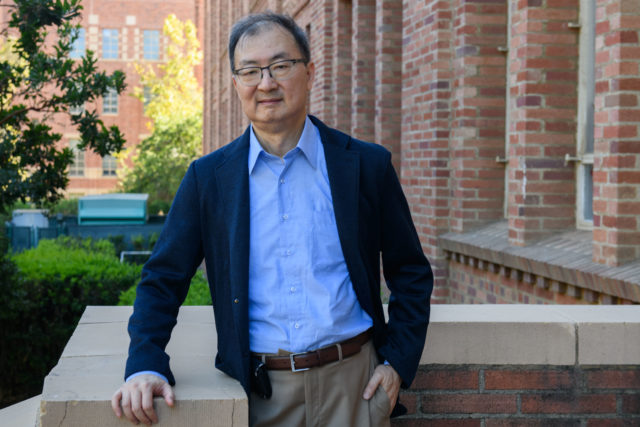
In his upcoming science fiction trilogy, Benjamin Huang’s thoughts on artificial intelligence get deep.
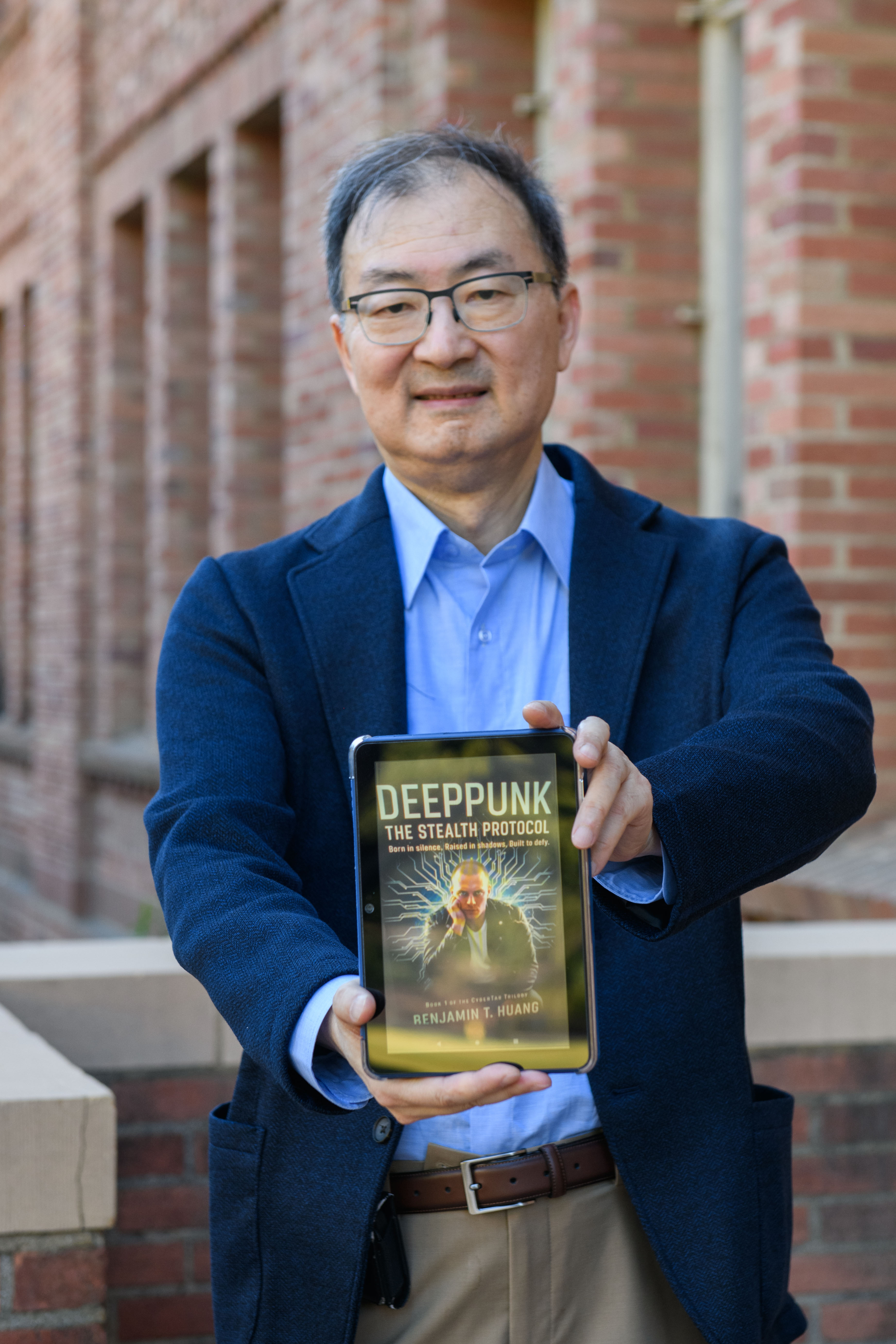
The UCLA alumnus, who graduated with a degree in cybernetics in 1983, will be self-publishing his science fiction novella “DeepPunk: The Stealth Protocol” on Oct. 15. Huang said the book centers around a retired radiologist and a doctoral student who create an artificial intelligence named DeepPunk. As the first installment of Huang’s “CyberTar” trilogy, he said “DeepPunk” will explore a darker side of AI through a heist thriller plotline while simultaneously offering an optimistic outlook on the relationship between humans and AI.
“I come (at) it with a different angle. Instead of describing that potential crisis, horror, I’m trying to come up with a solution that can avoid it,” Huang said. “That is the very underlying message of these three books.”
Huang said the inspiration for the novella arose from a question he would often ask himself of whether it would someday be possible to transfer his own memories and thoughts into a large language model that could simulate these thoughts. As a longtime fan of James Bond movies, he added that he wanted to explore his imaginary AI hypothetical through an action-packed plotline while also recording his own experiences.
[Related: Alumnus bridges historical, personal narratives on same sex marriage in ‘Deep House’]
Originally from Taiwan, Huang said he learned English as a second language and used AI as a tool for the editing process of his trilogy. With the story and characters coming from his own imagination and the writing refined by both AI and a human editor, he said the writing process reflects the unity between human and AI he hopes to convey in his work.
“It’s all fiction, just my hope that it may happen,” Huang said. “That’s all I can say. Rather than dwelling on how dangerous they could be, how they can cheat – I try not to do too much of those because we know it (AI) can.”
When creating the character of DeepPunk, Huang said he combined the naming conventions of existing AI companies such as DeepSeek with the more rebellious archetype of fictional figures, such as gentleman thief Arsène Lupin. DeepPunk eventually encounters another AI named Benny later in the series, which Huang describes as a conscience similar to his real self. As opposite forces, the two AIs at first harbor antagonistic feelings for each other, which Huang said they overcome through shared cooperation with humanity.
Matteo Pellegrini, a professor in UCLA’s Department of Molecular, Cell & Developmental Biology, said Huang is very interested in the different applications of AI as both a method of advancing fields such as radiology and as a tool for customization. He said Huang’s vision of AI in the future is one where different “avatars” can be made to resemble oneself, similar to the Benny conscience in Huang’s novella.
“All of that thinking that started 50 years ago when he was still in school. All of this was science fiction. Now, it is really reality at many levels,” Pellegrini said. “It’s an interesting trajectory that lets him revisit, through fiction, what the implications of all these things are.”
[Related: Book review: Biography of Lin-Manuel Miranda provides insight, realistic depiction to readers]
After reading an article by Geoffrey Hinton – considered the “godfather of AI” – that suggested AI may someday destroy humanity, Huang said he was motivated to create a story that subverted this dystopian viewpoint. He said he admires how AI can execute certain tasks, and he hopes to portray a future in which AI’s power of execution can be accompanied by the power of human imagination. As such, the fictional AIs in Huang’s world are capable of conscious thought – and eventually loyalty – only after the human protagonists share their own memories with them.
Huang’s colleague Dr. Joon Dokko said the fictional AI depicted in “DeepPunk” could potentially reflect future usage of AI in other fields, even outside of the heist-focused context of the novella. With AI being used in the field of medicine today, Dokko said he looks forward to reading Huang’s interpretation of the technology.
Huang said the “CyberTar” trilogy will likely be the only books he ever writes, describing it as his contribution to Generation Z as someone from the baby boomer generation. He added that he included older song recommendations within the book, imparting a sense of anachronism into romantic classics the reader can listen to while absorbing a narrative on futuristic technology. He said he hopes younger readers can find motivation for the future in his narrative.
“We’re just going to be on the sideline watching, but your generation will have to deal with AI head-on,” Huang said. “Here, I’m just offering a possible solution to have a better outcome.”




Comments are closed.