This post was updated Oct. 16 at 10:57 p.m.
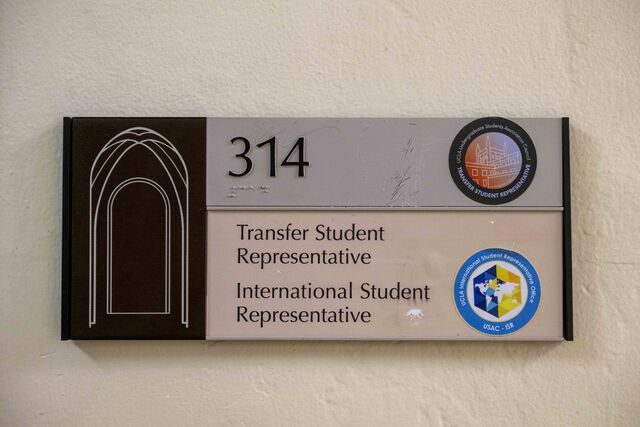
Undergraduate Students Association Council’s Transfer Student Representative staff said transfer students have been historically underrepresented within USAC, even though they make up nearly a quarter of UCLA undergraduates.
Some TSR staff said they believe USAC’s early application deadlines and lack of outreach make it difficult for transfer students to join the organization.
Currently, only two out of the 15 USAC officers are transfer students – a little over 13%. A survey conducted by the TSR office during the 2024-25 academic year found that at least 13 out of 15 USAC offices had less than 25% transfer students in leadership positions. Seven of these offices had one or no transfer students in their leadership staff, and 2025-26 TSR Hyerim Yoon was the only transfer student in three out of seven of those offices, according to the report.
Haroun Mohamed, a third-year political science student, said transferring to UCLA and getting involved in USAC took self-advocacy and work on his end. He added that he only learned about the TSR commission after meeting 2024-25 TSR Mona Tavassoli at Transfer Bruin Day but did not hear from any of the other USAC commissions.
“As an incoming transfer, I did not know anything about USAC coming into the school. Everything that I found out was through my independent research or just learning about it myself,” Mohamed said. “I feel like USAC isn’t really pushed towards transfer students at all. I had absolutely no idea what USAC even was until I actually took the time to read about it.”
Now serving as the director of transfer opportunities for the commission, Mohamed said he has found that the disconnect between USAC and transfer students has to do with access, not capability or ambition. Yoon said she believes roles within USAC and the council’s hiring process were created with traditional four-year students in mind and disproportionately exclude transfer students because of the early application timeline.
Most USAC offices begin their hiring processes immediately following their elections to the council – which occur in mid-May – and have deadlines that end at the beginning of summer, Yoon added.
Yoon said this deadline corresponds with the timeline for traditional four-year students who have to submit their Statement of Intent to Register by May 1, leaving them with time to search for organizations – including USAC – to apply to. She added that transfer students have less time to do so, with their SIRs due June 1. Waitlisted students in both groups may not find out they are attending UCLA until later in the summer.
Jennifer Ulloa De La Torre, a fourth-year political science student, said she had a lot going on when she first transferred to UCLA – from attempting to transfer credits, getting her associate’s degree, saying goodbye to friends and completing her new Bruin checklist. She added that USAC applications were easy to miss, with many transfer students not even knowing the applications existed.
Missing the application deadline for more executive roles can prevent people from being able to move up in USAC, Ulloa De La Torre said.
“If, by some means, the director positions pass you up, then they open up with staffer positions,” said Ulloa De La Torre, the chief of staff and senior director of external relations for the TSR. “But then some students … wanted to do more in their capacity, not just be staffers, so then they feel less inclined to do so and wait it out for the next oncoming year.”
Both Mohamed and Ulloa De La Torre said they have found that in addition to USAC’s early deadlines, mental barriers and impostor syndrome about leadership abilities are also hurdles for transfer students.
Mohamed said he believes on-campus organizations like USAC often think transfer students have not had enough time at UCLA to understand their structures and use that as rationale to discriminate against transfer students and limit their opportunities to join and move up the ladder.
“It’s become pretty apparent that a lot of these student orgs and campus clubs think that transfer students don’t exactly have the experience it takes to be in a board position or a higher position,” Mohamed said. “Just because they’ve only been on campus for two years, and they think that they’re not really going to know how anything operates.”
Ulloa De La Torre said entering student government at a prestigious university like UCLA was intimidating for her. She added that despite working for her community college’s student government for two years, USAC’s structures were innately different because of the scale and diversity of the different offices within the council.
The need for transfer representation, equal access and opportunities spurred the creation of the TSR office 10 years ago, Yoon said. She added that since its creation, the TSR office has sought to promote inclusivity in USAC’s hiring decisions and actions.
Yoon said she prioritizes closing accessibility gaps by ensuring transfer students have the information they need to succeed in integrating into on-campus life. She added that she has started a transfer newsletter, posts resources on her campaign website and uses the TSR platform to share opportunities that are beneficial to transfer students, such as jobs, internships and leadership positions specifically aimed at transfer students.
While Yoon said she believes she has made progress, she added that the heavy lifting of promoting transfer accessibility needs to be done by the rest of the council as well. Even though there is only one TSR, the council is elected to represent all undergraduate students – including transfer students, she added.
“I feel like leaders oftentimes get lazy or let life catch up to them and choose not to put in the effort to accommodate students from all different walks of life, and that’s just unacceptable,” Yoon said. “We should see transfer students running for USAC during the spring elections, we should see transfer students present in the day-to-day operations of various USAC offices and we should see transfer students and non-TSR USAC appointments as well.”
Looking forward, both Mohamed and Yoon said they believe the gap between transfer students and traditional students can be narrowed through increasing transfer-targeted marketing and shifting applications to be transfer-friendly by shortening time-based eligibility requirements and clearly communicating so.
“It’s really important to make sure that different perspectives are covered,” Mohamed said. “Everyone is involved on campus, regardless of whether they’re a traditional four-year student or just a transfer student.”



Comments are closed.