This post was updated Oct. 19 at 11:21 p.m.
UC faculty and alumni earned five Nobel prizes in a single year – the most by any university system in history.
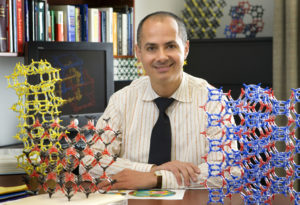
Four UC faculty members and one alumnus won Nobel prizes related to physiology or medicine, chemistry and physics in 2025. Fred Ramsdell, a UCLA alumnus, and Omar Yaghi – a former professor of chemistry and biochemistry at UCLA and a current professor at UC Berkeley – were awarded the Nobel prize in physiology or medicine and chemistry, respectively.
[Related: UCLA alumnus Fred Ramsdell awarded Nobel Prize for research on immune regulation]
The UCLA-affiliated laureates join John Clarke of UC Berkeley and John Martinis and Michel Devoret of UC Santa Barbara in receiving a Nobel Prize this cycle. All three won the Nobel Prize in physics for discovering that quantum effects – once thought to occur only in tiny particles – can also appear in electrical circuits large enough to be held, according to a Nobel Prize press release.
[Related: Former UCLA professor awarded Nobel Prize for work in reticular chemistry]
Their work has impacted the development of quantum computers – which could advance fields such as drug discovery, cybersecurity, agriculture and energy, according to a UC Office of the President press release.
[Related: Ted Lieu announces $1 million to fund UCLA Quantum Information Science Hub]
“California’s spirit of ingenuity drives world-changing progress — from quantum computing to clean energy and medical breakthroughs,” Gov. Gavin Newsom said in a statement. “These Nobel laureates reflect the excellence of our universities, the strength of our innovation ecosystem, and the boundless creativity that defines the Golden State.”
Federal research funding made the UC Nobel laureates’ discoveries possible, according to an email from UCOP announcing the awards. The National Institutes of Health, the National Science Foundation, the Department of Defense, the Department of Energy and the National Security Administration funded the laureates’ work, according to the email.
The NIH, NSF and Department of Energy suspended about 800 of UCLA’s research grants – amounting to $584 million – July 30 and July 31. The federal government alleged in letters explaining the suspensions that UCLA allowed antisemitism, illegal affirmative action practices and “men to participate in women’s sports.”
[Related: Federal funding cuts to UCLA]
UCLA’s NSF and NIH grants have since been temporarily reinstated following rulings by California federal district court judge Rita F. Lin on Aug. 12 and Sept. 22, respectively, in a case brought by UC researchers.
Michael Kratsios, the director of the White House Office of Science and Technology, congratulated Clarke, Devoret and Martinis in a post on social media platform X, calling their work “brilliant.”
“We’re glad to see the Trump administration recognizing the incredible achievements of our UC community,” said Meredith Turner, UCOP’s senior vice president of external relations and communications, in a reply to Kratsios’ post on X. “Federal investments in science and research are what make this possible.”
In a video sent to the UC community congratulating the winners on their achievements, UC President James Milliken said the laureates’ scientific discoveries have practical applications around the world related to agriculture, medicine and cybersecurity.
He added that the Trump administration’s threat to cut up to half the funding for federal scientific agencies would hinder this work, urging the community to “stand with UC and help us speak up for science.”
“This research by faculty and other life-changing work by faculty at UC and other leading universities doesn’t just happen,” Milliken said in the video. “It’s a result of a longstanding compact between our federal government and American universities to ensure that science, technology and medicine in our country lead the world.”