This post was updated Oct. 21 at 9:42 p.m.
Academics and alcohol: not just keys to the quintessential college experience, but also the sold-out specialty of Lectures on Tap.
On Monday, Oct. 20, the viral event series brought a seasonally spooky seminar to Zebulon, a bar and music venue in Atwater, Los Angeles. Originating in New York, Lectures on Tap brings professors and experts to speak at bars in cities across the United States, blending education and community for adults beyond the classroom. Lecture topics have ranged from fusion energy to misinformation in media – Monday’s lecture was “Crafting Horror: Shadows, Contrast & Cinematic Storytelling” in the spirit of Halloween. Cofounder Tyrone Freely said an important feature of the event series is providing engaging lessons without school-level stress.
“I think the value comes from the idea that learning never stops,” Freely said. “With school, there’s a lot of constraints, there’s a purpose, you have to get good grades. Now, we’re turning curiosity into fun and creating a different … relaxed environment for us to just learn in.”
At 7:30 p.m., after a half hour allotted for mingling, Monday’s class was officially in session. The night’s lecture was led by Drew McClellan, a UCLA alumnus and an adjunct professor at the USC School of Cinematic Arts. Having done two other lectures for the series before, McClellan said his lesson for the evening was pulled directly from a graduate course he teaches at USC that focused on the elements of cinematic design.
[Related: Film preview: Hollywood brings frights, familiar faces, fantastical fun to fall]
To kick off his talk, McClellan reflected on the history of filmmaking and the horror genre to contextualize more modern work. He said the first horror film was made in 1910. Cinema is still in its infancy when compared to the extensive history of other art forms, such as painting. This fuels his optimism toward the industry, he added, noting that the core aspects of visual storytelling – and specifically horror – have remained consistent for over a century.
“Everyone talks about the death of cinema, and I just don’t believe that,” McClellan said. “We were really evolving, and the things we’re gonna talk about tonight – the visual components … are tried and true elements of filmmaking that are not going anywhere.”
McClellan went on to show a clip from 1910s “Frankenstein,” a silent adaptation produced by Thomas Edison, to point out the technical elements still utilized in the genre today. Specifically, McClellan’s interest was the use of tone, which he said is the biggest “ingredient” employed by horror filmmakers. Tone – which relates to the brightness of an object – can be controlled to guide what information audiences receive onscreen, he said. Visual aids including grayscales and Renaissance paintings were used to showcase the concept and illusions of depth.
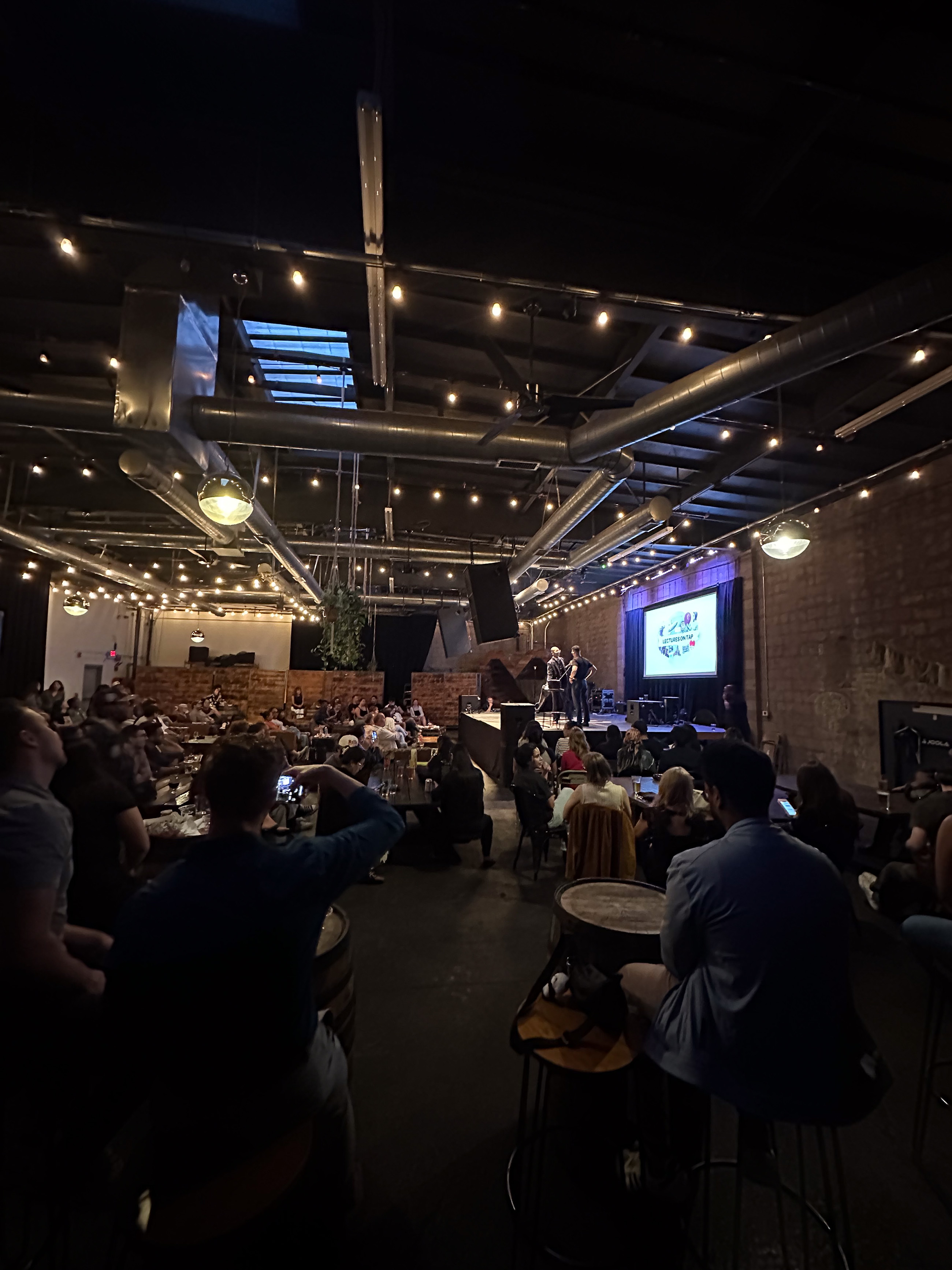
Next, McClellan explained how tonal separation – or contrast – can create visual intensity and contribute to extreme fear. When certain elements of a scene are obscured by deep darkness or overexposure, viewers are left to fill the gaps in their heads and build their own tension, he said. Combined with depth and movement, this contrast can be truly frightening, which McClellan exemplified with clips from “Get Out” and “The Witch” that made several guests jump in their seats.
“In these areas, it’s the unknown that’s frightening – what we can’t see,” McClellan said. “And our imagination’s conjuring up something that’s ultimately probably going to be more terrifying than what is actually photographed, but it can still be terrifying. … This is the horror filmmaker’s greatest tool.”
To clarify this tool’s impact in horror, McClellan displayed stills from comedies such as “Friends” to showcase the high-key lighting and bright tones they traditionally utilize to comfort audiences. He then went on to discuss how the best films use this science to their advantage – or even subvert it, as in the case of “Midsommar.”
After about 50 minutes, the lecture’s grand finale was the opening sequence of the apocalypse film “28 Weeks Later,” which McClellan described as one of the best introductory scenes – not only in horror, but across all genres. He instructed guests to identify the ways its changing tone related to fear – a fulfilling analysis to conduct using the skillsets built throughout the professor’s lesson. A brief Q&A followed, and then McClellan left the stage to a wave of applause.
[Related: UCLA alumnus releases science fiction novella on relationship between humans, AI]
While the crowd dispersed, many audience members lingered to drink and chat, with several staying to continue conversations with McClellan individually. Reflecting on McClellan’s three collaborations with Lectures on Tap and the success of Monday evening, cofounder Felecia Freely said the professor truly embodies the series’ concept as someone who is both intellectual and down-to-earth.
“He obviously knows his stuff. He’s worked with some of the greatest in the industry,” Felecia Freely said. “And then when you get him in a bar … he’s here – for example – today, doing a horror lecture wearing a Jason (Voorhees) shirt. It’s a perfect blend of these two worlds.”
As Ty and Felecia Freely continue to bring more Lectures on Tap events across the city, Ty said they are always seeking out new speakers and would love to feature more professors from UCLA in particular. Over a year after the series’ debut, Felecia Freely said she is thrilled that adults can continuously leave these events having learned more about topics they are interested in for a fun purpose.
“After every lecture, one of the most common things that people say is … they still appreciate having access to experts and listening to a lecture, and it’s just so much better when there’s no pressure to get a grade at the end of it,” Felecia Freely said. “You can listen and learn for its own sake. … Exploring your curiosity is the point.”

Comments are closed.