

This post was updated Oct. 26 at 9:12 p.m.
Warning: Spoilers ahead.
Like the song from which it derives its title, “Blue Moon” is a short but memorable tale.
The new film from Oscar-nominated director Richard Linklater released Oct. 17, two weeks before his other 2025 feature “Nouvelle Vague” arrives in theaters on Halloween. The 100-minute film avoids predictable biopic fare by largely focusing on just one night – March 31, 1943 – in the life of lyricist Lorenz Hart (Ethan Hawke), the former musical partner of award-winning composer Richard Rodgers (Andrew Scott). Soulfully merging comedy and drama with earnest performances and a twinkling screenplay, “Blue Moon” captures Hart’s songwriting genius even as he struggles to reckon with the smash success of Rodgers’ new production, the instant Broadway hit “Oklahoma!”
The entire success of “Blue Moon” hinges upon Hawke’s irreplaceable performance, which is immediately on par with the heart and sincerity the actor previously brought to roles such as his Oscar-nominated performance in 2014’s “Boyhood.” Hawke elevates the brilliant writing from Robert Kaplow in every scene, chattering in fast-paced and breathy bursts of speech that exude the feverish romanticism and uncertain social skills controlling Hart’s actions. Hawke’s ease with switching from chuckle-worthy comedy to all-consuming disappointment – often mid-sentence – binds the audience to Hart, and the expressiveness of his face honestly displays every splinter of heartbreak the musician experiences as he battles with alcoholism and depression.
[Related: Film review: Despite flaws, ‘After the Hunt’ provokes thought on power, moral ambiguity]
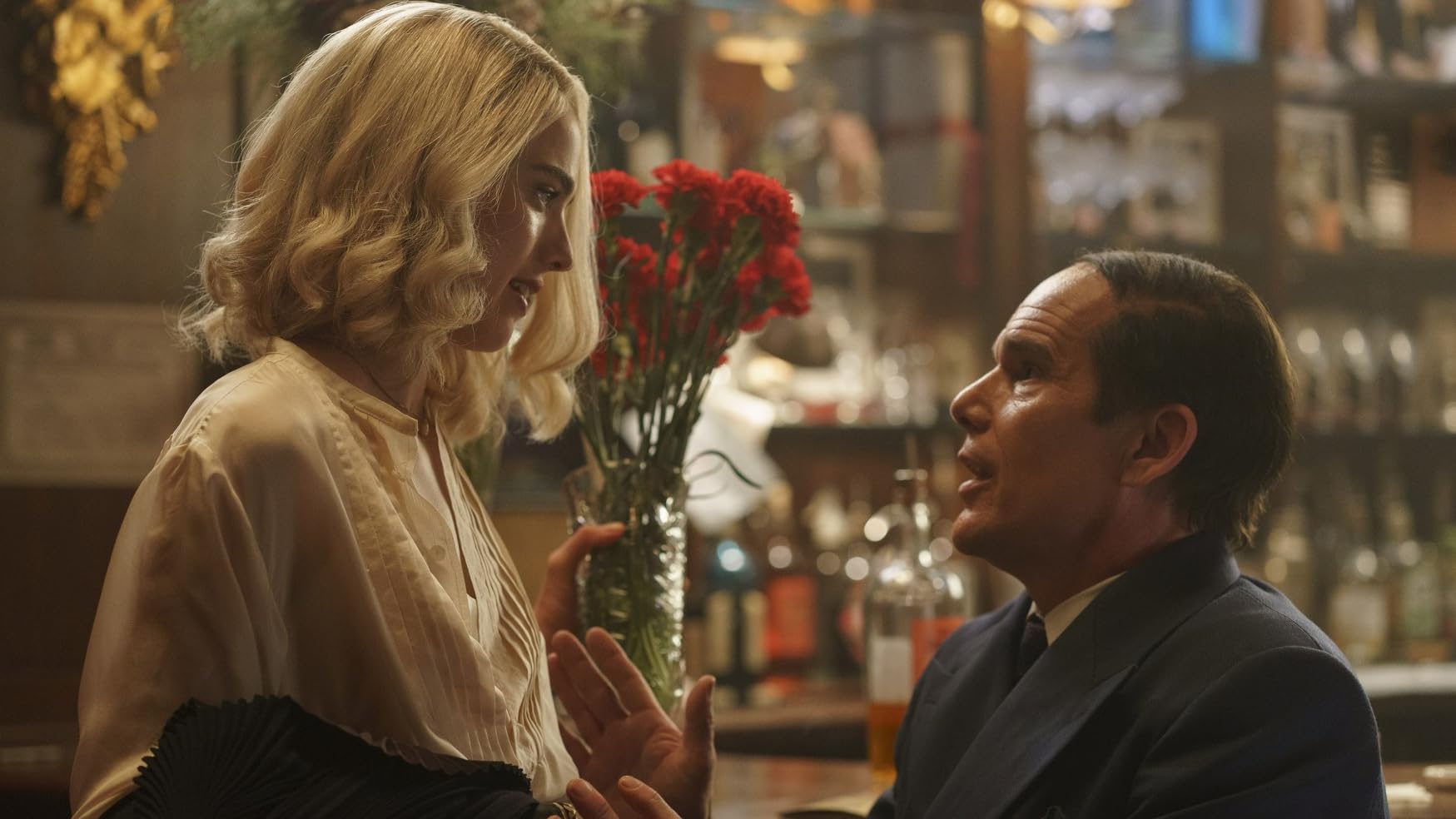
Hart spends a great deal of the film talking to everyone around him about his infatuation with Elizabeth Weiland (Margaret Qualley), his protégée and an arts student at Yale. Despite their age gap – Hart is 47 and Weiland is 20 – or the fact that their relationship doesn’t turn sexual, Hart is hopelessly in love with Weiland and has selected a book, a painting and flowers that she might like enough to reciprocate his feelings. Qualley’s portrayal of Weiland as playfully intellectual and purposefully bohemian is sufficiently alluring to make Hart’s obsession with her believable, even if audiences can tell early on that Weiland does not return Hart’s affections.
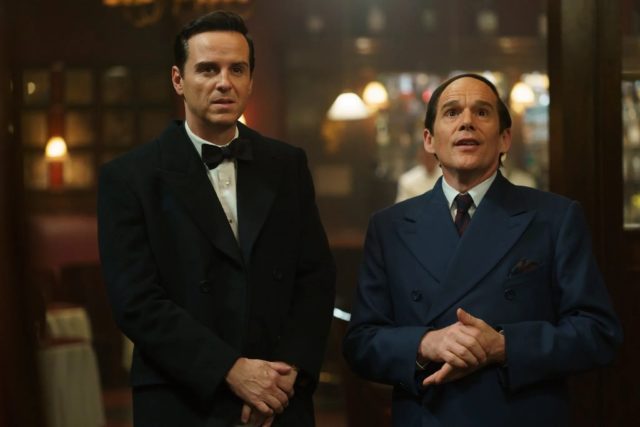
Scott is also in terrific acting form as Rodgers celebrates the acclaim of his first project created with his new partner, Oscar Hammerstein II (Simon Delaney). While the interactions between Rodgers and Hart begin on a polite and cordial note, the tension between the two men is multiplied by Rodgers’ strained impatience as Hart presents outlandish ideas for music they could create together. Scott imbues the performance with just the right amount of surface-level niceties and concealed cynicism, crucially revealing that the demise of the duo’s two-decadelong professional collaboration was both an artistic separation and a response to Hart’s drinking problem. Even as the pair hesitantly agree to work together for a revival of “A Connecticut Yankee,” the success imbalance between the two is stark as Weiland decides to attend Rodgers’ afterparty instead of Hart’s.
In the midst of such stellar acting, “Blue Moon” glides by with an endearing and unhurried lilt. If there is a critique for this thoughtfully rendered but unambitious film, it would be that “Blue Moon” could have very easily been a successful play rather than a motion picture. Barring its first two scenes, the entire story takes place inside Sardi’s, a classy New York restaurant where Hart flits from the bar to the piano to the staircase and back again. As delightful as the humorous yet insightful interactions are between Hart and bartender Eddie (Bobby Cannavale), each time Hart reaches for another drink, there is a repetitiveness to Hart’s movements that can make the film’s already languid pace seem snooze-worthy at times.
[Related: Film review: Pick your battles, including this one – ‘One Battle After Another’ is a lively romp]
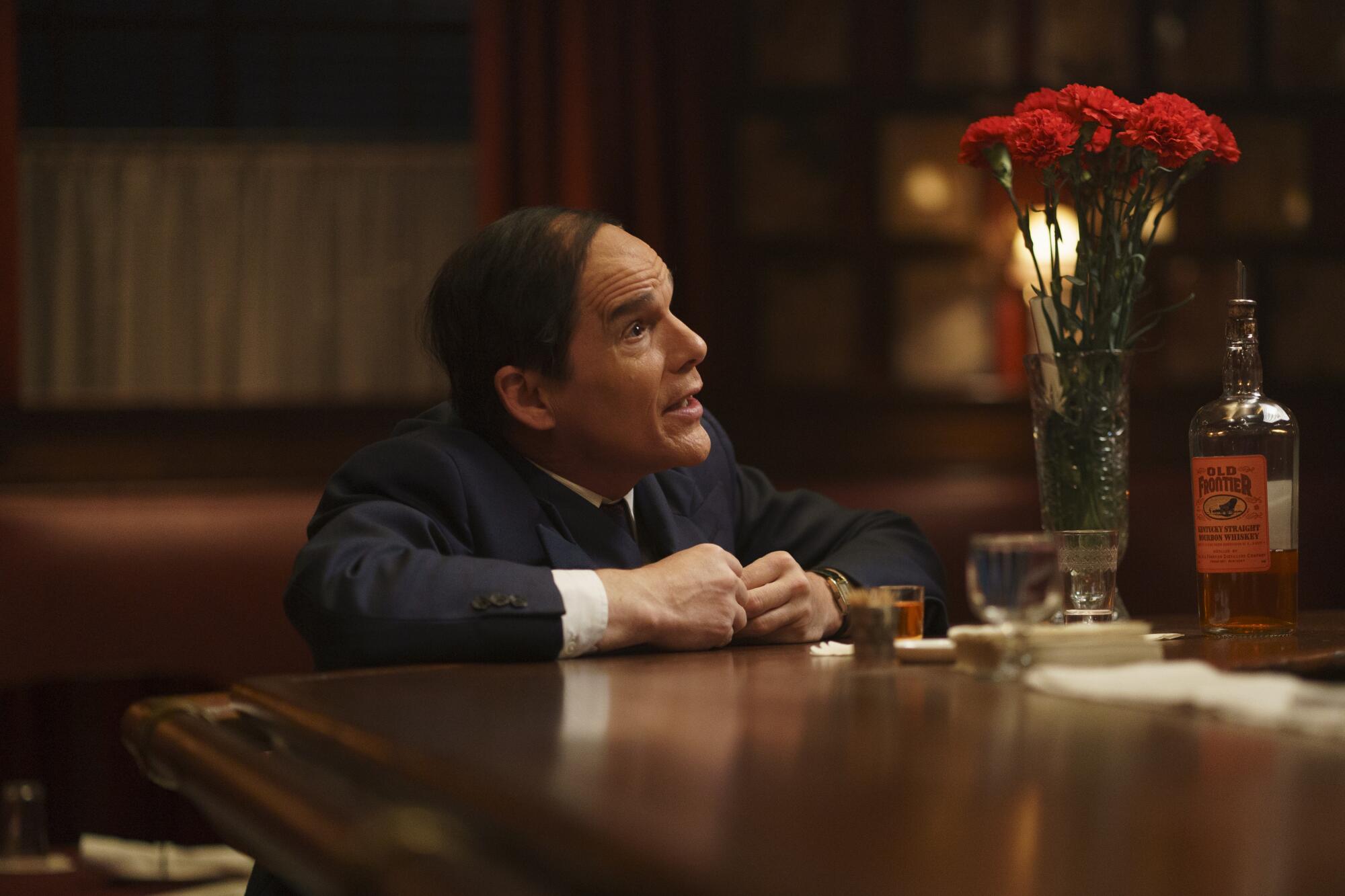
That said, the true gift of “Blue Moon” is Kaplow’s writing, which narrows in on simple phrases that carry much greater emotional weight than they ought to – such as the line, “Nobody ever loved me that much,” which Hart contemplates from “Casablanca.” The film’s climax centers on the effect of three words when Hart confesses his feelings to Weiland and she acknowledges that she loves him, but “Not that way.” Hart’s devastation is profound as Weiland emphasizes her care for him as a friend while admitting that she would drive 30 hours to spend one more night with Cooper, the Yale fraternity student who has not contacted her in four months.
Any great biopic ideally communicates a key takeaway from the protagonist’s life, and “Blue Moon” does so by displaying the cruel irony that a man who dedicated his life to writing about love was incapable of receiving it himself. The film’s empathetic angle celebrates the enduring legacy of Hart as a songwriter – with tunes such as “The Lady Is a Tramp” and “My Funny Valentine,” which remain evergreen today – while giving Hawke the space to deliver a standout performance that validates Hart’s amorous desires and gloomy unhappiness. Certainly not a tearjerker and far more intriguing than a traditional sappy biopic, “Blue Moon” achieves a balance of feeling and intentionality that an artist with Hart’s talent would be proud of.
Charming and quaint, “Blue Moon” is a film ready to be loved.





Comments are closed.