This post was updated Oct. 28 at 9:07 p.m.
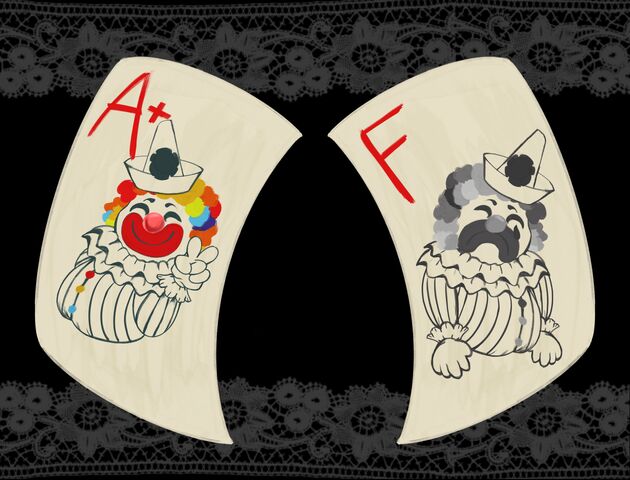
Can you plagiarize yourself?
Yes: Makenna Kramer, Assistant Opinion editor
Your professor releases the essay prompt, and hooray – the assigned topic is nearly identical to a paper you wrote last quarter.
Clearly, you should reuse your old essay. Could it even be considered plagiarism if you’re copying yourself?
Yes, it can.
The UCLA Plagiarism and Student Copyright policy lists among its prohibited activities, “representing … the student’s own previous work as if it were the student’s original or new work.” This is a clear condemnation of self-plagiarism.
But it’s not just UCLA’s honor code that makes self-plagiarism immoral. The act of reusing your old work for a new assignment raises serious ethical concerns.
For one, it ignores the true purpose of college writing assignments. When most professors assign a paper, they aren’t expecting a groundbreaking, never-before-seen perspective. Rather, they are asking students to engage critically with the material and cohesively summarize their thoughts.
When you reuse previous work, you are cheating yourself out of an opportunity to grow as a writer and researcher. Students should ask themselves why they chose to take a class if they simply want to recycle work from a previous one.
It’s not just yourself you’re fooling when you self-plagiarize, though. Presenting old work as new may not trick the previous author, but it certainly tricks your reader.
A common argument in favor of self-plagiarism is that people in the “real world” do it all the time. Singers rerelease songs with minor changes, and artists create paintings heavily inspired by previous ones. But this analogy does not hold when it comes to the discipline in question: academia.
The majority of reputable scholarly journals will not republish work, even if it’s an updated version. The Journal of Biological Chemistry, one of the world’s most cited scientific journals, has a zero-tolerance policy for “duplicate and redundant publication.”
If industry leaders don’t accept self-plagiarized work, professors shouldn’t either.
Sure, reusing your own writing may not be the dictionary definition of plagiarism or carry with it the same legal issues. However, it is still a misrepresentation of the work and a violation of academic and moral standards.
After all, if your last essay was so good, why can’t you do it again?
No: Sierra Benayon-Abraham, Opinion editor and Sara Green, Assistant Opinion editor
When an artist performs their own song time and time again on a tour, everyone sings along. No one comes after them for copyright infringement. They created the lyrics, the melody and the rhythm. This is the case because no one assumes they are making the song up on the spot. They are not deceiving anyone by playing their own music.
Why, then, should the same logic not apply to the notion of self-plagiarism?
When an individual puts in the time, effort and creativity to draft a work of writing, they should maintain the right to use such work when and where they would like to. As long as they are transparent about doing so, people reserve the right to use their own work as they wish.
According to the University of Oxford, plagiarism is defined as “presenting work or ideas from another source as your own, with or without consent of the original author, by incorporating it into your work without full acknowledgement.” Nowhere in this definition, however, is the action of using one’s own work addressed.
Academics have only recently brought self-plagiarism to the forefront of discussions surrounding plagiarism. Yet, it is still commonly deemed a form of academic dishonesty. Several colleges, universities and professors explicitly prohibit self-plagiarism in their academic codes of conduct or syllabuses. Students who properly cite themselves in assignments or papers are thus left to face the consequences.
Some argue individual assignments demand their own research and work, and that student use of previous work displays laziness or a lack of effort. We argue it demonstrates the opposite: a strong background and familiarity with the subject matter and a willingness to dive headfirst into class material.
When professors teach concepts from books they wrote or assign their own research papers as readings, students understand this to be a demonstration of knowledge and mastery. No one assumes the professor is trying to deceive students or commit plagiarism.
Thus, if songwriters can reuse their songs and professors can reference their own textbooks, then students should be allowed and encouraged to cite themselves, too.
It is time we reframe the narrative surrounding self-plagiarism.
Rather than viewing such a concept as academic dishonesty, self-plagiarism should be seen as a form of academic excellence.


Comments are closed.