This post was updated Nov. 6 at 7:29 p.m.
The University of California’s motto is “Let There Be Light.” But that motto seems to be limited to the University’s seal.
UCLA’s revisions to university positions and budget allocations have left vulnerable campus communities in the dark, threatening the continuity of access and retention programs.
All university positions have been under review since March because of the university’s need to prioritize “critical positions” in a “difficult budget environment.”
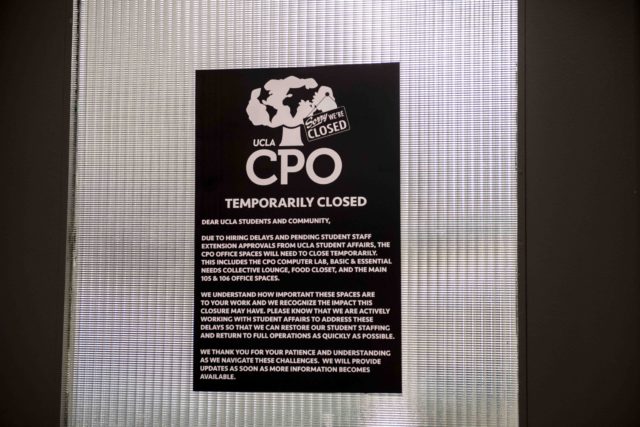
The UCLA Community Programs Office offers basic needs and support resources, such as food and printing services. The office closed temporarily in the first week of the quarter due to delays in hiring and contract extensions, which CPO employees have alleged to be caused by UCLA Student Affairs.
There is no doubt that UCLA is facing a challenging situation and must adapt. The university is facing unprecedented federal pressure and has had challenges securing state and research funding. However, the university administration must also consider that its actions affect the lives of thousands of students and employees.
UCLA must be as transparent as possible about the changes it is making and provide the necessary resources to ensure the community is not left behind.
Protecting access and retention programs amid attacks on diversity, equity and inclusion should be the priority.
Leandro Stoffels, a doctoral student in gender studies, said he regularly used the food closet at the CPO, especially when money was tight. He said during the closure, he thought about students who would spend the whole day on campus and that they might have been counting on the CPO to eat.
Resources like the CPO can decrease stress in students’ lives, allowing them to focus on their academic work, Stoffels said.
A spokesperson for Student Affairs said in an emailed statement that UCLA is collaborating with the Undergraduate Students Association Council to “establish new student-majority committees” and that the Division of Campus Life will “implement a professional staffing model tailored to the needs of selected programs.”
The university is committed to the continuity of vital outreach and retention programs, the spokesperson said in the statement.
But lack of information and support during changes in structure and program funding creates uncertainty for students’ futures.
Kyla Daez, the retention coordinator for Samahang Pilipino, said the Samahang Pilipino Education and Retention lost much of its funding. SPEAR, a retention program affiliated with the Student Retention Center at CPO, offers peer counseling, mentorship and an internship program for Filipino students at UCLA.
Daez, a second-year chemical engineering student, said SPEAR can no longer offer paid positions and could lose some of its student staff due to budget cuts.
“Now we’re kind of scrambling to find this funding,” Daez said.
Five access and retention programs have lost their project coordinators after UCLA did not renew their contracts, leaving project members without a full-time supervisor.
A former project coordinator for one of the access programs – who was granted anonymity due to a fear of retaliation – said the office cubicles in the CPO were closed, and the door codes changed without notice, restricting student staff’s access to the program’s materials.
They also said their project had been mostly inactive since the summer due to layoffs and a lack of funding to pay student workers.
Access and retention programs are essential to creating a diverse university community. Not only do they provide resources to marginalized high school students, but they also ensure that university students from disadvantaged backgrounds can graduate.
UCLA must provide stability and support for these programs so they can continue providing essential services to the campus community.
The university’s actions affect more than just the programs themselves. They also affect the staff’s ability to plan for their futures.
The former project coordinator said UCLA had been renewing contracts monthly rather than committing to the usual yearlong contracts since March. The university had failed to inform project coordinators of their renewal until a week before the contract expiration date, the former program coordinator added.
“It was stressful not knowing if I was going to keep my job,” they said.
Some might argue UCLA needs to take drastic measures in response to federal budget cuts and directives opposing diversity, equity and inclusion initiatives.
However, restructuring access and retention programs without offering support leaves students struggling to access basic resources needed for academic success, compromising UCLA’s diverse environment.
“If you want to have a more diverse university – a more welcoming university – then these resources are definitely important,” Stoffels said.



Comments are closed.