This post was updated Nov. 6 at 11:31 p.m.
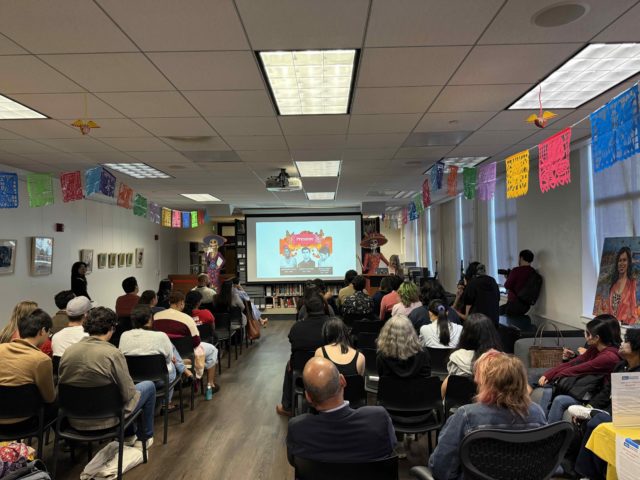
Students and faculty gathered Oct. 28 for a Día de los Muertos event honoring Chicano activists and people impacted by immigration raids who have died.
The Chicano Studies Research Center, the Latina Futures 2050 Lab and the UCLA Latinx Success Center collaborated to host the gathering, which was held at the Chicano Studies Research Center Library in Haines Hall. The event featured a variety of speakers who delivered speeches on the importance of remembering those who have been killed or who died unjustly.
Día de los Muertos is a holiday celebrated in Mexico and other Latin American countries, where participants commemorate the spirits of departed loved ones and welcome the return of their spirits with altars and other offerings, according to the National Museum of the American Latino.
“Día de los Muertos allows us to reclaim history that is often erased,” said Veronica Terriquez, the director of CSRC. “It is really important at this particular historical moment to recognize the past struggles, to learn to remember that people have fought for us to be here in the first place and that we must continue fighting for our communities.”
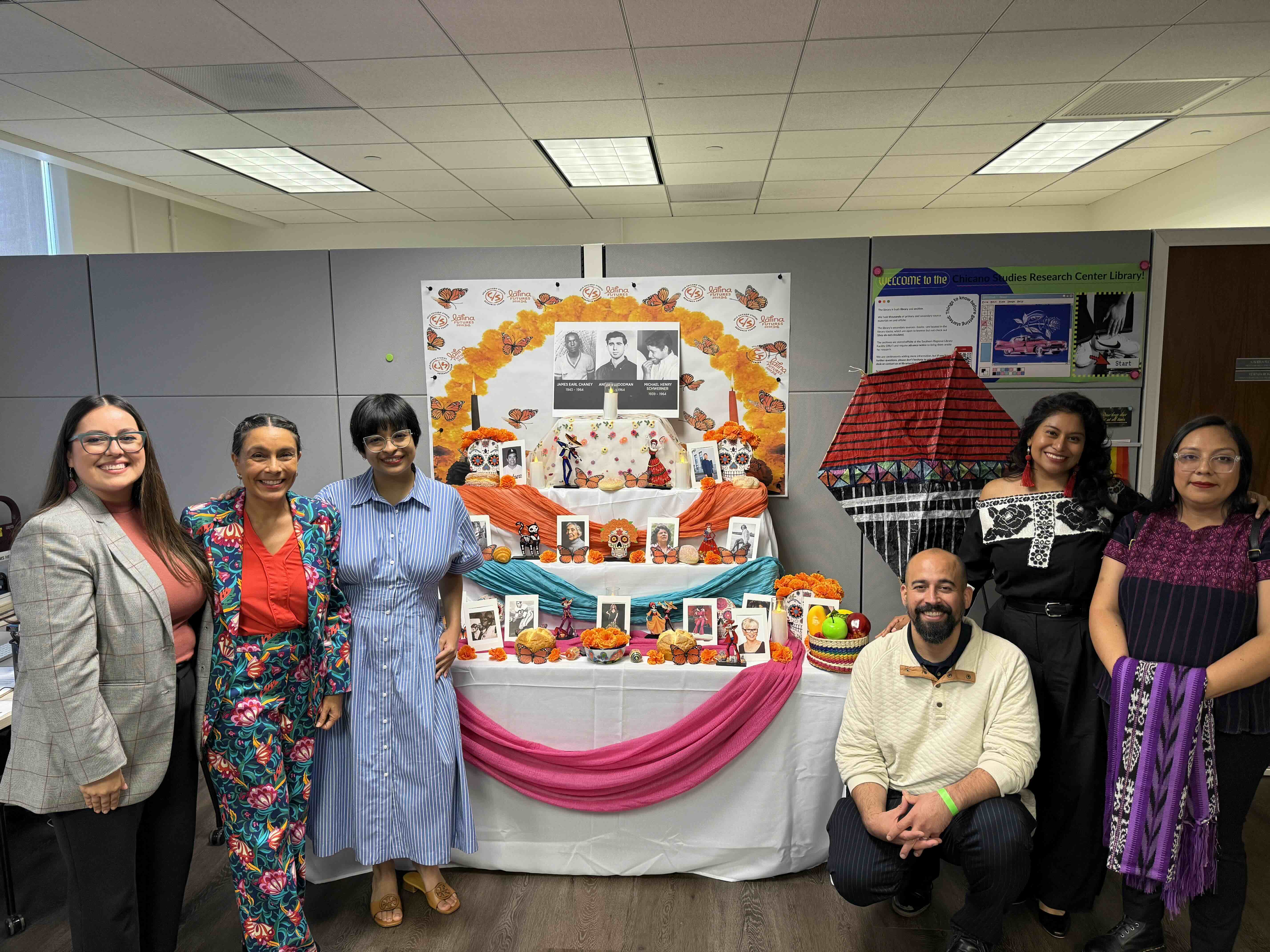
Janillynn Lopez, a third-year sociology student, said she helped create a barrilete – an honorary kite flown in Guatemala on Día de los Muertos – for the event. Floridalma Boj Lopez, an assistant professor in the Chicana/o and Central American Studies department, said in a speech that the kite is dedicated to former Los Angeles resident Estela Ramos, who was deported to Guatemala by United States Immigration and Customs Enforcement this year.
The Trump administration ordered ICE and U.S. Border Patrol, an agency under U.S. Customs and Border Protection, to carry out mass immigration enforcement raids across LA since June, arresting over 5,000 people over the summer, according to the Department of Homeland Security.
Ramos died in Guatemala two months after her deportation, according to MSNBC News.
The barriletes symbolize the enduring relationship between the living and those who have died, Floridalma said.
Working on the project allowed Janillyn to feel connected to her culture, she said.
Gaby Dominguez, the operations manager for CSRC, said this year’s event was limited to about 60 attendees because it had less funding than last year’s, which had about 400 audience members. The department made the decision to scale back to be modest with the event’s budget, she added.
Dominguez said the center has made the decision to cut back funding, which could make it more difficult for it to host as many people in future events. However, she added that the CSRC will continue to create welcoming spaces for students and staff.
“Regardless of the funding, I think our center is going to continue to strive to make spaces available for our students, for our staff or for our faculty that make everyone feel welcome, that bring folks from all around campus come together,” Dominguez said.
Isidro González Granados, a postdoctoral fellow in the history department who spoke at the event, alleged in his speech that anti-Mexican hate fueled the disproportionate targeting of Mexican people through California’s sterilization law – a eugenicist statute designed to control the reproductive capacity of those deemed “mentally defective” from 1909 to 1979, according to a study by the American Journal of Public Health.
About 20,000 people were sterilized in California homes and hospitals based on the law, according to the study.
Granados added that, around the 1940s, Andrea Garcia – a ward of the Los Angeles County Juvenile Court – was most likely sterilized. Garcia’s mother, Sarah Rosas Garcia, took legal action against the State of California, he added – making her the only person to challenge the constitutionality of the eugenics law, according to the Organization of American Historians.
Granados said it is important to remember stories like Garcia’s on Día de los Muertos, adding that her story fits into the larger narrative history of Latinx people being mistreated in the U.S. throughout the 20th century.
“I would like to frame this remembrance within a broader pattern of the inclusion-exclusion, push-pull, waxing-and-waning attitudes of the United States towards Latinx peoples in history throughout the 20th century,” he said.
Michelle Vasquez Ruiz, a postdoctoral fellow in the Chicana/o and Central American Studies department, said she believes it is especially important to build community during difficult periods of history.
“Right now, as we’re living a really intense and kind of hostile moment in history, it’s really important that we build those communities and that we build those and sustain those connections amongst each other,” she said.


Comments are closed.