This post was updated Nov. 6 at 10:34 p.m.
“Rodrigo” marries elements of past and present pop culture into a spectacle of virtuosity and ambition.
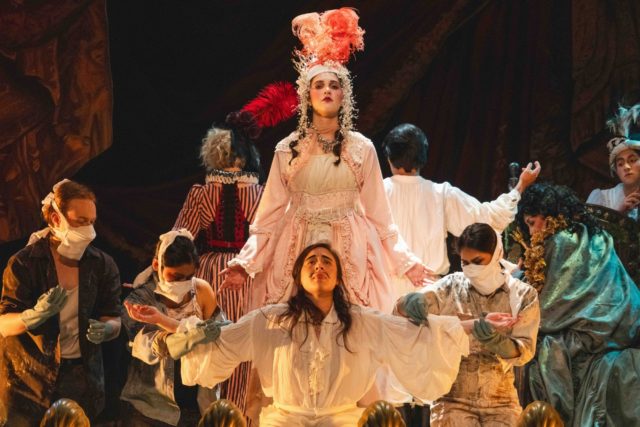
On the surface, the 1707 opera “Rodrigo” – written by a 22-year-old George Frideric Handel – appears as a production anchored to the times it was written for. Originally in Italian, the full-length composition unveils the downfall of Rodrigo, the tyrannical Visigothic king of Spain. Opera UCLA Director and professor of music James Darrah said the themes and emotions of “Rodrigo” transcend time and contemporary theater conventions, dispelling the commonly held notion of opera being inaccessible to modern audiences.
“We’re not a conservatory, we’re a provocation. Because opera was designed to be provocative,” Darrah said. “A lot of people think Baroque music is pristine or emotionless, that it’s about execution of technicality – and actually, Handel was writing pretty messy … pretty intense stories, and ‘Rodrigo’ is one of the first.”
Darrah, who became the director of opera at the UCLA Herb Alpert School of Music in 2024, said they chose “Rodrigo” as the department’s first production because they were confident their pupils would be able to sing the complex pieces that characterized Handel’s early work. Performed May 16-18 at the Little Theater, Darrah said the opera is seldom performed because of the notorious difficulty for contemporary singers to achieve the castrato pitch of the 18th-century primo uomo – the principal male singer in an opera. Darrah emphasized that they disdained introducing something “safe” as their inaugural production as head of UCLA’s opera program and encouraged students to embrace the messy virtuosity of opera wholeheartedly.
Leela Subramaniam, a doctoral student in musical arts who performed the title role of “Rodrigo,” said the opera is unlike any production she’s ever been in, with Darrah’s “Rodrigo” being daring, evocative and modern. Subramaniam said she is excited to channel the lost tradition of castrato in her gender-bent casting as Rodrigo, adding that the role is neither fully masculine nor feminine, but awe-inspiring in its celebration of sound and music.
“Singing Handel is a totally different operatic tradition because it’s early Baroque,” Subramaniam said. “You – as the singer – are the composer in that moment, and that’s different from most opera tradition because you don’t really get the opportunity to compose in the same way.”
[Related: Movie-concert ‘Right in the Eye’ harmonizes music, Georges Méliès’ films]
Although Darrah’s vision for “Rodrigo” was loyal to the key elements of the traditional story, the director said they were not entirely wed to Handel’s vision for the production. Darrah explained they cut details they found unsavory, altered story beats and integrated elements of metadrama into “Rodrigo.”
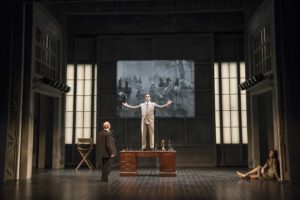
Jit Yang Tung, a graduate student in the UCLA School of Theater, Film and Television and the assistant director of “Rodrigo,” said the production is staged on a wooden platform – invoking traditional Baroque opera – within the larger stage, with the wiring and lights on view to the audience. By revealing the backstage, he said his intent was to bring the period drama into the modern day. In service of this goal, Darrah added that they referenced modern pop culture figures such as Charli xcx and Caroline Polachek in their students’ repertoire as a means of accessing the essence of opera.
“I want us to bring people from other media. I want fashion designers. I want drag queens … I want people on the pulse of the zeitgeist,” Darrah said. “That’s who should be making opera because that’s how it was designed. And we need to be the leading program in the country doing that.”

Tung said the modernity of the production amplifies its timeless themes. Although the story is Eurocentric – set in Visigothic Spain – Tung added that the explosive interaction between power and virtue translates well to a modern audience. With the runaway success of shows such as “Game of Thrones,” Tung said the modern audience has a taste for politics within fiction and fantasy – a taste that “Rodrigo” will satisfy.
[Related: “The Little King of Norwalk” spotlights Chicano story of community, self-discovery]
Jimena Soto Mejía, a graduate student in fine arts and the costume designer for “Rodrigo,” said the attire was an extension of the story. She said in the first act, the costume pieces reflect the characters embodying the Baroque ideal – distinguished and imperial while also being delicate, veiling the characters’ flaws and troubles in ornamental gilding. However, as the story unfolds and the characters become corrupted by power and violence, Soto Mejía said their costumes were curdled.
Darrah said the production “Rodrigo” signifies the shift in leadership within the UCLA Herb Alpert School of Music, with new dean Michael Beckerman assuming his role in October 2025. Darrah said the transitory period exemplifies the dynamic action they encourage their students to embrace.
“Opera was designed to be the art form that combines everything,” Darrah said. “That’s the beauty of it, is that you devote an immense amount of energy and time on stage that is tangible, and then after the last performance, it is gone … The ephemerality is to be embraced.”

Comments are closed.