This post was updated Nov. 7 at 8:48 p.m.
Winning games often start with winning the trench battle.
The team that dominates the offensive and defensive front typically controls possession – and, therefore, establishes the game’s pace.
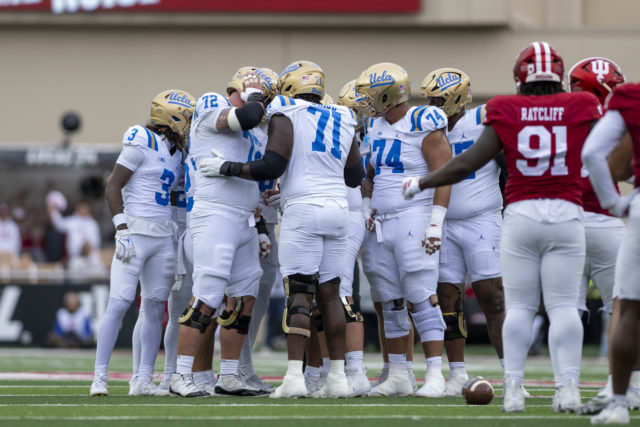
UCLA football (3-5, 3-2 Big Ten) will face Nebraska (6-3, 3-3) at the Rose Bowl on Saturday. The Bruins suffered a 50-point defeat in their Oct. 25 outing, where they wilted on both the offensive and defensive lines – rushing for less than 90 yards to the Hoosiers’ 262 and holding possession for less than 25 minutes.
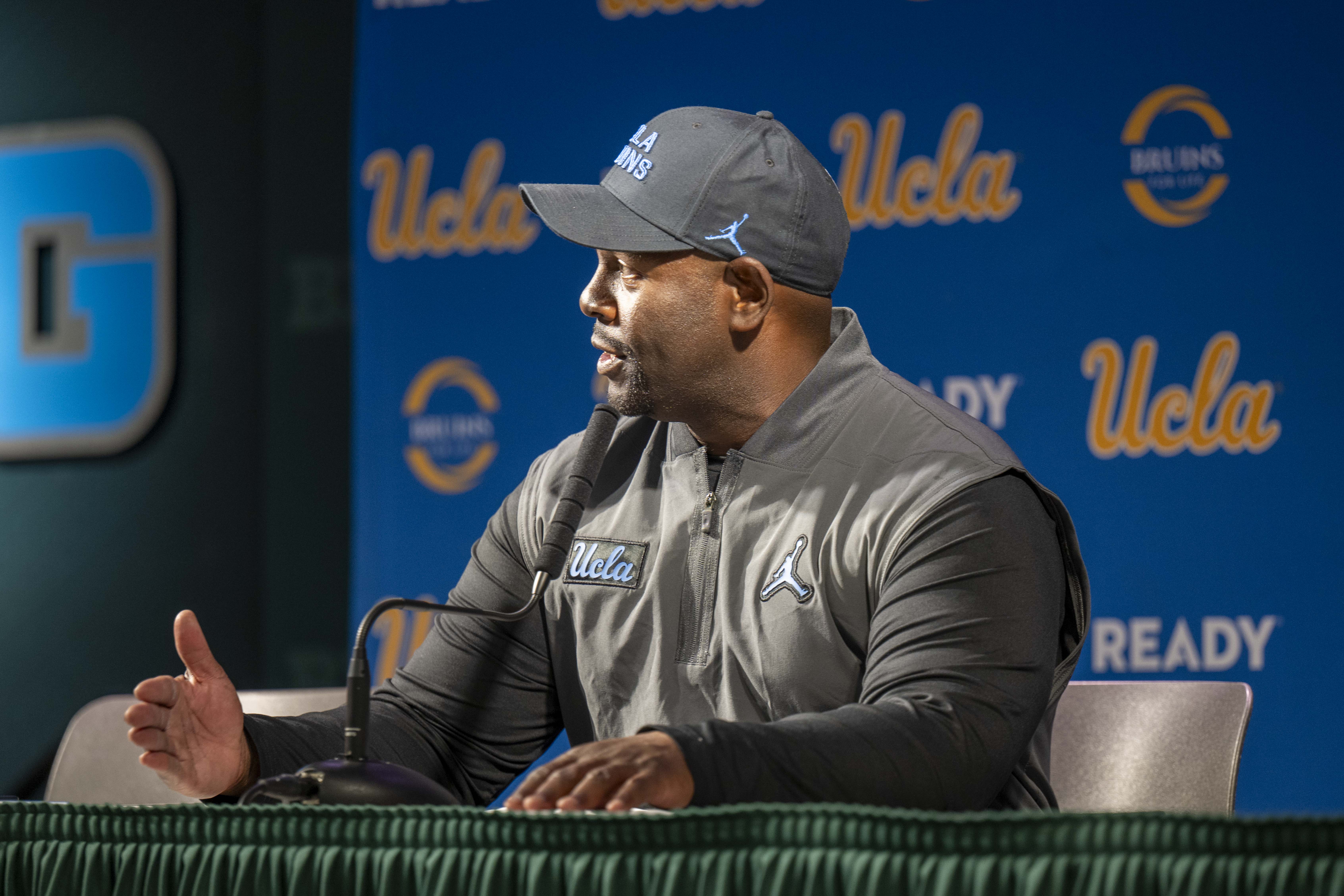
“You’re going to learn from this game,” said interim head coach Tim Skipper following UCLA’s 56-6 loss against Indiana. “We’re not going to just throw this away tomorrow. When you watch film, it’s just as important as practice and is as important as playing in the game, so we’ll evaluate everything as coaches and as players, and then we’re going to get back ready to go for the next one.”
Nebraska boasts a potent offensive front that excels at run blocking.
The unit has helped running back Emmett Johnson eclipse 1,000 rushing yards across just nine games.
And the Bruins’ front seven struggled to limit the Hoosiers’ ground personnel since the group struggled to execute the fundamentals, with missed tackles plaguing the squad.
“When we got the contact, we stopped our feet,” Skipper said. “You have to keep your feet moving as you wrap up and knock people backwards. It’s fundamental stuff. We have a bye week to attack it, and then we get to the game week, then we get another opportunity in two weeks.”
Redshirt freshman linebacker Jalen Woods added that senior defensive analyst Kevin Coyle – along with the other defensive coaches – has implemented more tackle drills at practice to bolster the crew’s tackling fundamentals.
The cracks in UCLA’s defense have been apparent throughout the season, not just in its most recent outing.
UCLA has surrendered the most rushing yards in the Big Ten and the 10th most in the nation, with opposing teams rushing for almost 200 yards per game.
And defensive line coach Jethro Franklin’s unit has recorded just six sacks this season – the fewest of any collegiate football program.
Redshirt junior defensive lineman Anthony Jones is the only Bruin with more than one sack through eight games. The former Spartan boasts just 1.5 quarterback takedowns this season.
Edge pressure often overwhelms quarterbacks in the pocket and forces signal-callers to rush passing decisions that create opportunities for a secondary to create turnovers.
The pressure’s backfield impact is amplified when an inexperienced quarterback is under center.
Freshman quarterback TJ Lateef will take the reins and replace injured signal-caller Dylan Raiola, who suffered a season-ending broken fibula in Nebraska’s 21-17 loss to USC.
The former three-star recruit is making his first collegiate start in Pasadena.
But Skipper said Lateef boasts the dual-threat abilities and athleticism to impact the game despite his inexperience.
Still, the defensive front represents just half of the trench-battle equation – a physical offensive line is also necessary.
Before the Bruins’ defeat in Bloomington, Indiana, their offensive line helped the squad record at least 100 ground yards in six-straight contests, and the ground arsenal rushed for a season-high 269 yards in the team’s 42-37 upset against the Nittany Lions on Oct. 4.
And rush defense may be the Cornhuskers’ glaring weakness.
Nebraska surrendered 161.6 ground yards per contest – the third-highest mark in the Big Ten.
Against conference teams that rank in the latter half of the conference in total rushing defense – which includes Northwestern, Penn State, Michigan State and Maryland – UCLA’s ground attack has eclipsed 200 rushing yards twice and nearly surpassed the 200-rushing-yard mark against Maryland on Oct. 18, when the unit rushed for 193 yards.
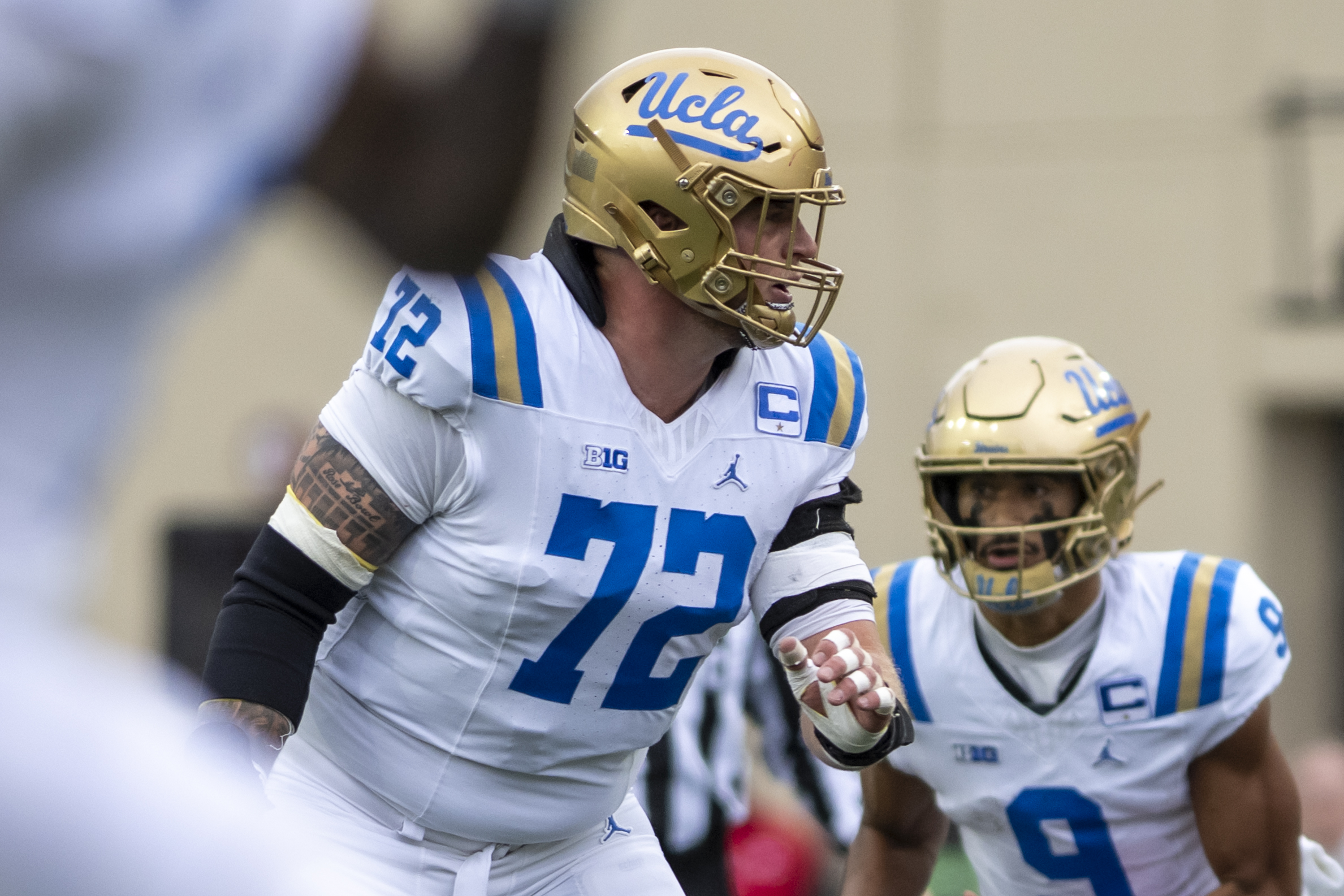
The UCLA offensive line is seemingly embracing Skipper’s emphasis on earning front victories to spur efficient tailback production.
“Coach Skipper talked about it being a trench game (against Nebraska), and that’s what we’re looking for,” redshirt senior offensive lineman Garrett DiGiorgio said. “It’s going to be a battle between our O-line and their D-line, and our D-line versus their O-line. We have a good competition week, and I’m looking forward to getting to go against guys at that caliber too.”
The Bruins sported 139 rushing yards and limited the Cornhuskers’ tailback crew to 3.0 yards per carry, which helped spearhead their 27-20 victory in Lincoln, Nebraska, last November.
And the war in the trenches – often a microcosm of the larger bout at hand – may dictate the contest’s outcome this year.



Comments are closed.