This post was updated Nov. 11 at 11:09 p.m.
The California Supreme Court stood by a lower court’s ruling that the UC cannot bar undocumented students from holding on-campus jobs Oct. 29.
A lawsuit alleged that the UC’s rule preventing undocumented students from working on-campus jobs violates the California Fair Employment and Housing Act – which says it is illegal for employers to discriminate against employees or applicants on the basis of their immigration status – according to court documents.
UCLA alumnus Jeffry Umaña Muñoz and former UC lecturer Iliana G. Perez – represented by lawyers from the UCLA School of Law’s Center for Immigration Law and Policy, among other attorneys – filed the suit in October 2024.
[Related: Petitioners continue seeking employment expansion for undocumented students]
A California Court of Appeals ruled in early August that the UC must reconsider the policy, which the UC Board of Regents appealed later that month. The Supreme Court refused to hear the appeal, thus leaving the appellate court’s ruling in place.
[Related: Court rules UC barring undocumented students from campus jobs is discriminatory]
The court ordered the UC to revise its policy or its legal argument in support of it, said Ahilan Arulanantham, the faculty co-director of the CILP and one of the lawyers in the case.
Rachel Zaentz, a spokesperson for the UC Office of the President, said in an emailed statement that the University is assessing its options following the court’s Oct. 29 decision. Zaentz added in the statement that the appellate court’s ruling could create legal risks for the UC and other employers in California.
“The discriminatory policy cannot be justified by the University’s proffered reason,” the appellate court said in the decision. “The University abused its discretion when it relied on improper criteria in deciding to continue using its policy.”
The UC has argued that its policy does not discriminate on the basis of immigration status but is rather meant to comply with federal law under the Immigration Reform and Control Act of 1986, which makes it illegal for employers to hire undocumented people. The UC argued it wants to keep the policy in place to prevent possible retaliation from the federal government under IRCA, according to the appellate court decision.
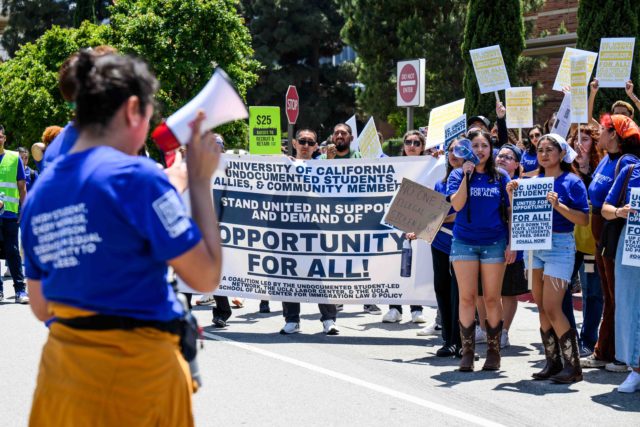
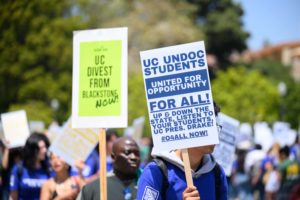
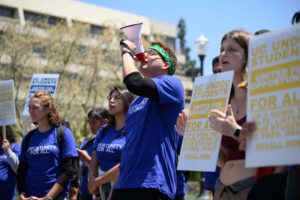
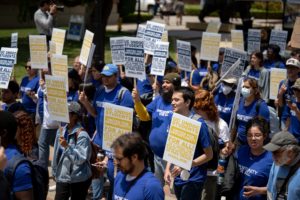
The Opportunity for All campaign has presented a legal framework that a federal statute barring employers from hiring undocumented people does not apply to states – and has explored several avenues for allowing undocumented UC students to hold on-campus jobs.
The campaign fought for state legislators to pass a bill that would allow undocumented students to hold on-campus jobs, which passed in both the California State Assembly and the California State Senate. However, Gov. Gavin Newsom vetoed the bill in September 2024, saying a federal judge should assess the bill’s legality before it is signed into law.
[Related: Newsom vetoes bill that would allow undocumented students to hold campus jobs]
In 2023, the UC considered revising its current policy that does not allow undocumented students to hold on-campus jobs in response to the Opportunity for All campaign’s advocacy. However, after missing its November 2023 decision deadline, the UC Board of Regents opted to maintain the status quo at its January 2024 meeting.
Then-UC President Michael Drake said at the regents’ January 2024 meeting that the policy was created to comply with federal law – and therefore to avoid jeopardizing the University’s federal grants. However, the Opportunity for All campaign, the CILP and UCLA Labor Center have suggested this federal prohibition does not apply to state entities, such as the UC.
[Related: UC rejects plan to hire undocumented students, halts consideration for a year]
The federal government suspended $584 million in federal research grants to UCLA in July, but a federal district judge ruled that the bulk of the grants must be restored in August and September. The Trump administration’s suspension of grants came in response to UCLA allegedly allowing antisemitism, illegal affirmative action practices and “men to participate in women’s sports” and was unrelated to the UC’s policies for undocumented students.
Arulanantham said the UC has 30 days to respond to the ruling, during which he and the plaintiffs hope the University decides to revise its current policy. They added that revising the policy would allow the university to hire the best research assistants possible.
Students who are undocumented currently cannot work as paid teaching assistants under the current policy or receive work-study financial aid.
“The University should run status-blind,” said Arulanantham, a professor of law. “We’ve shown that that is legally possible and, in our view, actually legally required.”
Arulanantham said he anticipates the University will address the matter at the next UC Board of Regents meeting – which will take place from Nov. 18 to 20 at the Meyer and Renee Luskin Conference Center. Some students are preparing to call on the regents to amend the policy both prior to and at the meeting, he said.
Perez said in the press release that the opportunities provided by on-campus jobs can be “life-changing” for undocumented students. She added that it would be beneficial for California if undocumented students have access to these positions, as they would be able to make contributions to the state’s economy and workforce.
“When these students are allowed to work, the entire state benefits from their skills, innovation and tax contributions, strengthening our communities and future prosperity,” she said in the press release.


Comments are closed.