This post was updated Nov. 12 at 12:05 a.m.
I was six years old when I went to Wrigley Field to watch the Chicago Cubs in 2012.
Growing up in the city, I’d hear about the mystique of the now-111-year-old “Friendly Confines” – the ivy covering the brick outfield wall, the manual scoreboard in center field and the rooftop bleachers on nearby Lake View buildings.
But as a kid in the Chicago April cold watching a 100-loss Cubs team, I didn’t get it.
Wrigley Field wasn’t charming or special – it was just old. At worst, it was a dump gilded in someone else’s nostalgia.
That’s how I feel about the Rose Bowl.
The City of Pasadena and the Rose Bowl Operating Company filed a lawsuit against UCLA on Oct. 29, alleging that the university is trying to break its lease – which would keep the Bruins in the Rose Bowl through 2044 – in order to move to SoFi Stadium.
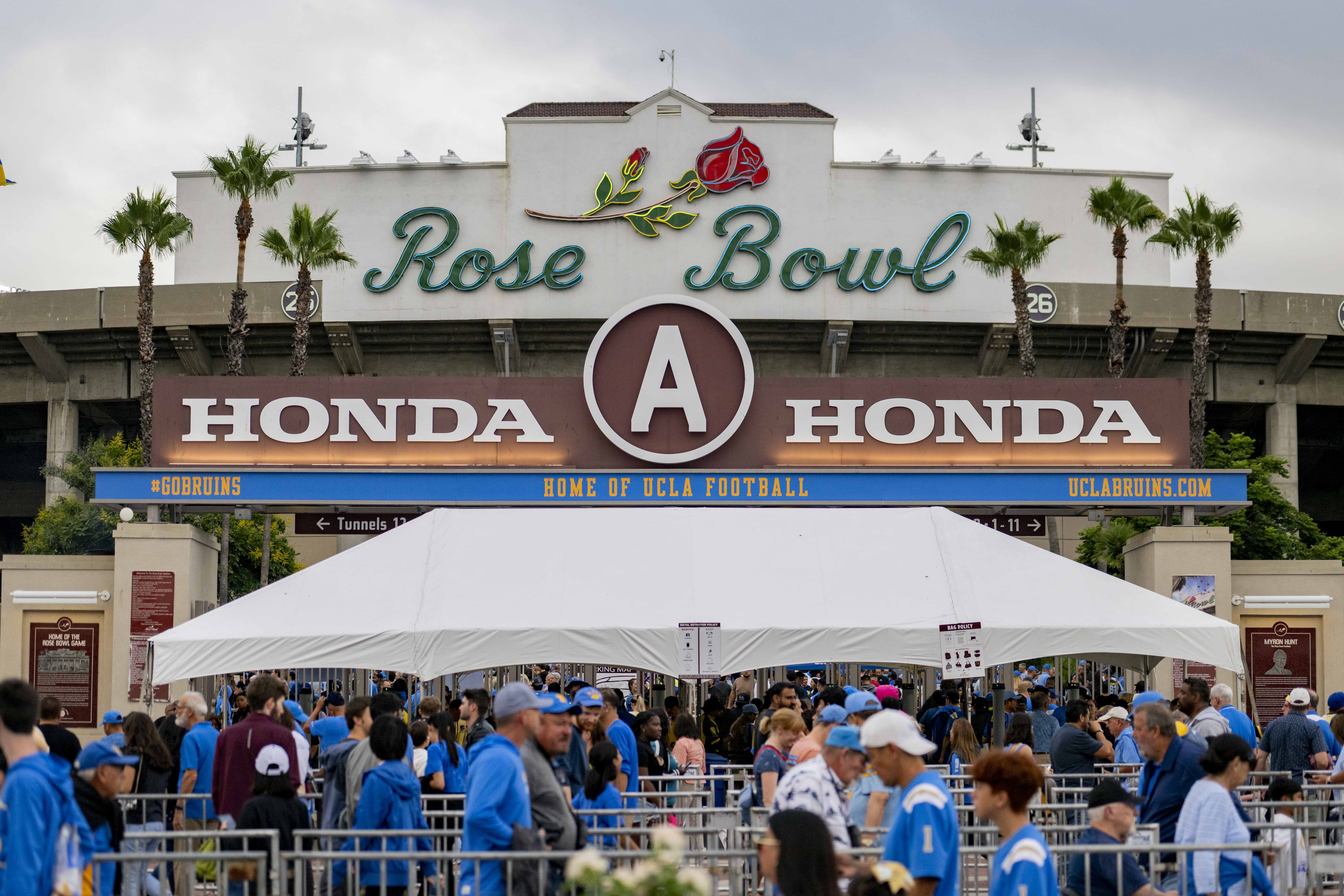
UCLA’s move to the Inglewood arena was in the midst of being finalized Sunday, according to Bruin Report Online.
I completely agree the Rose Bowl is important to the sport. It should continue to host the Rose Bowl game – which will remain one of the biggest stages in college football and a fixture in the College Football Playoff. I’d even argue it should host the national title game every year.
But it’s a good idea for UCLA football to find a new home.
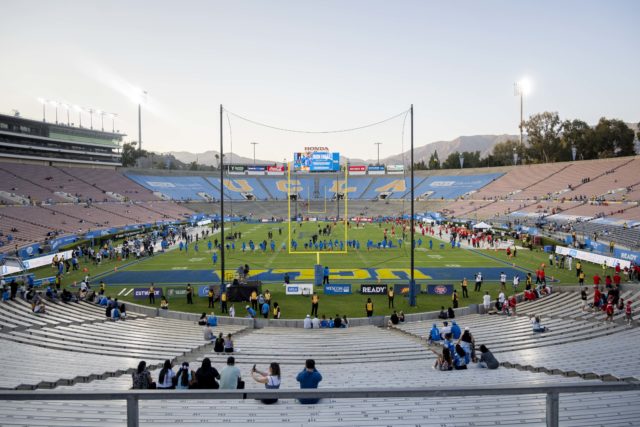
The Rose Bowl is about a 26-mile drive from campus. These days, the Bruins can never come close to filling the stadium – instead opting to cover multiple sections with tarps. The arena feels incredibly outdated, and UCLA hasn’t been in the venue’s main event since 1998.
It’s hard to make an arena built for the Tournament of Roses a true home to a single college team.
Longtime fans will reminisce over the Terry Donahue era – and I don’t deny that it was special – but that doesn’t carry much weight to people who weren’t born until 10-plus years after the coach’s final Bruin season.
UCLA Athletics is already well over its quota in nostalgia farming with men’s basketball. You can’t keep football stuck in the past, too.
Here’s the reality.
UCLA averaged an attendance of 66,552 from 2010 to 2014. That number dipped over the next five seasons to 56,884 per game. Since 2021, it’s dropped farther, to 43,984 spectators per contest.
Through five games in 2025, the Bruins are averaging an attendance of 37,099 in an arena that seats over 91,000.
It’s true that the Rose Bowl’s current renovation plans would reduce its capacity to just over 70,000, but still, UCLA has only had an average home attendance of that mark or greater four times in its 44 years at the venue.
It hasn’t averaged more than 60,000 in a single season since 2016 and has failed to attract more than 50,000 since 2018. 2025 could very well beat 2022’s record low average of 41,593.
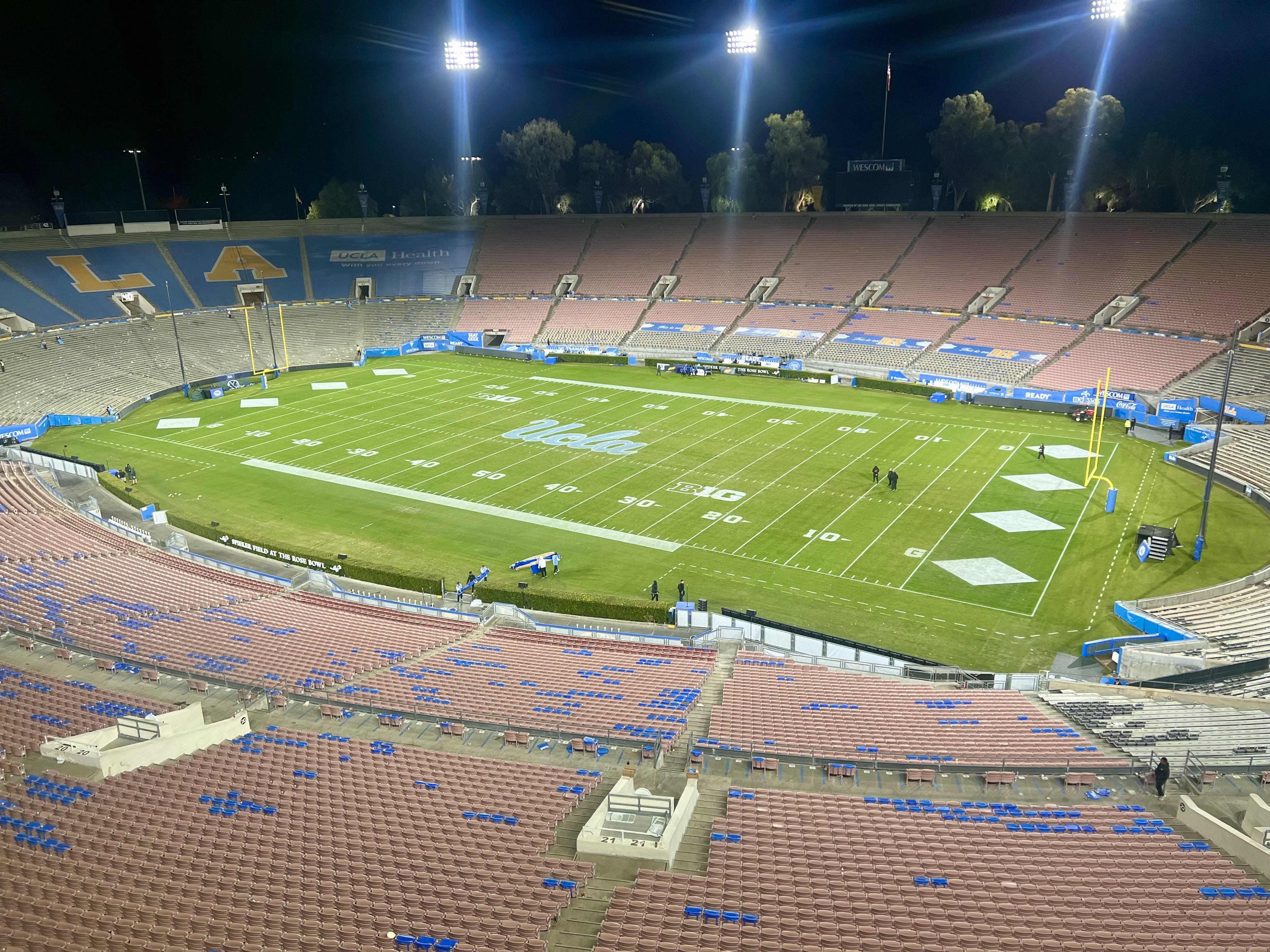
The truth is UCLA fans aren’t going to the Rose Bowl.
Wrigley Field did get better, of course. From 2014 to 2019, ownership’s Project 1060 added two giant jumbotrons to the stadium, renovated the outfield bleachers, finally put in a batting cage that the players could access from the dugout and built an entertainment plaza and sportsbook adjacent to the ballpark.
In 2025, the Cubs had the sixth-best attendance in MLB.
The Rose Bowl has renovations scheduled, too, but only valued at $75 to $85 million. Project 1060 cost $550 million – though, admittedly, it did also include structural renovations to MLB’s second-oldest venue.
The Rose Bowl does have plans to improve its video boards and seating – with the stadium currently featuring two of the smallest screens I’ve seen for a stadium its size and seats that all look sun-bleached – according to the Rose Bowl Lasting Legacy website.
That’s not to say more money or a more ambitious makeover is the answer. Chicago’s other century-plus-old sports stadium, Soldier Field, got an infamous $632 million makeover ahead of the 2003 season that cost the site its National Historic Landmark designation – only for the Chicago Bears to announce their move to Arlington Heights, Illinois, anyway.
Rather, it’s to point out that it’s unlikely anything about the Rose Bowl will change enough to convince new fans and students to make the 20-plus mile trek for six-or-so Saturdays every year.
Sure, Pasadena and the San Gabriel Mountains are gorgeous – it gives you something to focus on when UCLA’s on-field product is too ugly to look at. And yes, it’ll be hard to replicate the Rose Bowl’s tailgating potential, but it’s a strange argument when every positive of a venue is everything but the stadium itself.
Remember, fewer and fewer people are going to Bruin football games.
UCLA has history at the Rose Bowl, but that doesn’t mean the Bruins can’t make new history somewhere else.
I would love an on-campus stadium, but it’s just not a viable solution. Drake Stadium’s capacity sits at 11,700 with bleachers only on the east side of the venue. Building a 30,000- to 40,000-capacity football arena would, at the very least, require bleeding into the campus’s already limited intramural fields.
UCLA only has 24,000 parking spaces – which already go to faculty, staff, students, patients, family and other visitors of campus and Ronald Reagan UCLA Medical Center. Look at a map of the university and Westwood – even if you find space for a football stadium, where are you going to put parking structures that will serve an additional 30,000-plus people?
On top of it all, how are you going to get homeowners in Westwood, Brentwood, Bel Air and Beverly Hills to put up with the idea of six-plus Saturdays of college football sound and traffic every year before they stop a potential arena’s development in its tracks?
Then there’s SoFi Stadium.
Sure, it’s already used by the NFL’s Los Angeles Rams and Chargers, but it isn’t USC’s home field and it isn’t the host of the Rose Bowl Game – it’s the host of the LA Bowl, which the Bruins won in 2023, 38 years more recent than their last Rose Bowl win.
SoFi Stadium is everything the Rose Bowl isn’t.
It’s the newest venue in the NFL with modern amenities and an indoor facility many will find attractive.
It’s about half the distance closer to campus.
It’ll provide the clean slate UCLA’s football program desperately needs – a reset, a new beginning, a way to leave the current ineptitude in the past as it tries to finally get its footing in its new conference.
I’m not saying I never want to see the Bruins in the Rose Bowl again.
I do.
But only in a game played on New Year’s Day.


Comments are closed.