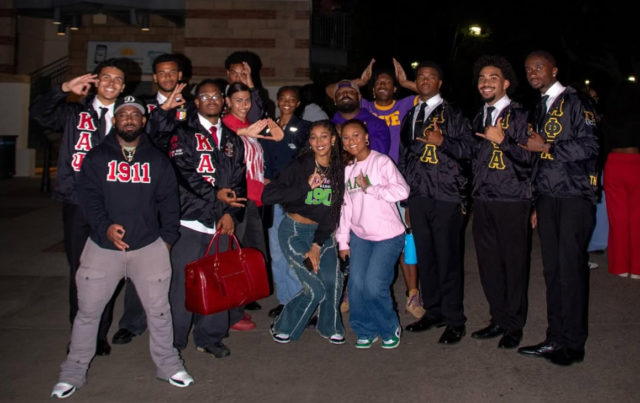
The Afrikan Student Union is reviving Black Wednesday, a decades old tradition that aims to cultivate community and visibility for Black Bruins.
Maleeyah Frazier, the ASU’s chairperson, said the tradition – where Black students gather at the Bruin Bear every Wednesday – emerged in the 1990s. The event was historically held weekly during lunch time, she said, adding that students would plan their schedules around the 12 p.m. to 2 p.m. period so they could attend.
Next year will be the Afrikan Student Union’s 60th year, Frazier, a third-year public affairs and education and social transformation student, said. She added that she hopes resurrecting the event reunites the Black community and honors the organization’s history.
“We have to push back against certain systems if we want to continue to see Black students thrive on this campus,” Frazier said.

During Black Bruin Welcome Week, which occurred at the beginning of October, ASU hosted the first Black Wednesday since the COVID-19 pandemic, Mitchell Stevens, a member of Alpha Phi Alpha Fraternity – a Black fraternity associated with the ASU – said. The event took place from 6 to 8 p.m. at Bruin Plaza and featured various performances, such as dancing and singing from Black student groups – including the Divine 9 at UCLA, the East African Student Association and the Elegant Bruinettes.
The ASU hopes to make Black Wednesday a regular event, Stevens added.
Daija Patterson, the UCLA chapter president of Sigma Gamma Rho – a Black sorority – said the tradition became more popular after the chapter hosted its new member presentation on a Wednesday. The sorority’s charter – or its founding class – built Black Wednesday into a vibrant tradition, she added.
Patterson said Vanessa Rickmon, a member of the charter, also pushed for students from predominantly Black high schools to tour UCLA on Wednesdays so they could witness Black students spending time at Bruin Plaza. With the help of funding from the National Panhellenic Council and the Cultural Affairs Commission, activities at Black Wednesday were expanded in the 1990s to include cookouts, performances and fundraisers, Patterson added.

Black Wednesday programs varied from fun events and bake sales to sit-ins, protests and serious conversations – such as one about Proposition 209, which banned affirmative action in California, Frazier said. However, she added that Black Wednesday was, at its core, about “having fun with each other”.
“It created a sense of belonging during a time when Black representation was even smaller than what it is now,” Mathias Wodaj, the ASU’s co-athletic coordinator, said.
Wodaj, a co-host for Black Wednesday, said his goal was to cultivate excitement leading up the event and bring Black students together outside the classroom.
Another one of the tradition’s objectives is to spark potential collaborations between different Black student organizations, Wodaj added.
“It makes every UCLA Black Bruin feel like they have a home in a sense, like no one feels isolated or alone,” Wodaj said. “Black Bruins take up a small percentage at UCLA – it’s a PWI (predominately white institution), and it’s very easy for a lot of students to feel isolated or alone.”
Alpha Phi Alpha, like many of the other Black fraternities and sororities at the event, performed a step and stroll – a form of rhythmic dance popular among Black Greek letter organizations – and shared information about their organization, Stevens said.
Frazier said Black UCLA alumni also expressed excitement about the event’s return – including by leaving comments on the ASU’s social media posts and requesting that the event be livestreamed.
“They’re (the alumni) definitely watching us and just watching my leadership styles and the things that I’m doing to revive our community,” she said. “It felt really good to just have the affirmation that me and my staff are, we’re actually doing a great job.”
Frazier said she hopes that Black Wednesday highlights Black joy on campus. Stevens added that it was especially meaningful to see younger students and transfer students showing up and connecting with one another at Black Wednesday, creating new relationships between Black Bruins.
“We build that community amongst each other, and building that rapport to where, when we enter into different spaces – like the Black Bruin Resource Center or walking around campus – we can continue to recognize each other and be visible on campus,” Stevens said.


Comments are closed.