
This post was updated Nov. 20 at 8:12 p.m.
Devising a convenient class schedule at UCLA is not easy.
Students race against time to satisfy general education and major requirements. The good seats fill up fast. Those with later registration times are left to scavenge for whatever they can find, forcing them to get creative.
Amid this chaos, one small factor is easy to forget.
Students need time to eat.
This quarter, I booked classes from 8 a.m. to 3:15 p.m. on Tuesdays, with no time in between to use a meal swipe. I told myself I’d be fine – I needed those classes anyway.
When I miss breakfast – which is more often than not – my hunger turns into nausea. My lecture notes read like gibberish by 11 a.m.
If students are to succeed academically, we need food. Skipping breakfast to get to class on time is less a sign of dedication and more a sign of bad planning.
But at the same time, it’s not so black and white.
Sometimes, it feels like the university incentivizes Bruins to go to class hungry.
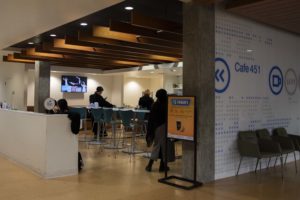
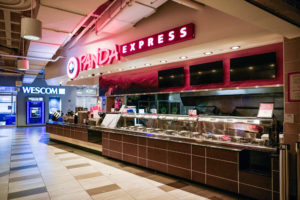
Meal swipes are redeemable during most daytime hours at dining halls and quick-service eateries all over the Hill. They can even cover a $10 purchase at ASUCLA-operated restaurants between 11 a.m. and 4 p.m. on weekdays. When these locations are open, students with meal plans have what feels like unlimited, quality options within walking distance.
But between 10 a.m. and 11 a.m., Hill residents can’t use their prepaid swipes anywhere on campus.
Say a student’s first class is at 11 a.m. They can use a swipe before 10 a.m. and subsequently find a way to kill time. They can choose convenience, spending extra money at an on-campus restaurant or café during that awkward hour. Or worst of all, they may choose to not eat at all.
We are, of course, legal adults with the capacity to get out of bed 30 minutes earlier than we otherwise would. But in practice, things don’t always work out as planned.
It can be easy to make a routine of skipping breakfast if it makes more sense for our schedules.
First-year cognitive science student Almas Alghamdi said she used to eat before school, but she now finds it difficult to balance breakfast with morning classes.
“Sometimes I can’t focus because I’m hungry,” Alghamdi said. “I want to eat beforehand, but there’s no time.”
According to a scientific statement from the American Heart Association, roughly 20% to 30% of Americans skip their morning meals. This figure has swelled in recent years. Importantly, the AHA points out a connection between this habit and diminished diet quality in adults, including a potential increase in sugar consumption.
A two-meal-a-day diet, supplemented by intermittent snacking, might feel normal to many of us, especially if we miss our chance to eat in the mornings.
But we shouldn’t forget the value of getting energy in before we spend the day using it.
Lindsay Harrison, a first-year physiological science student and athlete on the UCLA women’s rowing team, said she finds that eating breakfast is essential to recovery and cognitive function.
“If I didn’t (eat breakfast), I would be probably drowsy,” Harrison said. “I would be tired. My body would physically not be functioning as well and my brain also just wouldn’t be functioning as well.”
While most of us don’t have an early-morning practice to work up an appetite, all UCLA students should value their brain health.
Past data from various American public schools has shown a strong link between school-supplied breakfast programs and boosted test scores and attendance.
It would be beneficial to student health, then, to tweak dining hours at one or two locations so Bruins can redeem their swipes throughout the whole morning.
“In past years, adjusting the schedule was considered,” UCLA Dining said in an emailed statement. “However, data shows that maintaining a consistent schedule across all restaurants during peak demand helps manage seating capacity and reduces crowding during busy dining times.”
Crowding, as any Hill resident can attest to, is a common issue at dining halls and on-campus eateries that certainly needs mitigation. However, encouraging students to skip a meal is not an effective solution.
Important, too, is that the schedule is far from consistent: Two dining halls, Bruin Plate and De Neve, open for breakfast on weekdays at 7 a.m. But while De Neve stops serving at 10 a.m., B Plate closes at 9 a.m.
If UCLA Dining pushed back De Neve’s hours to 8 a.m. to 11 a.m. – and delayed its lunch service until noon – Bruins would get a fair shot at breakfast while also maintaining abundant lunch options.
Sure, leaving meal periods as they are is easier for the university. The extra money it pockets from unused swipes can’t hurt, either.
Meal plan data from the 2023-24 school year highlights the discrepancy between how many swipes students pay for and how many they actually use. While the price per meal for the popular 14 Premier plan was technically $12.72, those with the plan paid an average of $13.73 when only counting the swipes they ended up redeeming.
Using all the swipes we’ve paid for could certainly be easier if UCLA expanded or adjusted dining hours. In the meantime, Bruins can get more bang for their buck and look after their wellbeing by adding a ‘breakfast’ slot to their enrollment plans.



Comments are closed.