
This post was updated Nov. 16 at 9:45 p.m.
“Table 17” is serving a theater experience worthy of a Michelin star.
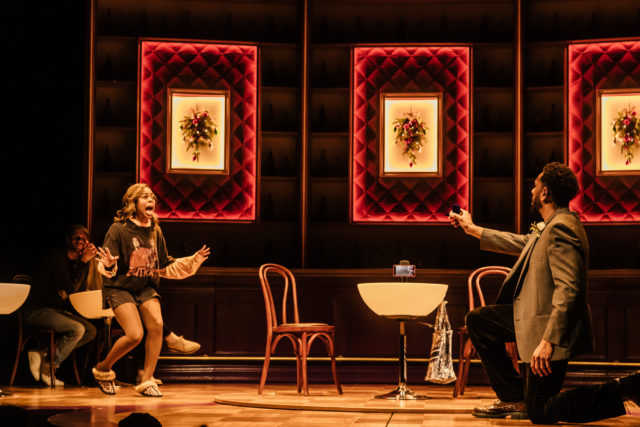
Earlier this month, the romantic comedy made its West Coast premiere at the Geffen Playhouse Gil Cates Theater, where it will remain Los Angeles’ hottest reservation until its final show Dec. 7. Directed by Zhailon Levingston, the play finds ex-fiancés Jada (Gail Bean) and Dallas (Biko Eisen-Martin) meeting for their first discussion in two years – a dinner that sizzles with lingering heat and heartbreak. Emmy-nominated playwright Douglas Lyons excels at telling a story that never loses momentum, yet manages to make four years of love feel fully lived in a succinct 85 minutes. Most impressively, “Table 17” is carried by merely three actors, whose collective starpower is so magnetic it draws 512 people into impossible intimacy, syncing heartbeats with unending humor and passion.
Much of the show’s long-term success can be attributed to its well-executed opening. Through Jada and Dallas’ first moments on stage, Lyons is quick to establish the characters’ personalities as they prepare for the dinner in their respective bathrooms. They dance hilariously, debate outfit choices and detail their backstories in a way that feels conversational – instead of forcibly expository.
The sequence is also used to introduce a key feature of the play’s format: audience involvement. Throughout their first monologues, Jada and Dallas directly solicit the crowd’s opinions, which viewers enthusiastically yell out in return. By setting up the rhythm early, this interactive element flows well as the show continues, never leaning into obnoxiousness or distraction. In a clever design choice, several audience members sit at tables onstage alongside the cast, intentionally blurring the line between spectator and performer, reinforcing participation as a pillar of the story.
[Related: Theatre review: ‘littleboy/littleman’ shares modern American Dream with snug staging, snappy sound]
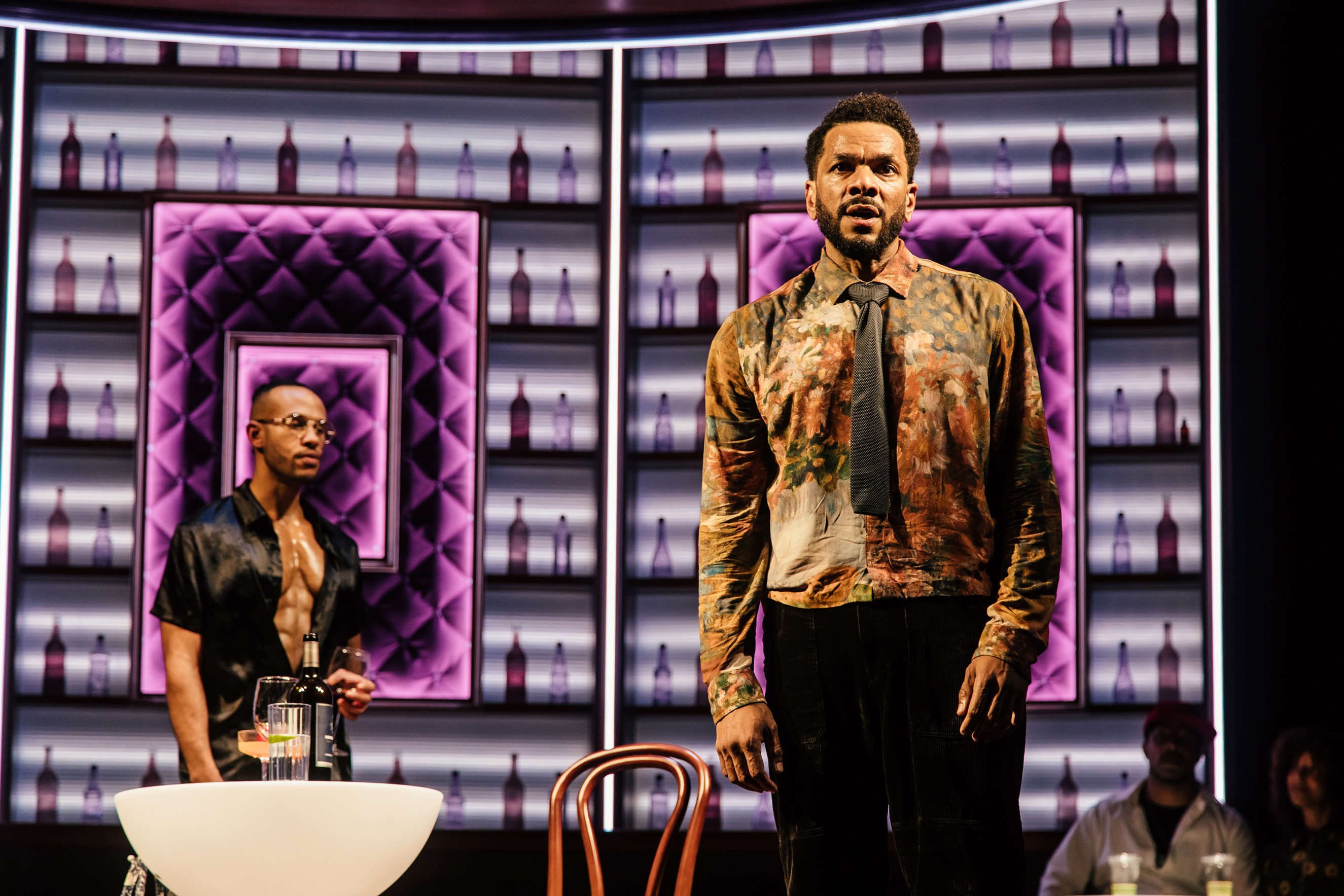
Soon after the exes arrive at Bianca’s Restaurant, the scene begins to change, and Lyons unveils another trick that reinvents his storytelling. What initially seems like a new set of characters in a faraway club quickly reveals itself to be Jada and Dallas, meeting for the very first time around six years prior. Throughout the play, the timeline jumps between their present dinner and flashbacks to key points in their relationship, with smooth transitions that contextualize the evening’s emotional depth. Remarkably, the story never lulls or speeds amid the back and forth, as Lyons maintains consistent pacing by sharing only the most crucial information, from their endearing engagement to their biggest fights.
On that note, the production’s visual team plays a significant role in keeping the layered storyline clear. As locations move from the restaurant to an airplane to a Clippers game, scenic designer Jason Sherwood’s two-level set remains generally the same, seemingly to avoid wasting time on grand set changes. Masterful collaboration with lighting designer Ben Stanton allows the space to feel fully transformed in the blink of an eye, and distinct costumes from Devario D. Simmons are smoothly interchanged to support each setting.
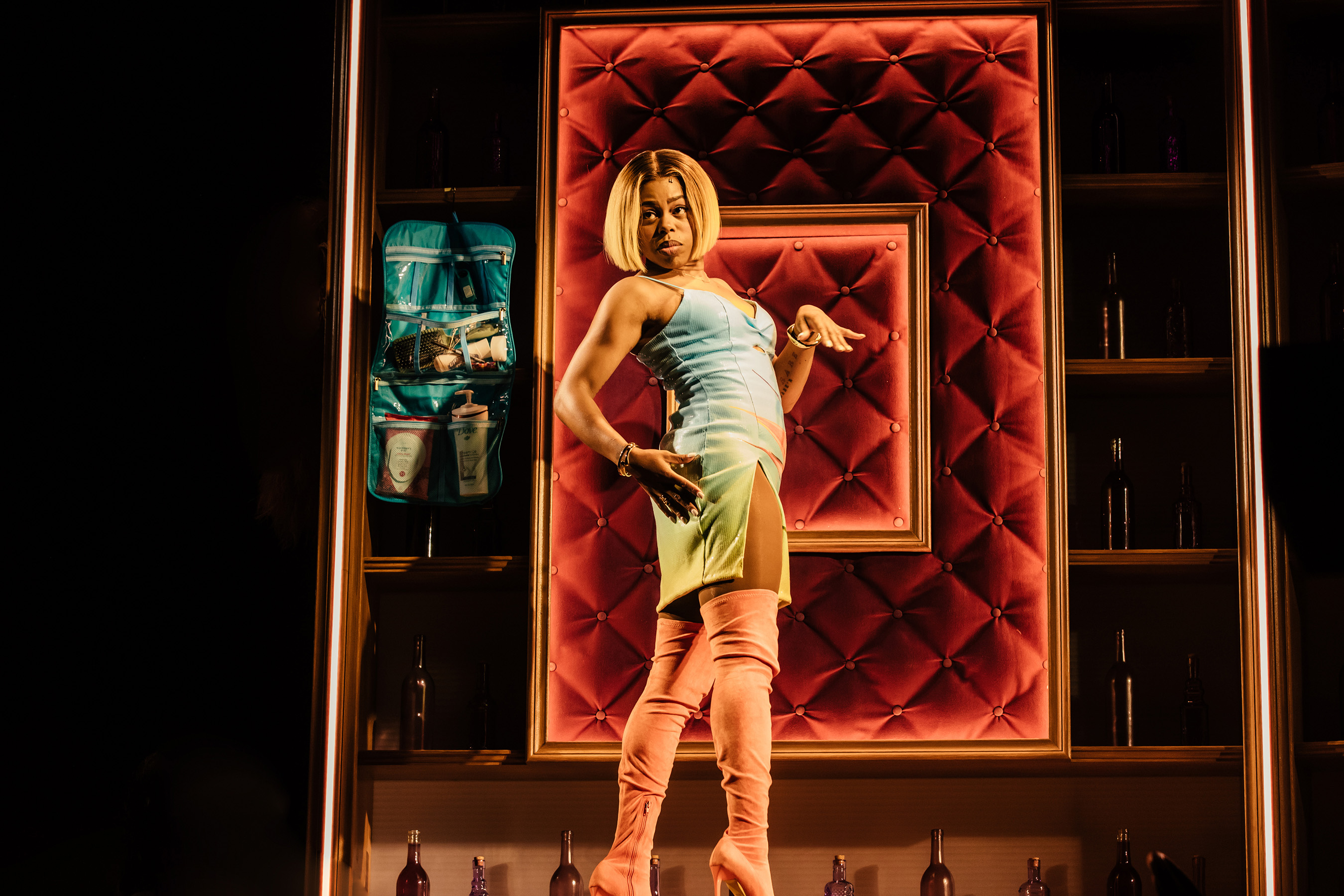
The driving force of “Table 17,” however, is its sensational cast: a trio of should-be Tony winners who maintain complete control of the audience’s attention. Candidly, the play couldn’t exist without the shockingly wide range of Michael Rishawn, who takes on multiple characters at different stages in Jada and Dallas’ journey. As River, their waiter at Bianca’s, he glides in shimmering hot pink heels, breaking the exes’ tension with impeccable comedic timing. Yet with just as much ease, Rishawn embodies an aggressively heterosexual vibe to portray characters like Eric, Jada’s smooth-talking coworker who drives a wedge in her relationship. If attendees don’t check the playbill before the show, it may take them ages to realize such drastically different roles are being mastered by the same performer.
Meanwhile, at the center of the show are Bean and Eisen-Martin, who are such fully authentic, grounded actors, they make the audience almost forget they’re watching a play, feeling every emotion in sync with them. The pair has electric chemistry, sharply bouncing jokes off each other just as naturally as they cry together. Bean, in particular, is a shining star whose captivating dynamism stays with viewers long after the lights go out – in a show that doesn’t really have a singular lead, she manages to rise above as the ideal leading woman.
[Related: Theater review: ‘West Side Story’ hits right notes as timeless tragedy with contemporary topics]
What is perhaps most impressive about Bean and Eisen-Martin’s performances is how truthfully they capture the messiness of their characters’ love, equal parts enchanting and infuriating. At the story’s climax, both Jada and Dallas unveil game-changing mistakes that earn gasps and minutes of boos from the audience. And yet, even as the story fades into a somewhat ambiguous ending, viewers can’t help but root for the same people they might have briefly hated.
River concludes the show by speaking directly to the crowd, basically reciting the story’s lesson in a way that feels a bit too on-the-nose but is heartfelt enough to move past it. While effort, forgiveness and dedication are all powerful themes in Lyons’ script, the more significant takeaways from this production reach far beyond them. It is a stunning display of Black art, a representation and celebration essential in contemporary theater. And perhaps unintentionally, “Table 17” makes a strong case for the necessity of live performance, pulling audiences into its story in a way that wholly satisfies and consistently entertains.
“Table 17” argues that mistakes are worth making, and audiences will find their seat well worth taking.



Comments are closed.