Some problems don’t announce themselves.
They show up over and over and over on film until the pattern becomes impossible to ignore.
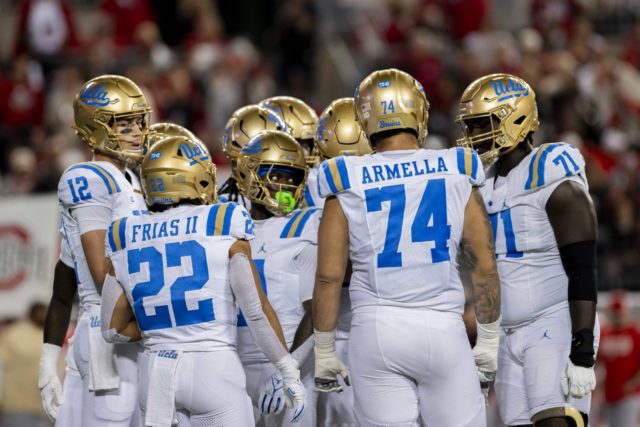
For the Bruins, that pattern is tied to the quarterback – the signal callers they have, the field general they just faced and the commander they will see next.
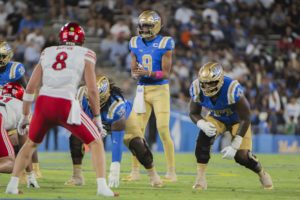
After redshirt sophomore quarterback Nico Iamaleava was sidelined for Saturday’s Ohio State matchup with a concussion, redshirt sophomore quarterback Luke Duncan made his first collegiate start against the No. 1 team in the nation.
And Duncan’s introduction came with little insulation.
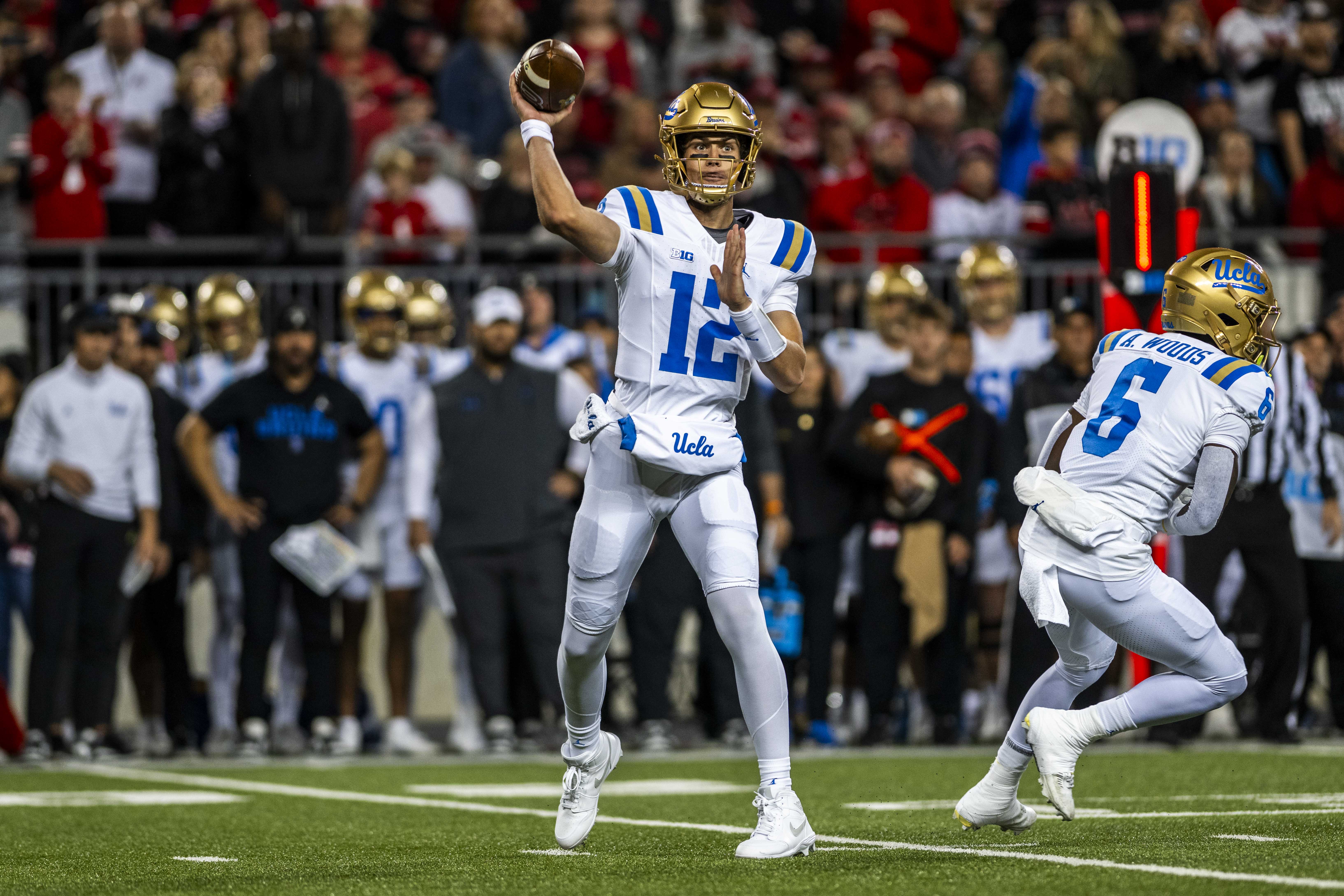
More than 100,000 fans, a top-tier Buckeye defense that ranks first in the country and a Bruin offense still adjusting to personnel changes forced him to settle in quickly.
“Hats off to him,” said redshirt junior tight end Jack Pedersen. “First collegiate start in that environment. … I think he played a great game.”
But the absence of Iamaleava, who sits as the team’s leading rusher and has surpassed 1,000 passing yards, altered the offensive structure.
While Iamaleava is back to practicing, his questionable game status coincides with UCLA preparing for yet another mobile quarterback – this time from Washington.
The Huskies mix pro-style structure with spread tempo, something interim head coach Tim Skipper said intensifies the stress the offensive combination places on defenses.
“They’ll give you two different kinds of looks,” Skipper said. “You have to be prepared to contain the quarterback.”
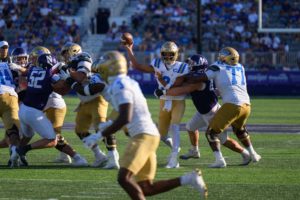
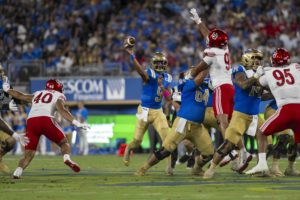
The Bruins have faced three mobile quarterbacks in the last month and have struggled to control second-chance plays, scrambling for yards after contact.
UCLA’s defense has allowed 383 yards per game and also ranks No. 119 nationally in rushing defense.
Redshirt senior defensive lineman Keanu Williams said those breakdowns have defined too many snaps.
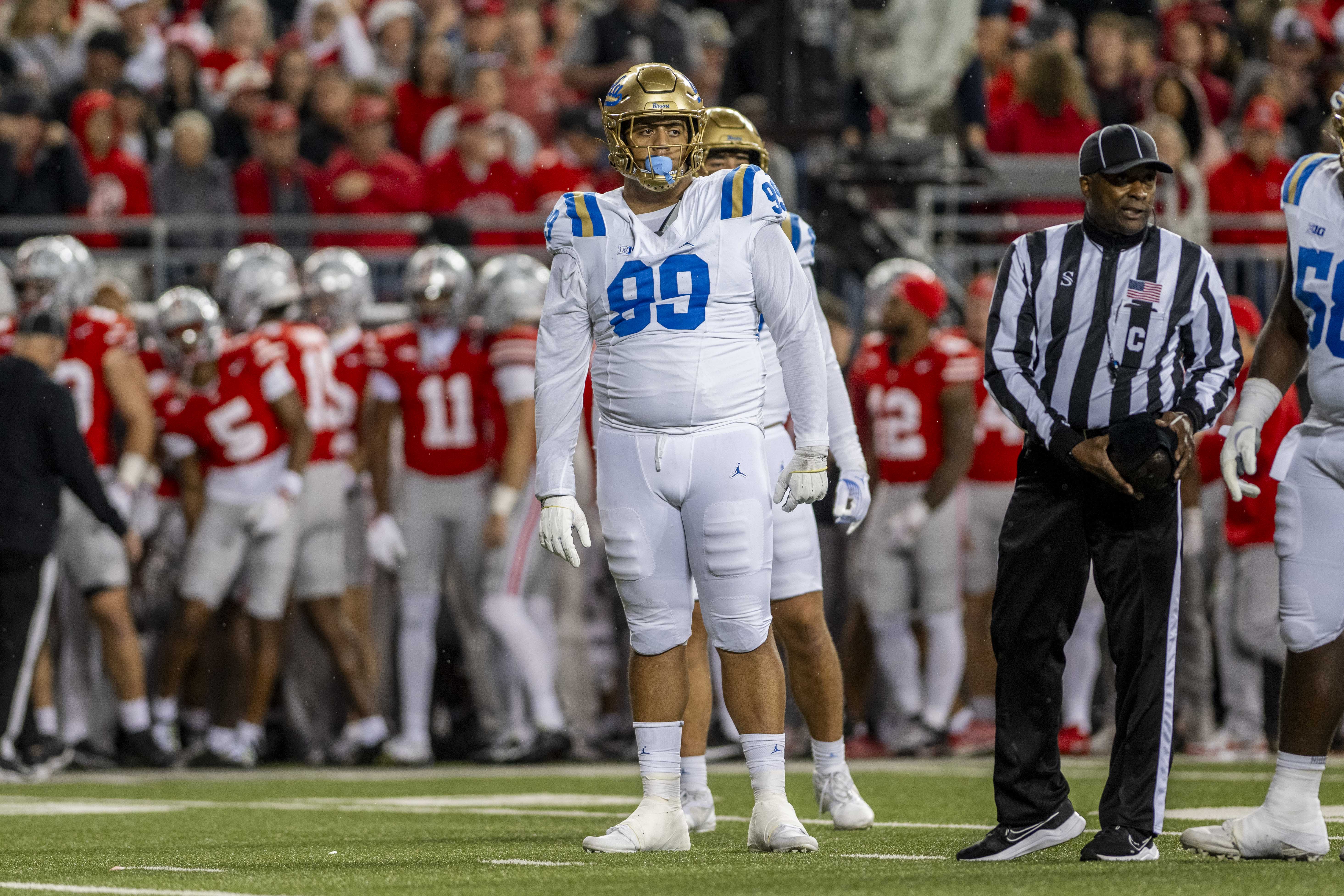
“We make a mistake, they take advantage of it,” Williams said. “You can’t afford to make small mistakes because those small mistakes, they take it 60 (yards).”
Opponents have consistently reached the second level across that three-game stretch, averaging more than five yards per carry against the UCLA front seven.
Explosive gains have also mounted, with the Bruins allowing at least one run of 20 or more yards in five straight games, a trend that mirrors the sharp rise in yards after contact – struggling particularly against physical backs and scrambling quarterbacks alike.
Those lapses have added strain to a unit already facing depth limitations up front.
“You can’t completely stop a mobile quarterback,” Williams said. “But you can minimize them.”
And the margin is just as narrow on offense.
Opponents have loaded the box against UCLA for weeks, a trend Skipper expects to continue.
“They’re going to load the box,” Skipper said. “You just have to keep moving piles forward.”
Between the quarterback situation and defensive vulnerabilities, the Bruins are confronting two sides of the same problem: execution under pressure.
With two games left on the schedule, the margin for correction is shrinking, and every possession now feeds into how the Bruins close a season marred by swings at quarterbacks and along the line of scrimmage.
“If we can go out there and win and end the 2025 season with two wins,” Pedersen said. “I think that’d be phenomenal.”

Comments are closed.