Student staff alleged that a lack of administrative support has placed strain on UCLA’s student-initiated outreach and retention projects for marginalized groups.
ELAS SEMILLA de UCLA – a retention program which mentors Latino high school students – was put on “indefinite pause,” according to SEMILLA’s Sept. 14 Instagram post. The program pause followed Campus Life‘s June decision not to renew its project director’s contract past July 31, leaving SEMILLA without a coordinator
Campus Life, a division of Student Affairs overseeing the program, terminated the contracts of five project directors – who oversaw the retention programs – as of June 30, project directors announced in a July 2 letter to program members. Campus Life told employees that it did not continue the project directors’ contracts due to new federal directives that “reinterpret diversity, equity and inclusion initiatives as potentially non-compliant with anti-discrimination laws,” they added in the letter.
[Related: UCLA lays off some retention, access program staff amid federal DEI scrutiny]
A Student Affairs spokesperson said in an emailed statement that Student Affairs is collaborating with the Undergraduate Students Association Council on new committee appointments and funding allocation processes for retention programs.
“The university is partnering with USAC to establish new student-majority committees,” they said. “The university and Student Affairs remain committed to continuing vital outreach and retention programs.”
The spokesperson added that Campus Life will implement a “professional staffing model” for selected programs.
Diego Bollo, the president of USAC, said in an emailed statement that Student Affairs restructured the student-majority committees to remove two representatives from the Student Initiated Outreach Committee and the Campus Retention Committee – student-run committees under Student Affairs that oversee the retention projects – as people who could vote on appointments to the aforementioned committees, claiming it was a conflict of interest issue.
Bollo added that Student Affairs told him the retention projects would be discontinued unless a new structure for USAC appointments was adopted.
“We are not sure yet how this will alter the funding, but we plan on using fall quarter fees and roll them over to winter and spring,” he said in the statement. “I strongly support student projects applying to funding who have historically contributed to the retention efforts on campus and diversify the applicant pool via student initiated outreach.”
Other student-led retention and access programs – including Southeast Asian Campus Learning Education and Retention and Project HOPE – have also said the termination of project directors’ contracts have placed a strain on retention initiatives, according to the programs’ joint Aug. 29 Instagram post .
President Donald Trump has attacked diversity initiatives since January, signing an executive order on his first day in office that banned diversity, equity and inclusion programs in the federal government. The U.S. Department of Education has pressured universities to shut down their diversity programs by threatening to withhold federal dollars from those that do not comply.
Several universities – including the University of Michigan, the University of Southern California and the University of Virginia – have shut down or renamed their diversity-related offices since the start of Trump’s second term. The UC Office of the President announced in late October that it would replace its equity, diversity and inclusion department with the Office of Culture and Inclusive Excellence, but said in a statement that its “values remain the same.”
[Related: UC eliminates EDI department, creates Office of Culture and Inclusive Excellence]
The Trump administration called on UCLA specifically to eliminate its diversity initiatives – among other demands, including a $1 billion payment to the federal government – in a proposed settlement it sent to the university. If agreed to, the settlement would have reinstated the $584 million in research funding that the federal government withheld from UCLA in late July, after accusing the university of “antisemitism and bias.”
[Related: Federal government suspends research funding to UCLA]
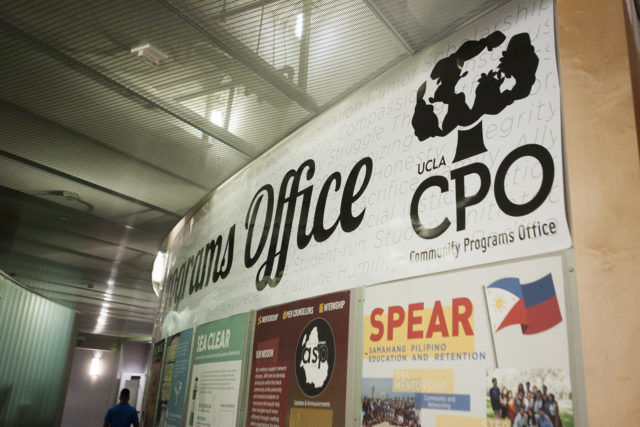
The retention and access programs, which also fall under the UCLA Community Program Office’s SIOC and CRC, provide personalized counseling, academic workshops and wellness programs to help students from marginalized backgrounds succeed in college, according to the CPO’s website.
The CPO temporarily shut down in late September due to hiring delays and pending staff extensions. CPO employees alleged that Student Affairs caused the delays by failing to approve student staff extensions in a timely manner.
[Related: UCLA Community Programs Office spaces, services temporarily shut down]
Vianney Garcia Barbosa, SEMILLA’s skill building coordinator, said the program provided academic and professional guidance to Latino high school students. SEMILLA offered the students free after-school workshops on how to create a resume, apply for summer programs and answer the essay portion of the UC applications, she added.
“Some of these students don’t even know what a campus looks like,” Garcia Barbosa said. “They don’t know what college life can look like. … We wanted to give them a little spark of what higher ed could look like for them one day because they weren’t given as many resources.”
In the long term, Garcia Barbosa said SEMILLA’s temporary closure could lead to a loss of relationships with local schools which the program works with – and the students who want to attend UCLA.
Dania Juarez, a third-year sociology student, said she volunteered at Shadow Day – an event providing Latino high school students the opportunity to visit UCLA and live a day in the life of a college student. Juarez added that the peer mentors provided high school students tours of dorm buildings and lecture halls, adding that they would frequently give advice about college life.
However, with the closure of SEMILLA, some Latino students are left without the same personalized support, she said.
Students who access resources provided by the Samahang Pilipino Education and Retention program – a student-run project aiming to increase admission and retention rates among Filipino students – was also impacted by its project director’s contract termination in June, said Sharleene Halog, SPEAR’s assistant project coordinator.
Halog, a fourth-year psychology student, said students in the SPEAR program schedule appointments with peer counselors to discuss their academic concerns and holistic wellbeing. However, students are having difficulty booking counseling appointments with their mentors due to reduced availability of counselors, she added.
Some students fear that they may no longer have access to a peer counselor who understands their struggles and their cultural background, Halog added.
“It’s so different to be able to talk to someone that’s your peer and has gone through the exact same things that you have, both as a student and as a Filipino individual,” she said.
The loss of the program’s project director has led to burnout among SPEAR staff, Halog said, adding that she believes the current staff structures are not sustainable in the long run.
Halog said student staff positions, which are unpaid positions, have also been forced to take on a larger caseload of mentees. Jasi Bermejo, a SPEAR counselor, said peer counselors hold nearly 10 one-hour counseling sessions every week.
“I’m not only a SPEAR counselor, I’m also a student,” said Bermejo, a fourth-year human biology and society student. “It’s hard for me to even find the balance that I’m telling my students to try to find because I know how important it is to have someone on your side, having someone on your shoulder that is able to tell you these things.”
Staff members are participating in a social campaign entitled “Hands Off Student Initiated Projects,” which aims to bring attention to the changes the student-led retention and access programs are facing, according to the project’s Instagram account.
“The story of academic retention goes so much broader than just the grades that you receive,” Bermejo said. “It’s not just your ability to stay at an institution, but also feel like you belong in it.”
Despite uncertainty surrounding the continuation of student-led retention and access programs, student staff plan to continue speaking out about the importance of the programs, Juarez added.
“It’s not going to stop us,” she said. “We’re still going to be here, we’re still going to be making noise for us or for other incoming students or for other Latino students at UCLA.”



Comments are closed.