This post was updated Dec. 3 at 7:22 p.m.
UCLA boasts an impressive 9% acceptance rate.
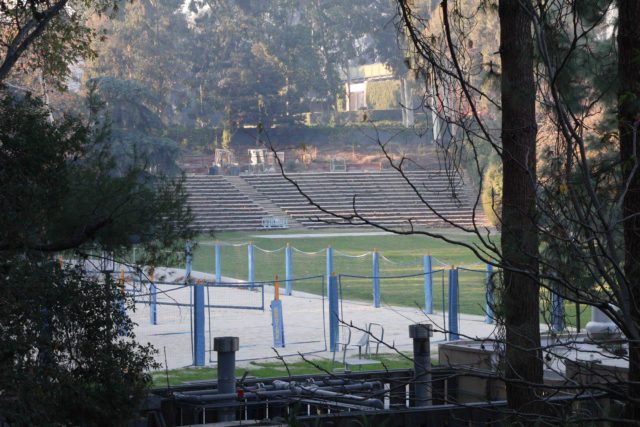
Yet somehow, Sunset Canyon Recreation Center’s pickleball courts’ acceptance rates seem even lower.
Overcrowding is common at UCLA’s facilities, such as the John Wooden Center. Sunset Recreation is just one area the phenomenon affects.
UCLA should limit the hours that non-UCLA students can use Sunset Recreation’s pickleball courts to prevent overcrowding and improve accessiblity for students.
Bruins pay the Wooden Center fee of $15 every quarter along with their tuition – this grants students access to amenities such as Sunset Recreation. UCLA faculty, staff, alumni, retirees and Westwood community members can also pay to use Sunset Recreation’s facilities, with memberships ranging from $192 to $390 per quarter.
Non-student members of Sunset Recreation have a right to the spaces they pay for and support, but students should have first priority to their own residence’s facilities. Having no policies in place to support students leads to overcrowding with both non-student members and students vying for opportunities to play.
UCLA does require reservations to control crowding in some recreational spaces.
“We have to check and make sure people sign in for their reservation for the tennis courts or pickleball courts,” said Joel Pollack, a fourth-year biochemistry student who works the front desk at Sunset Recreation.
Yet this reservation system presents a new form of competition: booking a court to play on. When students and non-student members are competing for reservations, this feature limits the amount students can use this resource.
Abigail Chang, a fourth-year human biology and society student, said she plays pickleball once or twice a week with her friends – and she almost never attempts to play without a reservation.
“It is something to remember,” Chang said. “The spots book up really quickly – which is why we do do bookings – because there are a lot of people that want to use the courts. I set reminders on my phone to book the courts.”
In theory, reservations give students guaranteed times to play. But in practice, the courts are so popular that it is difficult to secure a spot without scheduling days in advance.
This is especially difficult because students rely on the courts for accessible exercise and the convenience of proximity.
“I don’t have to pay a membership,” Chang said. “It’s included in tuition, and it’s a 10 minute, 15 minute walk from my apartment.”
UCLA students should not have to compete with non-students for court reservations, especially when non-students have so many other options in Los Angeles. By limiting the time slots that non-students can use the pickleball courts, UCLA Recreation could make the facilities more accessible for students who have few options.
Admittedly, there are some important reasons for non-student members to have access to the courts.
“The fees alone do not fully cover the operational costs of UCLA Recreation, and membership fees for individuals who aren’t students help maintain the quality of services available to our members,” a UCLA Recreation spokesperson wrote in an emailed statement.
While offering these memberships may be a source of revenue, the facility should have student-only times during the weekends and at night when there are few academic classes. This way, UCLA Recreation can accommodate the large number of students who are interested in grabbing a paddle and playing pickleball.
Limiting the times that non-students can use the pickleball courts to low-student-traffic hours gives Bruins more opportunities to use their campus’s facilities without hastily trying to make a reservation – all while still allowing these spaces to be a source of additional revenue for the university.
With new policies in place, hopefully the only competition on the pickleball courts will be the one happening between the players.

Comments are closed.