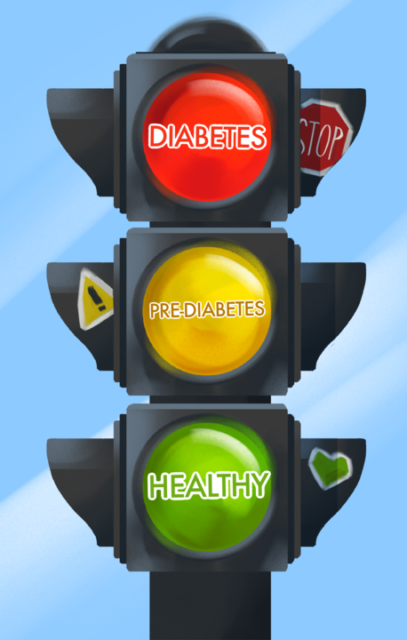
November is diabetes awareness month.
One in every 10 adults in Los Angeles County has Type 2 diabetes, according to the Los Angeles County Department of Public Health.
Dr. Matthew Freeby, the director of the Gonda Diabetes Center and the associate director of the Diabetes Clinical programs at the David Geffen School of Medicine, sat down with Daily Bruin contributor Andrew Wong to discuss diabetes prevention, misconceptions and notable research initiatives.
Freeby received his medical degree from Virginia Commonwealth University School of Medicine in 2002, and completed his residency at the UC San Diego Medical Center.
This interview has been edited for length and clarity.
Daily Bruin: What got you interested in diabetes care as a profession in the first place?
Matthew Freeby: Many in the field oftentimes have a family member, a friend or a colleague or someone who has a history of diabetes and has seen its effects and wants to make a difference in the field. I don’t have a family member, but my roommate from college has a history of Type 1 diabetes.
I was actually looking for various jobs after college, and one of them happened to be diabetes-related. My former college roommate said, “You need to take this job.”
It was a job that started off in research and development, looking at an alternative method by which you could monitor glucose levels. For anyone who understands diabetes, it was the first step towards continuous glucose monitoring. Continuous glucose monitoring has really revolutionized the way in which we treat diabetes and think about how we monitor sugars and ultimately make adjustments in real time. That company (came out) with the first approved device for continuous glucose monitoring in the United States. We got to run clinical trials for the company after research and development, and I actually did those during medical school.
I ended up picking endocrinology and ultimately diabetes as what I treat now on a day-to-day basis.
DB: Are there any notable initiatives that you’re leading right now at the Diabetes Center and at the David Geffen School of Medicine?
MF: I have now been at UCLA for about a decade, and I was hired to lead our diabetes clinical programs. Essentially, we are trying to help and assist in the diabetes care of our general population.
We do run a number of clinical trials – those will span from Type 1 and Type 2 diabetes, to gestational, pre-gestational diabetes, to even patients who are pregnant. We have a number of studies related to insulin pump therapy, or the use of continuous glucose monitoring.
We are also looking at Type 2 diabetes and memory loss. We know patients with Type 2 diabetes are at higher risk for memory loss as they age, and we are looking at the potential reasons why. A lot of these projects are either through companies, or through investigator initiated grants at UCLA – these are ones in which my colleagues are performing, or that we as an endocrine group will align with some other researchers who are not necessarily within the division of endocrinology and help them lead these studies on the human side.
DB: How do you think UCLA ensures that diabetic care is accessible and inclusive for diverse populations within the UCLA community and the greater LA area?
MF: The health system has tried to do its best to reach out to the greater community, in terms of reaching a broader geographic spread for both our primary care providers as well as endocrinologists.
One example is that we have learned that one of the obstacles to monitoring for complications is related to the eye. In fact, diabetes is the number one leading cause for vision loss in the United States in the adult population.
There are many things that we can do to reduce the likelihood of vision loss in diabetes, and that (includes) seeing an eye doctor, potentially undergoing procedures, but many of our patients actually are not screened. Whether it’s because we are not necessarily getting the word out, or access to ophthalmology or optometry care might be limited, what we’ve done through philanthropic dollars from the Gonda Foundation is that we’ve been able to add well over 20 cameras into primary care and endocrine locations, reducing the obstacles to eye screening for our patients with diabetes.
We’ve now placed this into various areas geographically throughout the UCLA system, with the hope that our patients will have their eyes screened. If there are abnormalities, then we can do a really good job of getting those patients in to see the eye doctor. So we’re trying to break down the barriers for eye screening, maybe for those who are unable to drive longer distances. We also are reaching out to all of our patients through digital means to ensure that they are getting those eye screenings as well.
DB: Are there any recent advancements in diabetes treatment or surgery at UCLA that you’re particularly excited about?
MF: I would not necessarily say that there are any new treatments that have per se come out of UCLA for the treatment of Type 1 or Type 2 diabetes right now.
Really, the excitement surrounding Type 2 diabetes care relates to these weekly injectable medications called GLP-1 receptor agonists. These are medicines like Ozempic and Mounjaro, amongst others. And it does look like there are going to be a number of newly approved medications, including probably an oral, easier-to-take medication in the next number of months. These medications were initially thought to just be a diabetes medication that would lower sugar and reduce the risk for problems like blindness and kidney failure, but the reality and part of the reason why these medications now are being used much more widely is because of the secondary benefits above and beyond diabetes control, which includes significant weight loss.
They’ve been shown to reduce the risk for heart attack and stroke. They’ve been shown to reduce the risk for kidney failure. They’ve been shown to reduce the risk for pain for those patients with significant osteoarthritis of the knee, as well as liver disease, which is one of the comorbidities that runs hand in hand with Type 2 diabetes.
In the general diabetes world, I would say that the GLP-1 incretin pathway, those medications really are at the forefront of what we’re seeing in terms of changing Type 2 diabetes care. On the Type 1 side, we are seeing a lot more use of technology, meaning that the use of insulin pumps, continuous glucose monitor devices and those two technologies pairing together and ultimately helping the patient to better improve their diabetes care. These technologies have really helped folks living with Type 1 diabetes.
DB: Are there any events, social support groups or educational workshops that are initiated or hosted by UCLA Health to foster community awareness and support for diabetes?
MF: Within our division to support those living with diabetes, we do have various programs, including online education, both asynchronously as well as in synchronous formats. Those are for patients living with Type 2 diabetes.
On an annual basis, we put together a UCLA Diabetes Symposium for the community to talk through some of the latest technologies, the risks and benefits of care, and our hope is to reach out to a number of people throughout our community. We also run, through one of our diabetes educators, a support group for Type 1 diabetes as well, and that’s generally an online support group that meets throughout the year.
DB: What are some of the biggest misconceptions about diabetes and diabetes risk factors, and are there any lifestyle changes that can help lower risk, especially in younger populations?
MF: Historically, Type 2 diabetes has been one (disease) in which you have to be midlife or later to develop. But we’re really seeing it more and more amongst the younger population, including as low as folks that are in the teenage years.
The goal really is to do our best to reduce the risk for progression towards diabetes, no matter what age you are, but in particular those who are younger, because unfortunately, we do see more complications pop up with those who are diagnosed at a younger age.
The changes in the types of food that we are eating, calorie-dense foods, the weight gain, as well as lack of exercise, definitely are factors that do increase the risk for diabetes, but they are not that alone. In fact, most people who have rising weight are not at risk for diabetes. It really does come with a genetic component, and so many of our patients do have family members who have diabetes.
For those who are at risk, who know they are at risk, who have a mother or father or a grandparent with Type 2 diabetes, the goal really is to maintain those healthy patterns really early in life to reduce the likelihood of diabetes later on.




Comments are closed.