This post was updated Dec. 3 at 10:32 p.m.
My favorite sports team was ranked at the bottom of the table not long ago.
FC Barcelona transformed from a club that dominated European soccer to a fractured program struggling in its own league just four years ago. Then, former player Xavi Hernández returned to become manager, restoring the club’s identity and eventually leading FC Barcelona to its first league title in four years.
But just as suddenly as he rebuilt it, he was gone.
When FC Barcelona announced Xavi’s departure in 2024, it felt like the club was losing its pulse.
I never expected that pattern to repeat itself in Westwood.
UCLA has weathered its fair share of coach departures throughout my four years here – so much so that departures and arrivals in Westwood began to feel routine.
But former coach Margueritte Aozasa seemingly embraced a different mindset.
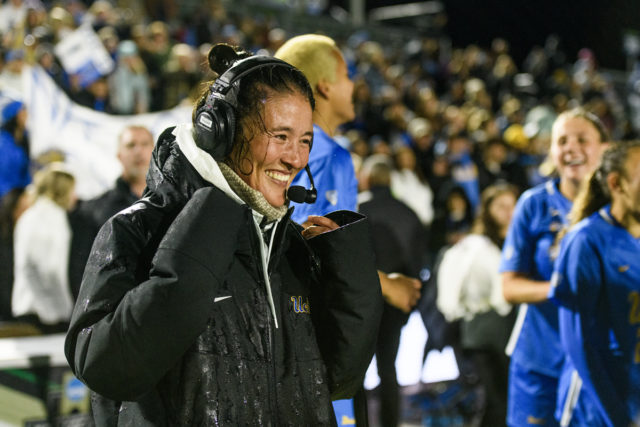
In four seasons, she didn’t just sport the blue and gold. She redefined what it meant to represent it.
Aozasa walked into a blue-blood women’s soccer program that was searching for redirection after a first-round NCAA tournament upset loss to UC Irvine in 2021 – UCLA’s earliest exit from the national stage since 2015. Aozasa’s arrival brought a breath of fresh air into a program with a flattering national reputation, and she wasted no time in setting the foundation for one of the greatest runs in program history.
She brought in the No. 2 recruiting class of 2022. She opened her first campaign with 13 consecutive victories – including wins against No. 2 Duke and No. 1 North Carolina – and the Bruins earned a place atop the national rankings for nine consecutive weeks.
Aozasa’s season was more than just a turnaround – it was a takeover of women’s collegiate soccer.
The Bruins tore through the bracket to reach the championship game against No. 2 seed North Carolina, who at the time held 22 NCAA titles.
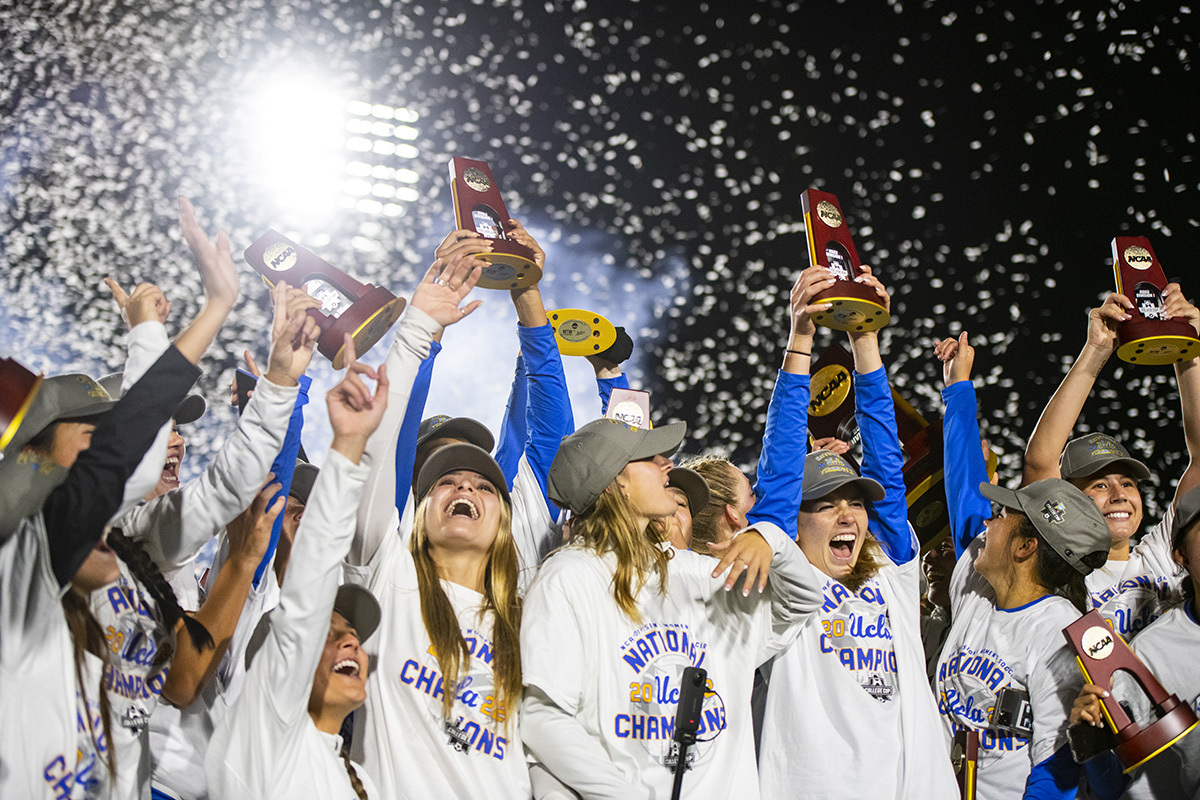
In the 106th minute, then-graduate student midfielder Maricarmen Reyes netted the golden goal that delivered UCLA its second-ever national title – Aozasa’s first as a head coach. Not only did the squad rewrite the ending from the year before, they returned with a new piece of hardware.
It only took one season for Aozasa to mold a shaken-up roster into a powerhouse. In the seasons following the historic run, she brought her team back to the NCAA tournament for three consecutive appearances.
But she never found the same tournament magic or bracket success of her first year, and that is what makes her departure so jarring. It felt like her job in Westwood was not finished yet.
It is an unresolved cliffhanger.
Maybe it’s a little dramatic to feel this way about a coach I didn’t know off the field. But I watched her team from the bleachers and, somewhere along the way, witnessing her tenure as a Bruin became a part of my own UCLA story.
The world of collegiate sports is no stranger to change, but Aozasa was not just another coach etched into program history.
She was the one who rebuilt a program from scratch and put the Bruins back on the map.
That is why her departure stings.
And Aozasa’s impact will go beyond what she brought to the pitch at Wallis Annenberg Stadium. In her four-year UCLA tenure, Aozasa produced 22 players that went on to play professionally – including 10 from last year’s squad – which is a testament to how she has prepared her players for the next level.
But now she is gone. And the era she ushered in feels suspended over the void she left behind.
How do you replace a coach who rebuilt a team into a national champion for the first time in almost a decade – and did it in a matter of months? How do you replace someone who developed 10 professional players within a single graduating class?
And most importantly, how do you replace her contributions to the program that no box score can measure: the culture she reshaped, the confidence she instilled into her players and the identity she restored?
When Xavi left FC Barcelona, the fans did not just experience the loss of a manager – they experienced the loss of what he represented for the club.
I felt that then, and I feel it again now.
Aozasa represented a new beginning for UCLA women’s soccer. Watching her walk away feels like the whistle blowing in the middle of a play.
In collegiate sports, coaches, players and systems will come and go.
But what Margueritte Aozasa built will not be forgotten. Because even if her chapter ended early, her legacy will outlive the abrupt ending that took her away from it.


Comments are closed.