This post was updated Jan. 11 at 8:38 p.m.
Livvy Marcus is telling a story of empowerment – both on and off the stage.
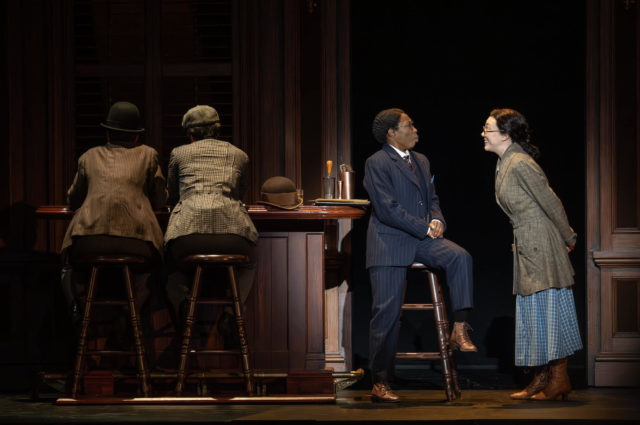
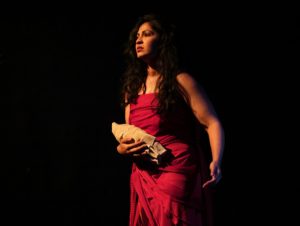
Making her national tour debut, the actress and musician is currently playing suffragist Doris Stevens in “Suffs,” the Tony Award-winning musical about the American women’s suffrage movement. The show is inspired by the real-life Stevens’ memoir, “Jailed for Freedom,” and will be running at the Hollywood Pantages Theatre through Dec. 7.
Marcus spoke with the Daily Bruin’s Victoria Munck about bringing life to Doris across the country and the enduring impact of the historical story.
This interview has been edited for length and clarity.
Daily Bruin: What was it like developing your portrayal of Doris for this show? Being preceded by not only a Broadway run, but also an actual historical figure, did you draw any influences?
Livvy Marcus: Nadia Dandashi, who’s the Broadway Doris, is a friend of mine. We’ve actually nannied for the same little girl in the past, so it all felt very serendipitous. I’ve only seen her as Doris once, and I love her, and I think she’s amazing, but I don’t remember that much of it. I just remember walking away and being like, “That girl is so loveable.” I wanted to take what she built developing the show – because it’s a very different job than doing a national tour – and honor it, but I also cut myself off immediately from listening to the soundtrack or watching any footage, ’cause I would start to just do a Nadia impersonation. I had to do my own thing. I am assuming it’s really different than what she did ’cause she’s her own incredible thing, but I don’t wish to know until years from now.
In terms of the historical figure, Doris Stevens wrote the incredible book that “Suffs” is based on, and I bought it and started reading it the day that I booked – like, the day. It’s called “Jailed for Freedom.” It’s been edited heavily, but it’s a pretty concise retelling of the Silent Sentinel protests and the more militant activist side of the women’s suffrage movement, which I didn’t know about previously. But I also had to cut myself off of learning more about Doris because I’m not a fan of her in her older age. She remarried some conservative whack and got really involved with McCarthyism – huge bummer. But I can’t understate the importance of this book that she wrote to the formation of our show and my experience learning about the events of the show.
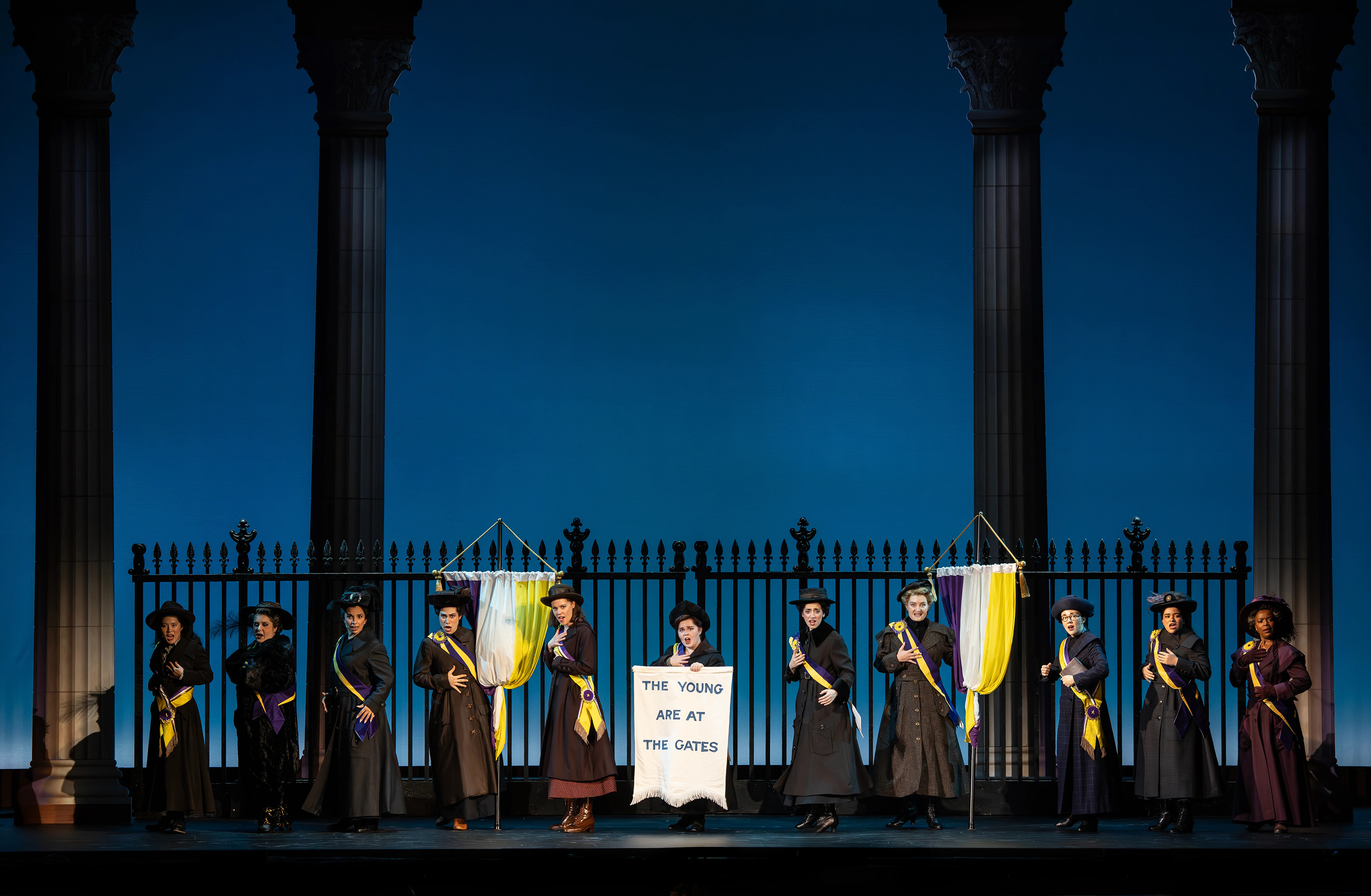
DB: “Suffs” takes place between 1913 and 1920. Despite being a century-old story, it’s clearly resonating with modern audiences. What do you think it is about this musical that’s still topical and connecting with viewers today?
LM: I think everybody in the show has a different answer for this question, and there’s no wrong answer. The obvious one is that women’s rights are under siege, like period, point-blank. But for me, as somebody who I think is a little too tapped into that reality and maybe doesn’t need to be reminded all the time, something that I do need to be reminded of that this show does a superb job with is that the women’s suffrage movement exists fully in concert with all other liberation movements for so many reasons. This show especially demonstrates how real change can’t happen without legislative action and militant activism existing at the same time, and that struggle is a cornerstone of all liberation movements across time.
Something else that our show touches on that I have found especially true in the United States is that liberation movements do not exist and are not successful without Black women. The women’s suffrage movement was not fully successful. That is a big part of the content of our show. It’s very complicated and really beautiful and really gut-wrenching, and I see that across the Civil Rights movement and Indigenous Land Back movements today and so many different things that I’m learning about as a person in this country. None of these liberation movements would exist without that dichotomy of militant activism, permitted rallies and legislative action.
[Related: Theater review: ‘Suffs’ musical empowers audiences with nuanced retelling of women’s suffrage]
DB: Your character, Doris, is a college student. What do you think young activists, or even just young people in general, can take away from this show regarding their potential?
LM: I’m just so enamored with college kids across the country these days and the spirit of activism that I feel is alive in that age group right now. I think my piece of advice that I’ve learned from the show is that being in the action and showing up and getting your ego in check to learn from those around you is the only job. That’s the first step, and maybe the only step: just show up, do good and listen. That’s what I try to think of when I get bogged down by all the minutia of our really complicated stories – Doris is really there as a surrogate for the audience to just show up and try to do good and listen.

Comments are closed.