

This post was updated Jan. 13 at 8:17 p.m.
At times, watching “Eternity” certainly felt like one.
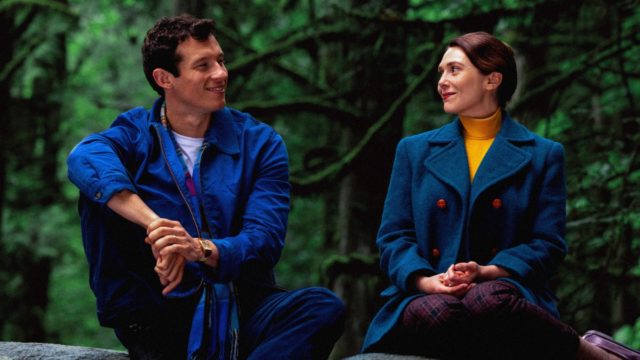
A24’s latest thought-provoking film premiered in September at the Toronto International Film Festival and released in theaters Nov. 26. The 114-minute movie features the afterlife of Joan (Elizabeth Olsen) as she decides whom to spend her eternity with: her first husband, Luke (Callum Turner), who has been waiting for her since dying in the Korean War early into their marriage, or Larry (Miles Teller), her second husband of 65 years. While the story has a unique premise that lends itself to an intriguing first hour or so, the weakness of its ending was simply unforgivable.
Although “Eternity” was marketed as a romantic comedy, it is difficult to find much of either in the movie, as it seems to land squarely as a drama, or at best, a dramatic comedy. While it has lighter moments, “Eternity” is often outright disheartening, particularly thanks to the strength of its actors’ performances. This is one of the film’s strengths – it stands fairly well as a drama, but anyone seeing it because it was marketed as a rom-com should be prepared to bring tissues.
The movie’s unique depiction of the afterlife saves the story from feeling cliche, especially with the blink-and-you’ll-miss-it background jokes regarding the potential eternities that souls can choose, as well as the delightful performances of afterlife coordinators Anna (Da’Vine Joy Randolph) and Ryan (John Early). In her supporting role, Oscar-winner Randolph offers much-needed and well-executed comedic relief throughout the film, such as her indifferent reaction to Larry realizing he died.
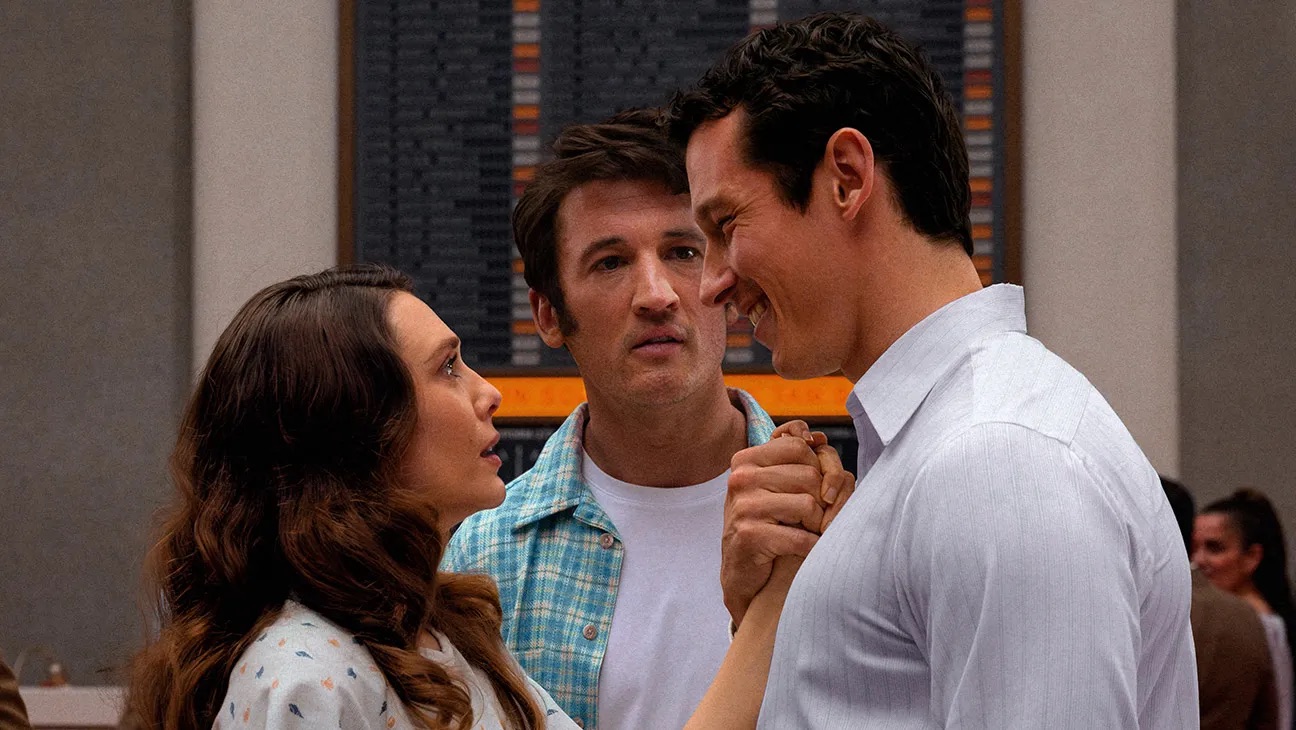
The opening, in particular – following an older Joan (Betty Buckley) and Larry (Barry Primus) prior to their deaths – is well-written and well-performed, immediately giving the audience a sense of their enduring relationship. Within the first scene, moments of humor, despair and familiarity perfectly set up the story to come. As the film continues, it focuses on Larry as he navigates the afterlife, reluctant to choose an eternity until his wife joins him. These scenes are well-crafted, as Teller masterfully portrays the inevitable confusion and regret that come with death, especially in concern for his still-living wife – whom he promised to care for through her battle with cancer. Yet this compelling emotional significance dissipates once Joan dies and Luke admits to waiting for her the past 67 years – the plot then switching to something closer to a soap opera.
For such an interesting premise, this tonal switch feels entirely out of place, with offbeat jokes about hair loss and the Korean War, which seem like something adapted from an earlier version of the script. Initially, the strong performances and the well-portrayed dilemma Joan faces overshadow these problems.
[Related: Movie review: ‘Die My Love’ flatlines from formulaic framing, wounds itself with shallow story]
However, the last 45 minutes just do not work. The film seems to end three separate times: first with Joan deciding to choose neither of her husbands, then picking an eternity with Luke, then discovering eternity is unsatisfying and running away to be with Larry. Further, the plot complicates itself when anyone who attempts to escape their eternity is sent to “the void” – now making Joan a fugitive. The well-done “first ending” becomes overdone half an hour later when the credits roll over Joan and Larry walking off into the sunset, creating a movie that lacks a strong final message.
Joan’s initial decision to pick neither husband is presented with a beautifully written and performed monologue by Olsen, illustrating life as meaningful because it ends and deeming an eternity with either Luke or Larry unfulfilling. This is where the movie should have ended – everything that follows completely upends that central message, making it seem as though the writers wanted to satisfy every viewer with all possible endings. Running at least 20 minutes too long, once the credits song “Everybody Loves Somebody” starts playing – a painfully miserable though seemingly intentional choice – the audience is likely to be torn between wanting the film to be over while also wondering, “That is how it ends?”
The “second ending,” in which Joan chooses Luke, makes this issue even worse, as she arbitrarily follows Larry’s suggestion to choose the life she never got to have. Joan’s sudden drop in agency leaves her to be the archetype of a female character written by a man – which she was, conceived by Patrick Cunnane and David Freyne.
[Related: Video game review: Despite flaws, ‘Just Dance 2026 Edition’ fosters fun, collaboration]
“Eternity” starts as a visually intriguing and unique story that pits a short romance against a lifetime of marriage but ultimately falls short of reaching profound levels of thematic importance. The early intrigue gives way to uneven execution, making the gap between concept and follow-through too big to ignore.
With incredibly high highs and dangerously low lows, the script for “Eternity” simply needed another round of edits to be something truly great.




Comments are closed.