This post was updated Feb. 1 at 8:19 p.m.
Your AP Lit summer reading is coming to a theater near you.
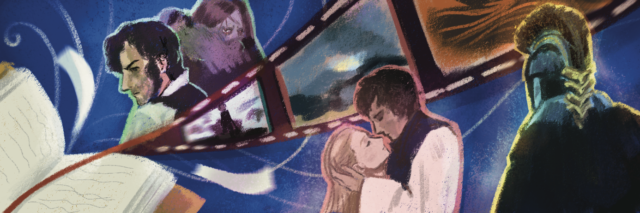
In October 2025, director Guillermo del Toro retold the tale of Frankenstein and his startlingly sensitive monster, starring Oscar Isaac and Jacob Elordi. This February, Emerald Fennell’s “Wuthering Heights” will grace theaters, with Margot Robbie and the aforementioned Elordi as the infamous pair of internally and externally destructive lovers. Likewise, Christopher Nolan’s newest summer blockbuster – “The Odyssey” – chronicles Odysseus’ perilous journey home from the Trojan War.
The trend of classic literature film adaptations appears to be caused by nostalgia for a time before technology, BookTok and reading internet subcultures, which have lowered audience expectations about faithfulness. While filmmakers might take creative liberties with the source material, these new releases ultimately celebrate the original texts and encourage new generations of readers to pick up these timeless stories.
As society plunges further into the age of artificial intelligence and technological omnipresence, people online have grown to long for life before the internet. One example of this phenomenon is the wired headphones trend: celebrities such as models Emily Ratajkowski and Lily-Rose Depp have been spotted wearing the antiquated alternative to Bluetooth listening devices, inspiring social media users to do the same. Another recent trend has been the digital camera, whose hashtag has garnered over 220 million views on TikTok, despite it originally being popular during the early 2000s. On the whole, society is experiencing a cultural longing for times past, and adaptations of classic novels are no exception. Characters in these films do not scroll on social media, receive text message notifications or espouse online slang – the audience appeal most likely lies in the refreshing sense of antiquity they offer in an increasingly online age.
[Related: Film Preview: Stay warm with this winter’s movie slate, from romance to thrillers]
Furthermore, internet culture has shifted towards growing nonchalance and isolation, from the rise of situationships – low-commitment, no-labels romantic relationships – to the growing use of therapy speak, or the imprecise use of clinical language in everyday conversation. People report feeling isolated, and social media is the likely culprit. Living in the age of 3 a.m. “u up?” Snapchat messages, the all-consuming and unhealthy romance between “Wuthering Heights” characters Catherine and Heathcliff – captured in Catherine’s declaration, “If all else perished, and he remained, I should continue to be; and if all else remained, and he were annihilated, the universe would turn to a mighty stranger” – becomes increasingly appealing. Classic literature provides a return to earnestness and exuberance amid a world of aloof, detached media.
Classic literature adaptations also reflect the popularity of reading online. BookTok features predominantly young women who film and post videos of themselves reading and reviewing novels. BookTok has transformed and revitalized the publishing industry, with reviews for popular books driving readership and creating a new demand for physical books. The popularity of this trend and other spaces online dedicated to reading has created a specific moviegoer demand for more book adaptations.
Such adaptations have a built-in fanbase and can draw instant conversation from fans of the book online. Films based on contemporary novels, particularly ones that have been trending on BookTok – such as “The People We Meet on Vacation” by Emily Henry and “Regretting You” by Colleen Hoover – have been hot topics in online discussion, thus drumming up popularity and viewership for the films.
Adaptations of classic novels specifically appeal to online readers while conferring additional benefits to filmmakers and studios. Contemporary novels have pre-existing fans, creating higher expectations for the filmmakers. Conversations around book adaptations largely stem from faithfulness to the source material, as “good” adaptations are considered to be the most faithful and “bad” adaptations are the least. For example, Chris Columbus’ film adaptation of “Percy Jackson & The Olympians: The Lightning Thief” is universally scorned by fans because of its deviance from the original source material, which has over 180 million books sold.
[Related: Second Take: Harsh critical response to ‘Wicked: For Good’ shows overexposure does not go unpunished]
Unlike popular contemporary books, classic novels are less beholden to audience expectations since they have name recognition without the pressure of fanbase approval. “Frankenstein” and “Wuthering Heights” are easily recognizable titles, yet they do not possess fandoms like “Harry Potter” or “Fourth Wing” do. As a result, filmmakers can take greater creative liberty without fear of persecution from diehard fans.
For example, del Toro’s adaptation of “Frankenstein” was adored by critics and fans alike. The film received an 85% fan rating, a 94% critical rating on Rotten Tomatoes and an average rating of 3.9 on Letterboxd. While the film received critical acclaim, readers intimately familiar with Shelley’s source material were unimpressed. The book featured a complicated and nuanced relationship between Frankenstein and his monster, with both characters committing atrocities in their own right. Shelley begs the question, “Who is the real monster?” and leaves the answer deliberately unclear.
However, rather than cinematically expressing both the creator and the monster as morally gray characters, del Toro casts Frankenstein and his monster as the dichotomy between good and evil. He answers the question point-blank. Critics have argued that this interpretation of the source material deprives the story of its complexity and nuance. However, the conversation around del Toro’s interpretation of Shelley’s original central themes has been largely overlooked in the overall reception. Despite the occasional deviations from source material, film adaptations successfully honor the classic novels’ enduring relevance and encourage viewers to read the original books.
As these books come to theater and television screens, directors redefine the meaning of the “literary device.”



Comments are closed.