This post was updated Feb. 22 at 9:50 p.m.
Linear algebra, despite its name, is not straightforward, stumping college students and graduates alike.
In the same vein, even when one’s path to sports stardom looks linear, that does not mean it is without hardship, strife and dedication.
And Cameron Thorne embodies that like no other.
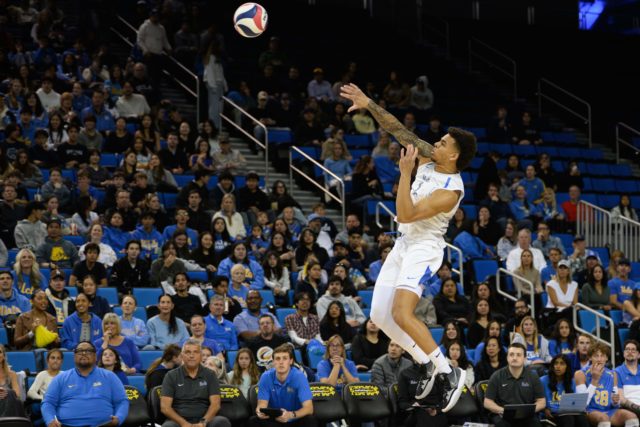
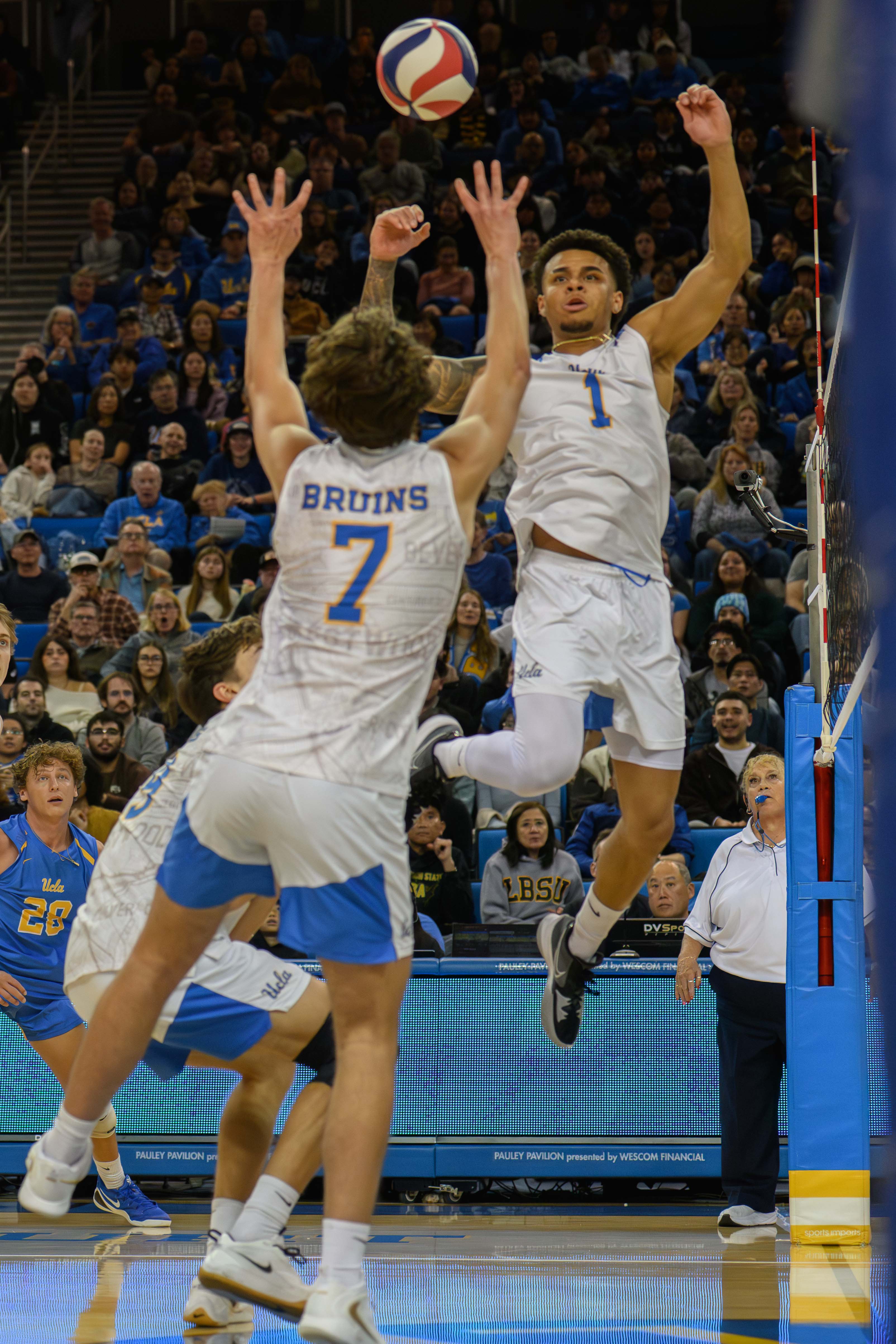
UCLA’s starting middle blocker is in his senior season, fresh off a career year in which he won the Ryan Millar Award for the nation’s best middle blocker, earned his second AVCA First Team All-America selection and ranked third in the MPSF in blocks per set.
But one accolade remains missing: a national championship.
“Last year, it hit me pretty hard – it sucked,” Thorne said. “You make it to that final spot, and you just come up short. It’s something you have to put in the back of your mind and think, ‘OK, I’m going to put in so much work now that I can never have this feeling again.’”
After helping lead the Bruins to their third consecutive national championship appearance last season, a sweep by Long Beach State stopped what could have been a Westwood three-peat. The former Grand Canyon athlete now has one final year to put an exclamation point on an already statement-filled volleyball career.
Thorne said his journey getting there was far from simple, as each step of the way has been underpinned by perseverance, shaping him into the person and player he is today.
The Hollywood, Florida, local said he began playing volleyball during his freshman year at South Broward High School as an opposite hitter. Although he grew up as a defensive specialist for his club team, Thorne said he operated as a pin-hitter for his school out of necessity, noting that his team was not as strong as surrounding schools.
Thorne acknowledged that he felt he was playing catch-up in college, despite playing volleyball all four years of high school. While he began competing at 15 years old, many on the West Coast begin well before age 10.
“Since ninth grade, he definitely was determined to be the best he could be on the actual team itself and as a person – I saw that also,” said Leo Jimenez, a former science teacher at South Broward High School and the school’s boys volleyball coach from 2014 to 2022. “He was very determined to be the best he could be as a son to his family but also to his friends. He was very caring and thoughtful about what he said around his peers.”
Thorne was lauded for standing out among his peers as both a student and a player, and Jimenez referred to his former student as family-oriented with a supportive household.
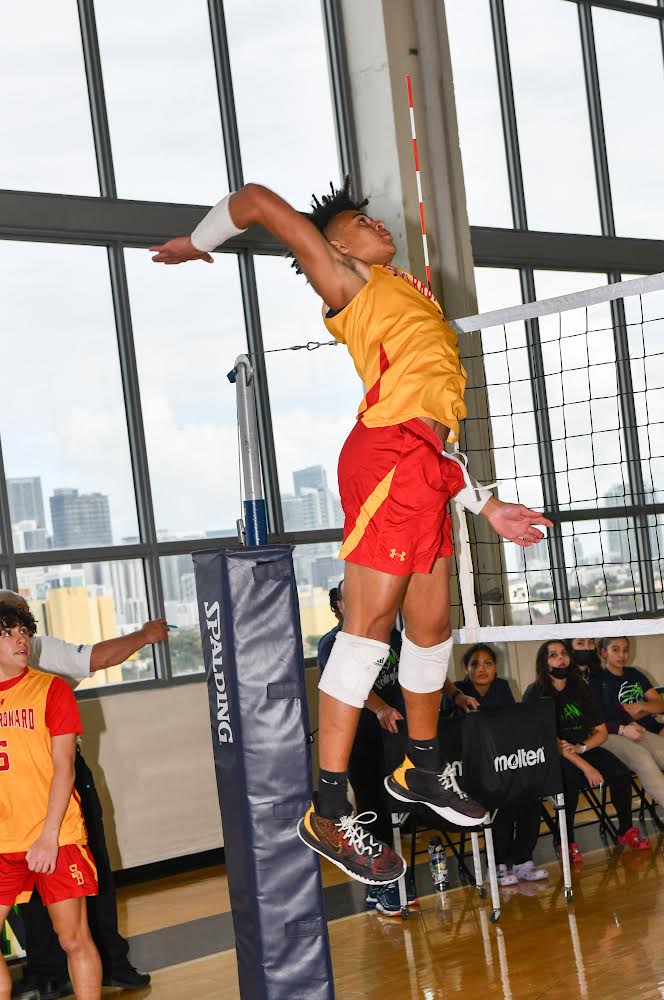
But standing at 6-foot-4, Thorne was never the tallest in his position group.
Even at UCLA, Thorne is the third-shortest player excluding liberos – two inches shorter than senior setter Andrew Rowan and five inches shorter than fellow starting junior middle blocker Micah Wong Diallo.
But Thorne makes up for his atypical blocking build with a 45-plus-inch vertical and one of the most athletic frames in the country, despite his shorter stature.
Nonetheless, for all his shortcomings, Thorne said they drive him.
“I definitely feel like I play with a chip on my shoulder, especially early on in my recruiting process,” Thorne said. “When I was 17, 18, a lot of coaches turned me down just because of height, not even because of my ability to play. They saw that I was a 6-foot-4 middle blocker, and they typically don’t recruit anyone under 6-foot-8.”
Thorne began competing for 352 Elite Volleyball under coach Roger Peluso, now the head men’s volleyball coach of Queens University of Charlotte, entering his junior year of high school. Peluso is no stranger to youth development, having mentored a plethora of now-collegiate athletes, including redshirt junior libero Christopher Connelly – whom Thorne played with at the club level – and his son, opposite/setter Ryan Peluso, at Long Beach State.
With the club initially based in Ocala, Florida, before moving to Orlando, Thorne’s home was more than 200 miles from where he competed, forcing him and his father to make three-plus hour commutes, Thorne said. Roger Peluso said Thorne often stayed with his family, with whom Thorne bonded heavily.
Thorne made an immediate impact on a team void of standout middle blockers despite the jump in competitiveness from high school to club, Peluso said, adding that Thorne had to learn how to sharpen his passing and serve to complement his natural athleticism.
“He was the guy, right?” Peluso said. “The team (South Broward High School) was all based around him. Then, when he came over to us, he had to play a really important role, but he also had to realize there was a lot of talent around him that was equally as good.”
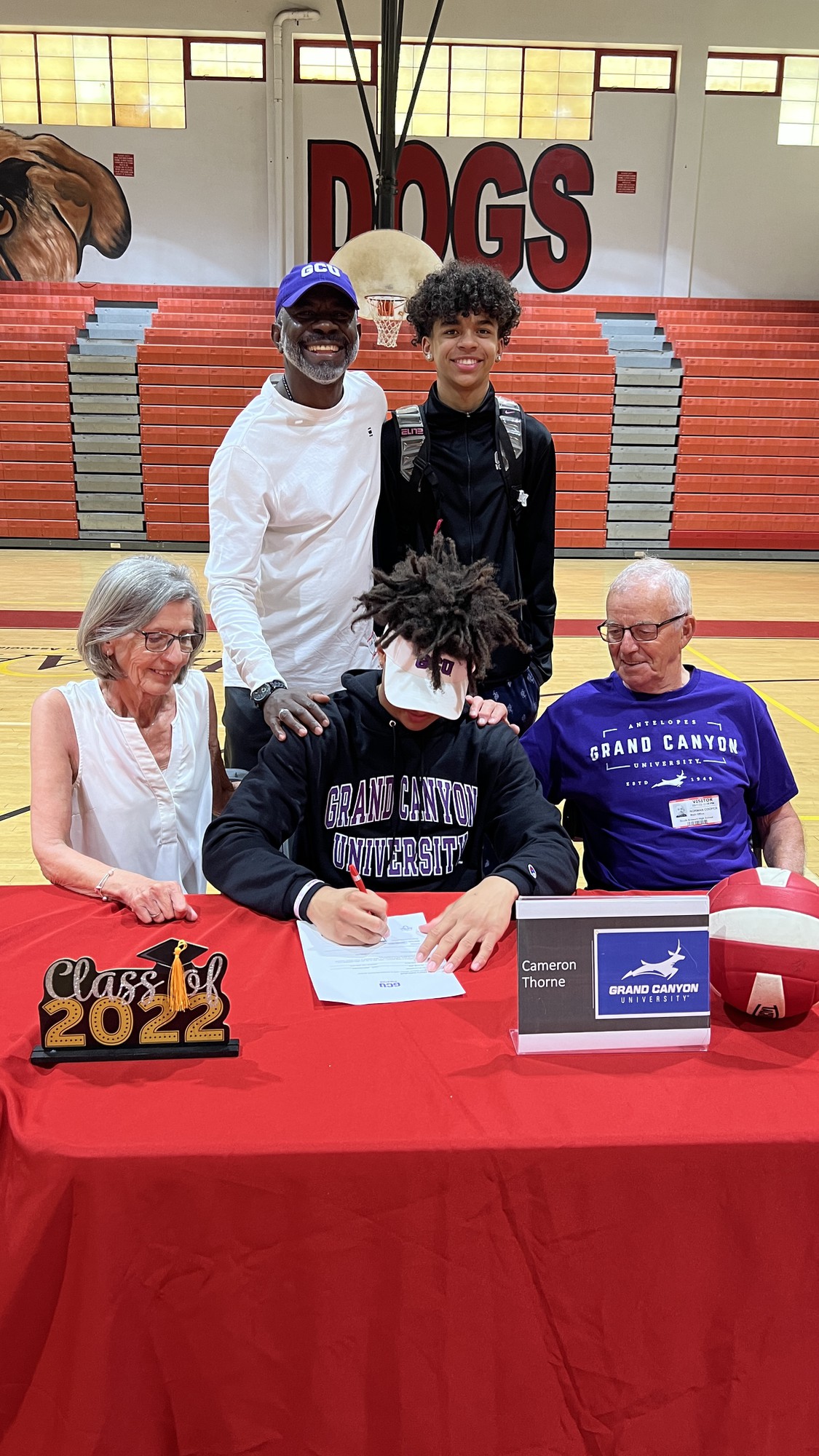
Although Thorne admitted to committing to a Division I college program in December of his senior campaign – relatively late compared to other volleyball athletes who typically do so in the fall, Peluso said he remembers the moment he realized his former player’s star potential at the collegiate level.
In a January 2022 matchup against Bay to Bay Volleyball Club, an elite team out of Silicon Valley, when Peluso’s squad was likely seen as an underdog, Thorne and his teammates emerged victorious.
“You look at how many kids there were, how many people standing around, standing on top of chairs,” Peluso said. “Their average height was 6-foot-5, 6-foot-6, and a lot of those kids are Stanford(-bound). … We wound up beating them, and it was incredible. In that moment, he put himself on the map.”
And by the time Thorne stepped on the court at GCU, his progress accelerated.
Thorne arrived as a rotational middle blocker among a senior-heavy group in his freshman season at GCU. In 2023, the Antelopes had eight middle blockers – five of whom were upperclassmen, meaning the position group’s sole true freshman had to work exceedingly hard to earn playing time.
And Thorne played in 25 of 30 possible games, starting all but three of his appearances. The eventual MPSF All-Freshman selection concluded his first collegiate campaign with 93 total blocks, including 13 three-plus block performances. Thorne notched a then-career-high six blocks in the MPSF championship against UCLA.
“He was so intentional with everything he did,” said former Grand Canyon assistant coach Matt August. “He came to my office probably every day, watching film, asking questions. That’s something that’s lost a lot, even in college now. … When he started asking questions, we knew we could trust him to be put in there. We gave him a chance, and he made sure he made the most of it.”
August was an assistant coach for the Antelopes in 2023 and 2024 before helming the Benedictine University Mesa Redhawks in 2025. The former UC Irvine player praised Thorne for his work ethic, which allowed the middle blocker to tap into his raw athleticism and close out blocks that most other middles could not.
Thorne has also been hailed as someone who brings exuberance to championship-contending squads.
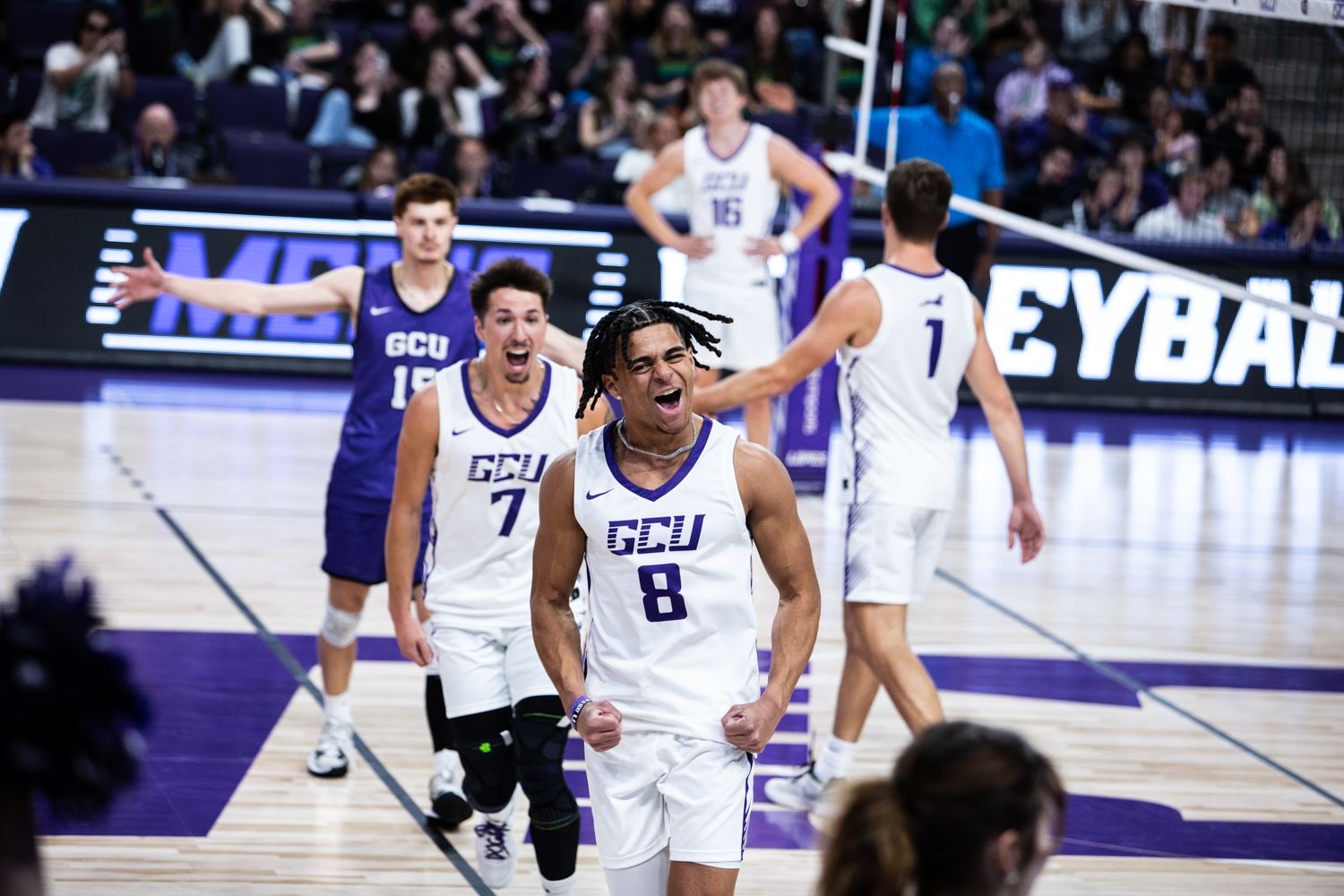
And his second season at GCU was no different, as Thorne finished the year as the nation’s leading blocker, accumulating 149 blocks and helping lead the Antelopes to an MPSF championship title.
But the road to the top is impossible without challenging decisions.
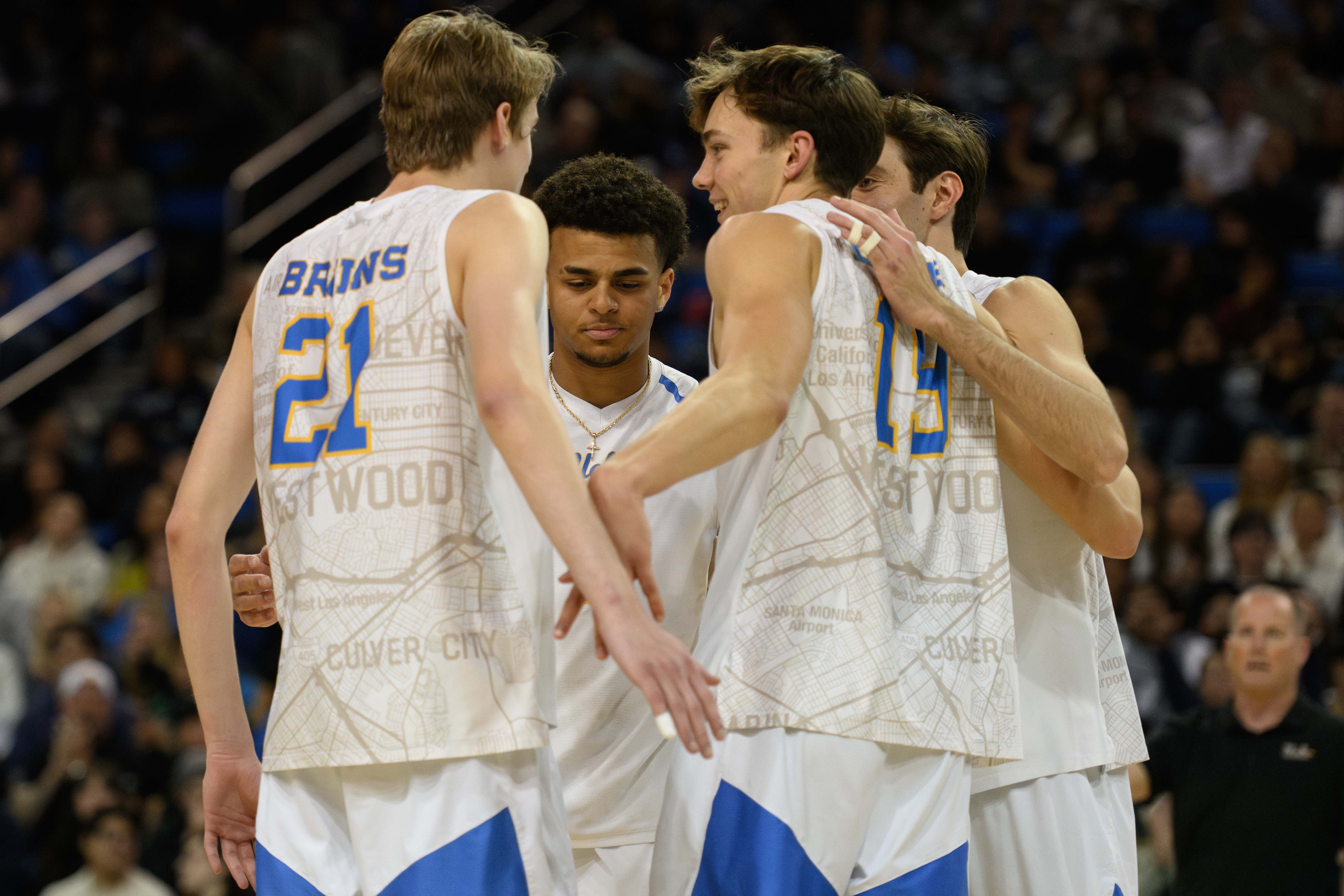
Despite coming off a conference championship and being a set away from the national championship match, Thorne said he knew transferring to Westwood would maximize his championship window.
The second-year Bruin cited the UCLA program’s championship pedigree – having come off two consecutive national titles – and the opportunity to play with All-American talents in seniors Rowan and outside hitter Zach Rama, along with now-graduated outside hitter Cooper Robinson, as his motivation for committing to UCLA ahead of his junior campaign.
“I always remember the coaches that turned me down, so when I see them on the schedule, it’s always a game I look forward to playing to prove them wrong,” Thorne said. “When I entered the transfer portal after my sophomore year, all those coaches came emailing me back wanting to talk. It definitely was a good feeling.”
But the attraction was mutual for UCLA as well, considering former middle blocker Merrick McHenry – who was a three-time AVCA First Team All-American and the 2024 MPSF Player of the Year – had just graduated.
With Thorne set to graduate this spring with a sociology degree, the All-American said he has his sights set on volleyball even after college, hoping to play professionally and on the global stage at the Olympics.
After competing and training with Team USA last summer, Thorne earned valuable experience training with some of the best in the game. This included former UCLA head coach and Bruin Hall of Famer Karch Kiraly, who won three national championships as a player from 1979-82 and three Olympic gold medals.
Thorne was also selected as the Best Middle Blocker in the NORCECA Pan American Cup last summer after helping the American squad achieve a silver-medal finish.
Thorne has just a few months left to check off the last box on his collegiate checklist amid an undefeated 2026 campaign.
But between how much he has grown from a young age and how much more he has yet to fulfill, this may be the year Thorne is most poised to hoist a national trophy.
“The mindset from last year and this year is the same,” Thorne said. “Of course, that national championship is the ultimate goal. I’ve shifted away from looking for personal gain and accolades and more of, ‘I want to win.’ I haven’t had the national championship feeling that a couple of the guys had, and it’s my last chance to do it.”


Comments are closed.