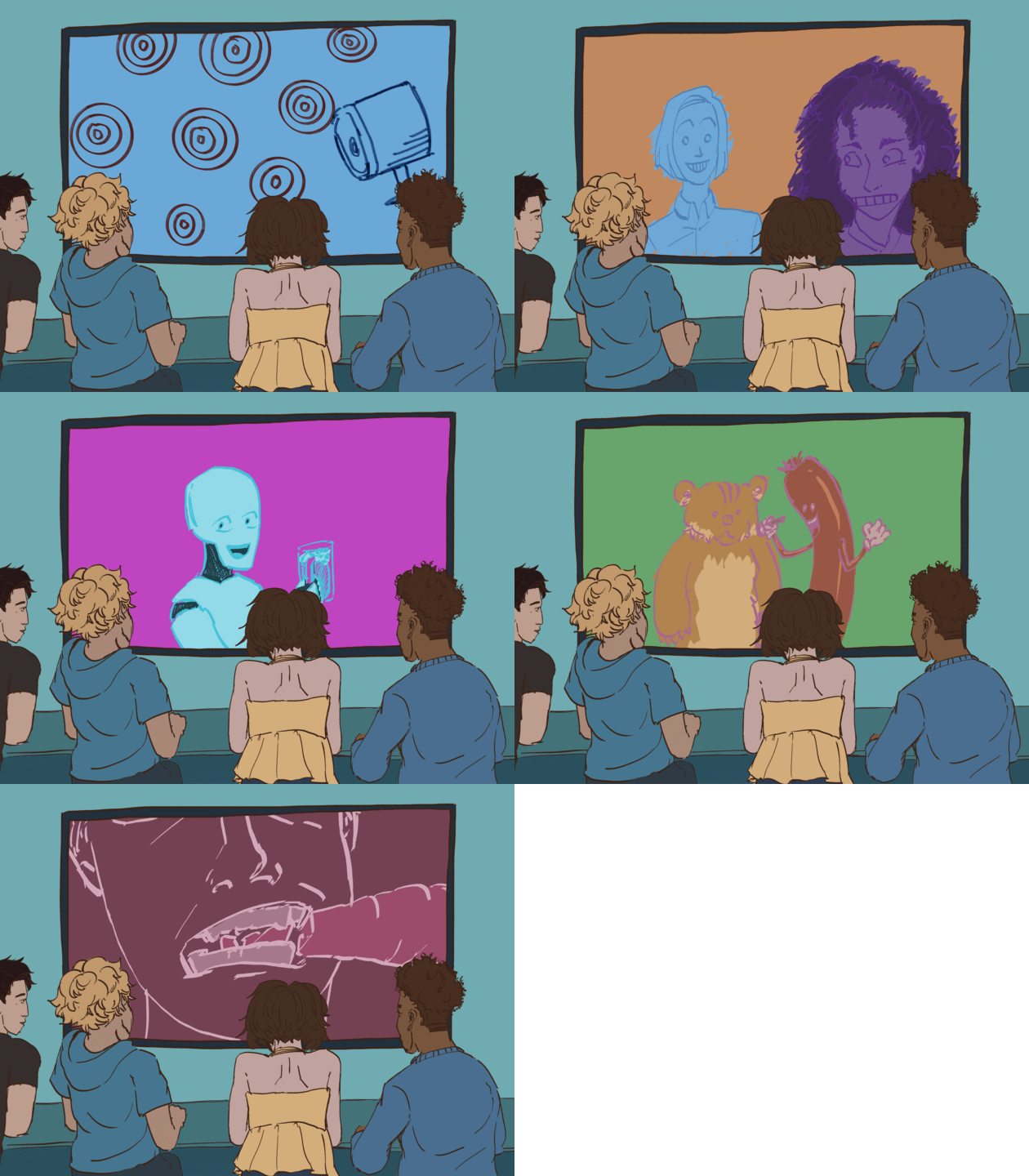
Super Bowl LX? More like Super Bowl AI.
Of the 66 commercials that aired during this year’s Super Bowl, 15 of them featured artificial intelligence. Even ignoring the associated ethical implications of excessive AI use, the quality of what used to be considered the best ad event of the year has dropped to an almost questionable degree. All were hard to watch, either for their disturbing implications or poor content, but above all the others, Ring’s was simply the worst of the broadcast.
The security system’s advertisement introduced Search Party, an AI program within the app that, as with the example in the commercial, can access neighbors’ cameras to search for lost dogs. The ad claims that since its launch, a lost dog has been found each day, but despite an attempt to tug on heartstrings, the only feeling that remains is fear.
It is bad enough that just about every action a person makes has the potential to be recorded, yet Ring found a way to fully realize the ever-present worries of a surveillance state. Particularly with the past year’s increase in United States Immigration and Customs Enforcement presence throughout the country, Ring’s initiative either feels horribly tone deaf or intentionally sinister. In any case, it is difficult to imagine anyone thinking of the family pet when watching this commercial.
Similarly, Anthropic, an AI company best known for its “AI assistant” Claude, attacks its rival companies with a warning that reads, “Ads are coming to AI. But not to Claude.” Before this on-screen text, however, the commercial focuses on a man talking to his therapist about wanting to repair his relationship with his mother, only for the therapist to give advice that slowly turns into an ad.
It seems the intention was for the eeriness to begin when the advice turns to blatant advertising, except the entire advice segment was written and performed in an incredibly vague, uncanny manner that makes the AI itself the uncomfortable portion, not the embedded advertisements. Someone only half-watching may not have even noticed the switch-up, given the monotone performance of the therapist.
The plethora of other AI advertisements was similarly problematic for a variety of reasons, but two stand out as especially egregious for one visually apparent reason: They were made by AI.
The commercial for Svedka, a vodka brand, featured two uncomfortably overgendered robots drinking and dancing, encouraging the audience to “shake your bots off.” The ad was made primarily with AI, according to the company’s owner. Uncanny at best and hypersexualized and offensive at worst, the ad is equal parts ethically problematic and painful to watch because of its lack of human artistry.
Similarly, the AI platform Artlist’s commercial boasts that it bought its ad space a week before the Super Bowl and made its commercial in five days using only its own AI Toolkit. Worse, its website promotes a $60,000 prize to the best Big Game-style ad created using the Toolkit. Though much more bearable to watch, the even greater moral implications of this commercial become too much to handle.
It is one thing to promote AI or use it with CGI, as other ads did, but these two commercials cross a line. With the high price tag of a Super Bowl commercial sitting at around $8 million, the lack of artist involvement is simply unforgivable. These highly anticipated commercials should not be rushed projects because at their best, they can become culturally iconic moments that are almost art. AI has no place there.
Beyond the AI takeover, there were plenty of problematic and uncomfortable commercials that erased all memory of the good advertisements, if there were any. Mike Tyson’s commercial – funded by the recently established MAHA Center, named after the Make America Healthy Again endeavor – includes him talking about how “fat and nasty” he used to be, with how much he would eat.
The MAHA Center is a nonprofit founded by Tony Lyons, chairman of the super PAC supporting Robert F. Kennedy Jr. The commercial was also directed by Brett Ratner, the director of “Melania.” It is apparent to anyone watching the commercial that no health professionals could have been involved with its awful message delivery, funded by billionaires and other donors rather than any health care organizations. Even ignoring the political overshadowings, this ad has no place in the modern world, with the number of people struggling with eating disorders and food insecurity.
Coinbase, a cryptocurrency trading platform, could at least be described as trying something new with a karaoke-based advertisement that feels more confusing or boring than anything else. While it started with the potential to be a delightful change of pace, by the time the lyrics changed to be about Coinbase, it was hard to care anymore.
Simply put, the commercials were either so boring they were bad or so bad they were unwatchable. So many of the advertisements from this year’s Super Bowl were for subscriptions, services and websites, a trend that seems to make for less interesting commercials as well as concerning economic implications. And with all the glaringly inappropriate ads, it almost seems like the problems are intentional.
Generation Z, a large percentage of the consumer pool, is widely considered to be less interested in broadcasts like the Super Bowl. So what are advertisers to do? Stir up drama. Whether intentional or not, it gets more attention. Posting politically correct takedowns of these offensive commercials is important, to be sure, but it also means people are talking about the companies to an increased degree.
When any publicity is good publicity, many companies have decided the Super Bowl is the perfect opportunity to make a bold choice.



Comments are closed.