

Editor’s note: This review contains descriptions of abuse and a miscarriage that some readers may find disturbing.
Warning: Spoilers ahead.
Emerald Fennell’s “Wuthering Heights” does not adapt Emily Brontë’s classic novel, but dissects, discards and ultimately rebuilds it into something deeply human.
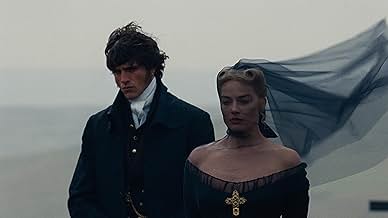
Released Feb. 13, director Fennell reimagines stars Margot Robbie and Jacob Elordi as characters Catherine Earnshaw and Heathcliff – lifted from the 1847 novel. As an adaptation, the film’s inauthenticity is insulting to Brontë, the characters, the fans and to the beloved world of “Wuthering Heights” as a whole. However, as a standalone piece, the film is visually stunning and wildly compelling.
From the beginning, the film makes little effort toward literary accuracy. The setting lacks a consistent time period, making it feel somewhere between a period drama and fever dream. The elaborate costumes exist alongside Charli xcx’s grotesque electronic soundtrack and the high budget surreal production design – in short, this is not 1771 Yorkshire.
[Related: Album review: Charli xcx’s ‘Wuthering Heights’ reaches peaks in production, falls in songwriting]
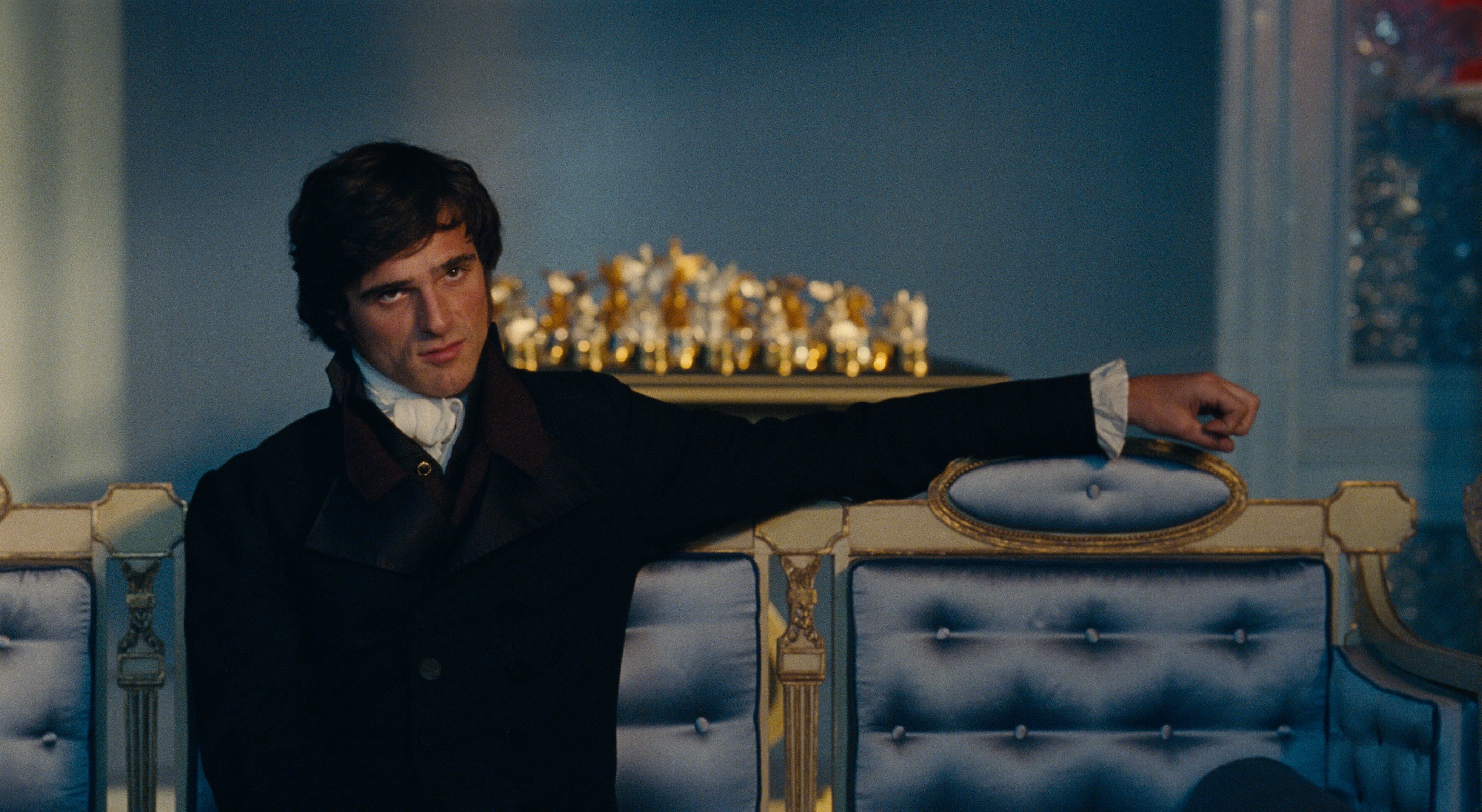
The casting is where the film commits its worst offense. Elordi plays Heathcliff, completely erasing the character’s racial identity. In the novel, Heathcliff is described as having a dark complexion and faces brutal racist treatment from the Earnshaw family. His outsider status, the racial slurs thrown at him and the dehumanization he endures ultimately fuel his rage and revenge throughout the book. Hence, his perceived otherness is essential to understanding his character. In the Warner Bros. film, Heathcliff is simply characterized as a man who falls so deeply in love with Catherine. The film’s whitewashing misunderstands what shapes Heathcliff’s character development.
Moreover, the character of Isabella (Alison Oliver) is completely rewritten. In the novel, Isabella is a victim of Heathcliff’s cruelty, as he marries her for revenge after he finds out Catherine is pregnant, and therefore abuses Isabella immensely. In the novel, this torment is horrifying and shows that Heathcliff’s trauma warps him into an abuser, yet in the movie, Isabella is merely portrayed to be a submissive to Heathcliff’s dominant. The abuse seems to become a kink – the torture a consensual power play in Heathcliff’s attempt to speak to Catherine. Isabella’s suffering is relevant to the plot of the novel, since it shows the cost of vengeance, but in “Wuthering Heights,” it becomes aesthetic, seductive, funny and stripped of its necessary gravity.
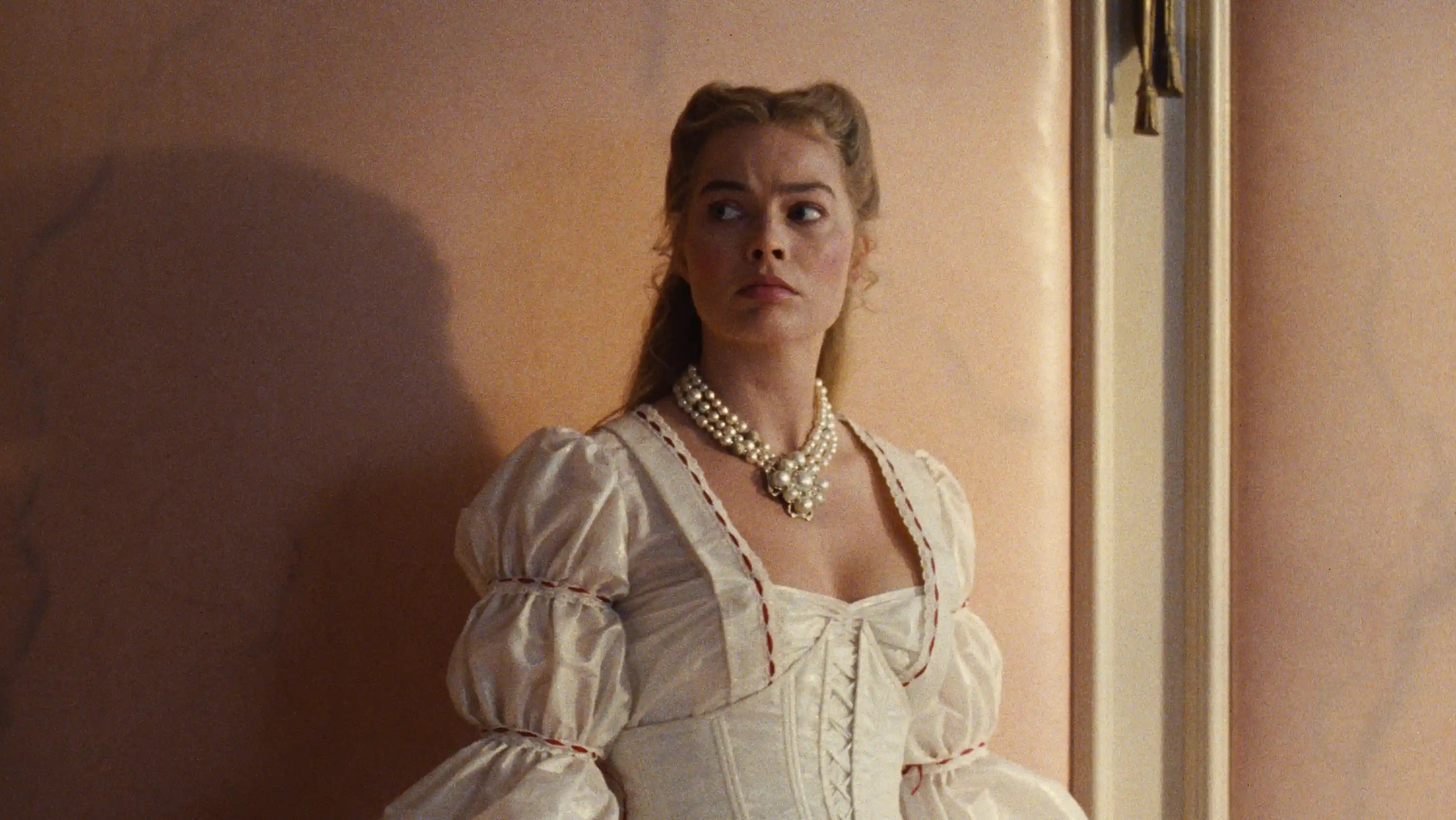
This directorial choice was deliberate on Fennell’s part. Firstly, she does put the title in quotation marks because she knew she was not remaking “Wuthering Heights,” but substantially reimagining it. While she borrows character names and a few of the infamous lines, if one compares it to the book, the result is enraging. However, if this roadblock can be acknowledged and accepted by viewers, most of what Fennell has created in the film becomes genuinely brilliant. Fennell successfully exhibits women that are constantly controlled by men.
With that being said, the production design choices are incredible. Catherine’s bedroom walls once she marries Edgar (Shazad Latif) become covered in scans of her skin – freckles, veins and moles – printed on silk and coated in latex so the walls sweat, literalizing Catherine. She is labeled as a decorative object to be displayed – her body being the wallpaper. Arguably, the room is an intentional reimagining of Catherine’s bedcloset in the novel in which the claustrophobic piece of furniture was deemed a“skin room.”
Likewise, vaginal imagery appears often throughout the film. For example, a crack in the wall, a pop up book Isabella gives to Catherine and even Catherine’s braids are styled with ribbon in a way that resembles female anatomy. This furthers the thematic visual of women being objectified in the film. Something so inanimate and private becomes a decoration to be displayed on screen. Further, claustrophobia is a huge part of Catherine’s marriage, as her heart lies blindly with Heathcliff. Walls weep, surfaces glisten, hands molded from people serve as candle holders – everything feels alive and suffocating. Catherine herself is dictated by the whims of Heathcliff’s emotions, which is visible through the film’s impressive stylization.
[Related: The Shakespeare Company highlights misogyny through ‘The Pliant Girls’]
The costumes and set design amplify the sense of the emotional hold Heathcliff has on Catherine after he leaves without a goodbye and she believes she must marry Edgar. Her gowns after marriage grow increasingly more elaborate and ornate. Fabrics shimmer and coil with different textures, deep tones of color pop, jewels and diamonds appear heavy and the set generally seems like a twisted fairy tail of dollhouses, fog and sharp-edged cliffs. When Heathcliff is present, Catherine runs through the moors with messy hair and looser, muddier gowns. She feels Heathcliff knows all of her and therefore, she doesn’t have to pretend with him.
The film’s seductive tone shoots desire as dangerous and all consuming, blurring the line between passion and destruction. Heathcliff and Catherine’s connection feels magnetic and wrong – both romantic and violent. Performances by all actors are incredibly believable, and the soundtrack creates impressive dirges, predicting a tragic cinematic finale.
In the end, Catherine dies of sepsis from a miscarriage, but emotionally from a double betrayal, the first when she ran Heathcliff off before her marriage to Edgar, and again when she does not believe she lost the baby, thinking she was just deeply demented over Heathcliff’s marriage to Isabella. This death ultimately eliminates the novel’s entire arc of redemption in which the second generation breaks the familial cycles of abuse. Instead, it ends with Heathcliff cradling Catherine’s dead body, crying over the loss he never thought possible.
The film abandons literary fidelity to become something entirely new. The quotation marks do their job – this isn’t Brontë’s story – and Fennell’s central point lands with full force, women remain trapped by the structures men built.
“Wuthering Heights” is messy, gorgeous, infuriating and unforgettable. Though it fails as an adaptation to honor the original story’s vision, the film traps viewers in its surprising beauty and makes the cost of desire impossible to ignore.




Comments are closed.