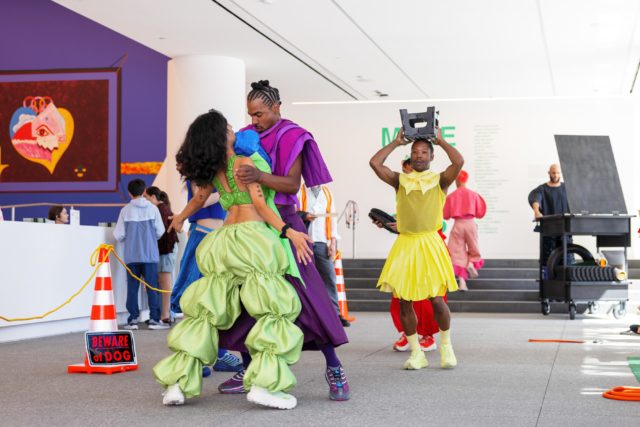
Dancers drifted through the Hammer Museum, carrying cones, canvas and found objects in a choreography of construction.
Presented as part of the Hammer Museum’s “Made in L.A.” biennial event, Will Rawls’ site-specific performance “Unmade” unfolded across a series of object-driven scenes. With its final showing Feb. 28, the project highlights the systems that define Los Angeles. Rawls, a choreographer, visual artist and associate professor in the Department of World Arts and Cultures/Dance, said “Unmade” portrays togetherness in an environment and era marked by instability. True to the exhibition’s ethos, Rawls said he curated the show with the question, “What can this work say about LA?” in mind.
“(As) a 20-year resident of New York City … one of the most sure things I can say about living in LA is that it has unmade me,” Rawls said. “I look at this performance – this kind of jumble, toss and chaotic, almost at times, inscrutable procession of activity – as a deep symbolic representation of how it feels for me to try to construct meaning and place out of becoming an Angeleno.”
The “Unmade” performer and UCLA lecturer Maya Billig said the piece visualizes the ever-changing nature of the city and reflects her recent experience moving to LA. The piece, she added, invites both audience and performers to reflect on the convergence of humor, ridiculousness and seriousness – and what is created and destroyed along the way.
“There can be a choreographer who is giving you the answers,” Billig said. “But, it feels like he’s (Rawls) with us in asking the questions – he’s leading the group into deeper questions, and he is also discovering them in real time with us.”
Gurmukhi Bevli, a performer in “Unmade” and UCLA alumnus, said the piece initially felt like it was asking a question of its own. Over the course of its six-month run, Rawls’ former student added, friends noticed the work gradually shifted and settled. What once felt like a project trying to figure out LA, she said, now feels more at ease with its uncertainty. Bevli said the city embodies the precarity of defining something and suggests that the need to define may be less important than the process itself. LA is constantly charged and mobile, Bevli said. She added that people, traversing the space with objects in the exhibit, highlight how the city is hard to pin down.
“As someone who’s an Angeleno, but also a diasporic person, I did not ever think I would see my perspective performed or represented this way inside a museum context,” Bevli said. “To understand my own lenses – how I’m both in and outside of LA – to see that as art has been really grounding for me.”
[Related: Line Dancing Club builds community, fosters connection one step at a time]
The history of art and performance in LA is distinct, Rawls said, as it allows for a wider range of techniques and approaches. That openness, he said, captures LA’s growing generosity toward individual artistic practice.
Essence Harden, who co-curated “Made in L.A.” with Paulina Pobocha, said the exhibition explored the broader systems that define the city – its architecture, housing landscape, economic pressures and global movement. The curatorial team aimed to spotlight the city’s talent, Harden added, while situating LA within a larger set of social and geographic factors.
Harden said, “Unmade” reflects the qualities of the LA arts ecosystem: a collaborative, process-oriented community that evolves with each performance. The openness and energy of “Unmade,” Harden added, reflect the region’s creativity and collective chaos.
“There is a large migrant community, an immigrant community.” Harden said. “It’s a real city. It’s a real place, so people move in and out of it. … (How we) engage with the city is through cement and structure.”
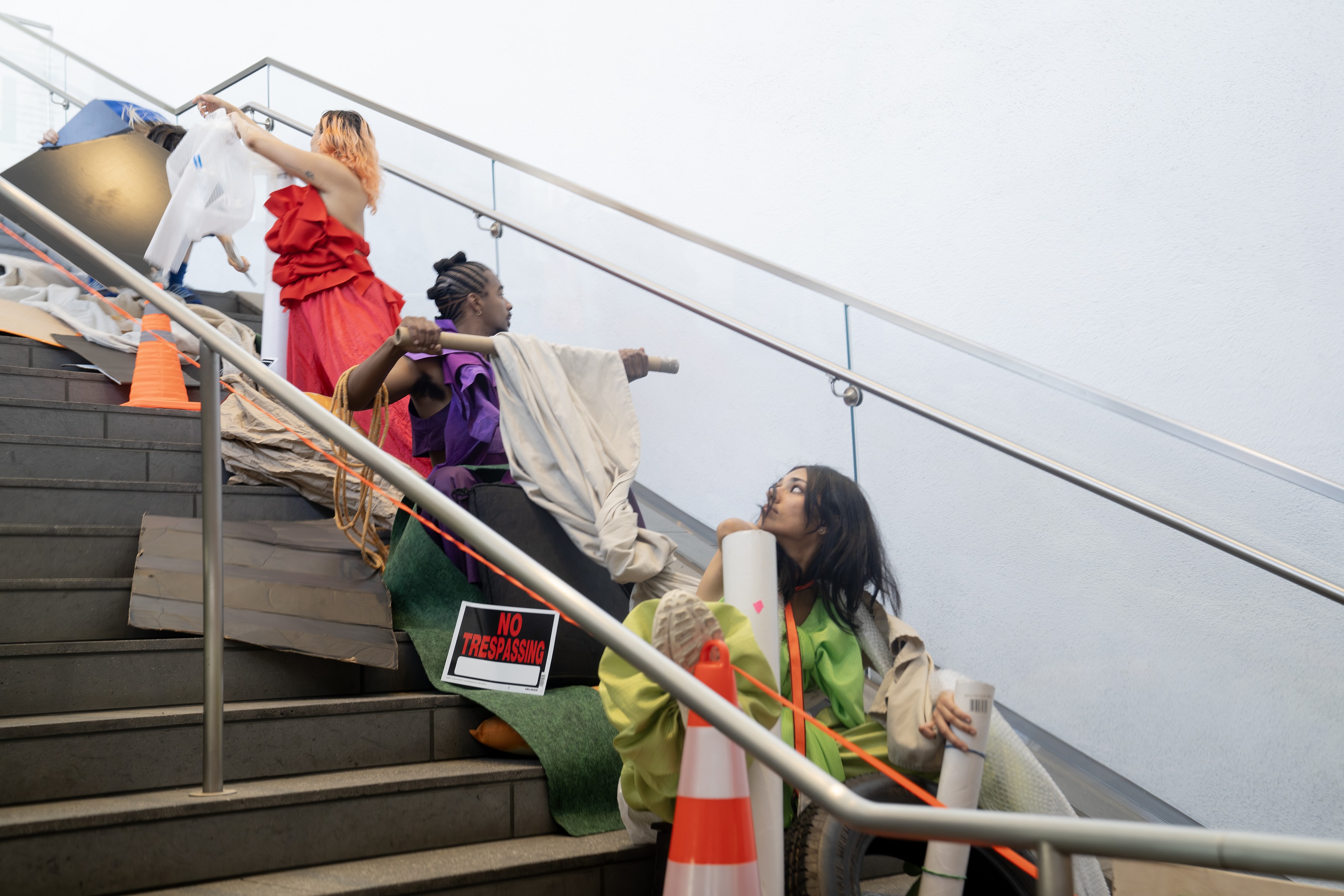
Inspired by an improvisational technique known as “clowning,” Rawls said he referenced teachings from Sayda Trujillo, whose teachings treated accidents as creative possibilities. The approach, he added, presented a crucial counter to the perfection-crazed culture by encouraging a more open, playful performance.
Harden said Rawls used clowning to harness humor as a response to break from institutional structures. The curator added that this technique helps accentuate how Rawls envisions movement across the space and LA as a whole.
“I’m seeing that ecosystem (the LA arts scene) grow in a way, giving artists more, despite all odds, when there’s less and less funding,” Rawls said. “There’s something magical about the artist, the artist’s commitment to their own infrastructure inside of an ecosystem that is inhospitable to their practices.”
[Related: Modern-spin Macbeth crafts Shakespeare to 1970s context with feminist tones]
As the final performance of “Unmade” approaches, Bevli said she is finally starting to feel comfortable in the work. Over time, each performance brought a greater sense of ownership and freedom to shape the material, Bevli added. Early on, the work felt external, she said, but the extended run made space to “unmake” and reshape with each iteration.
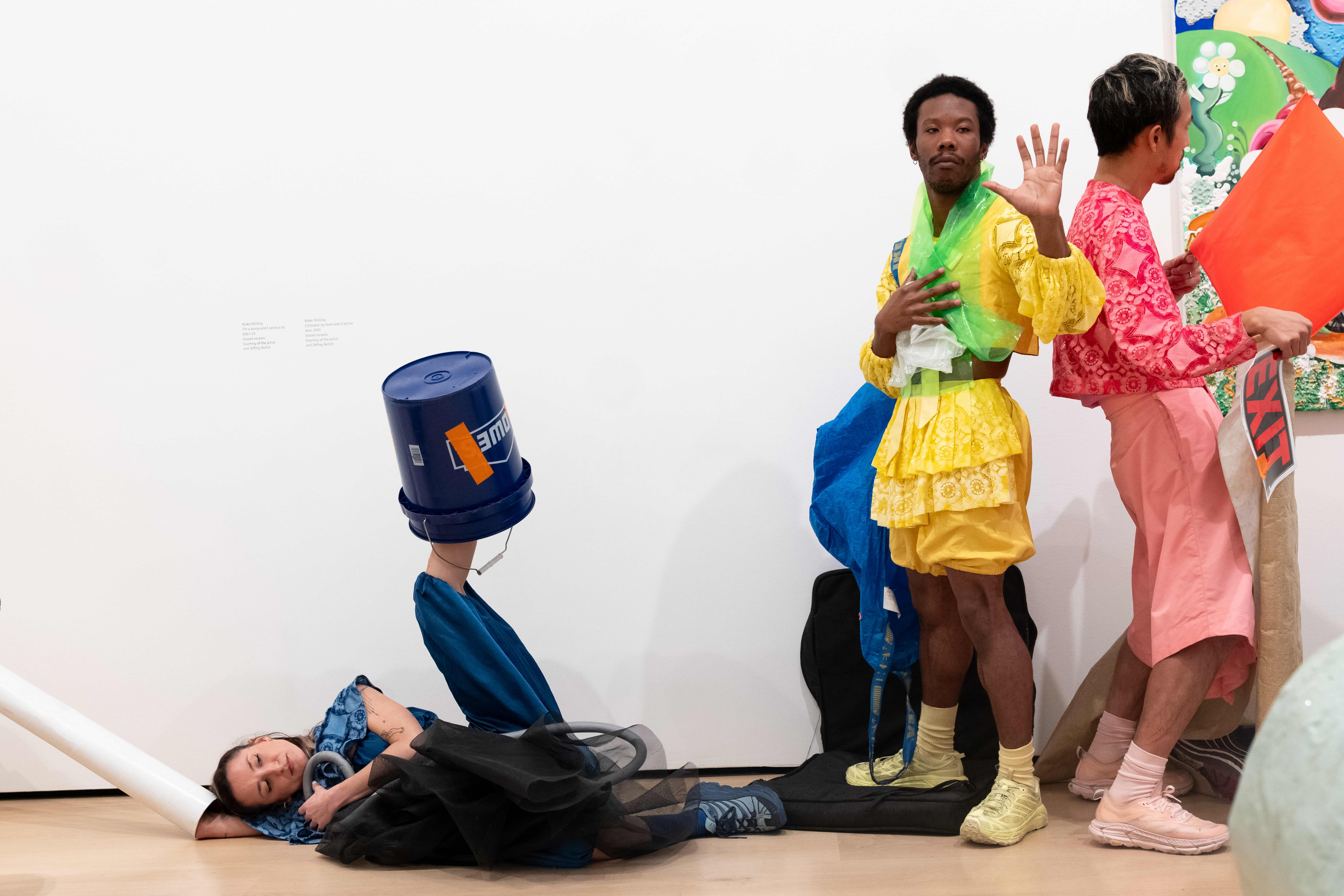
The alumnus added that when people – including herself – are immersed in an experience or performance, it can be challenging to understand how others perceive it. Dancing in “Unmade” was an experience of joy – a lighter sense of being, she said. But for those in the audience the work may take on new meaning, which she finds tremendously beautiful. In LA – a city shaped by distance, construction and constant movement – the practical challenges of getting from place to place informed his perspective, Rawls said.
“How objects are handled – and how handling objects can sometimes create sculpture or installation and leave a trace of the body – feels like a primary question,” Rawls said. “I hope to continue to work in visual art spaces where these questions feel really important. … I’m excited to keep thinking about the nature of making, how much of that process is revealed during a performance and what is left behind.”


Comments are closed.