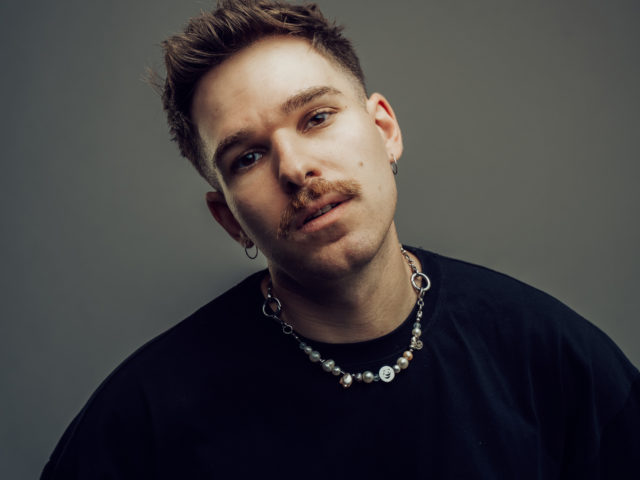
Ely Oaks is bending genre barriers.
The Austrian-born DJ and producer recently released a remix of Taylor Swift’s single “Opalite” as a collaboration with the pop star. In 2021, Oaks began his solo career after being part of multiple groups since his school days. He released a few singles but ultimately rose in popularity after his remix of “Spectrum (Say My Name)” by Florence + The Machine. On his North American tour, Oaks will make a stop in Los Angeles on March 6 at Exchange LA.
Oaks spoke to the Daily Bruin’s Ana Camila Burquez about his live performances, creative process and experiences collaborating with other artists.
This interview has been edited for length and clarity.
[Related: Q&A: Artist GUNNAR flips listeners ‘Upside Down’ as tour draws a hometown close]
Daily Bruin: You started your North American tour Feb. 27. After performing in Europe and multiple festivals, has there been a difference between the atmospheres of the European shows and the United States shows?
Ely Oaks: There definitely is, and I’m still trying to work out what it is. I feel like both crowds can go crazy in a little bit of a different way. I would say the sound I make, especially when the drops come, when the energy is the highest, that kind of stuff works really well in Europe, because the bouncy sound that I make resonates there really well. And then here in the States, it’s where I love to mix in a lot of pop and hooky stuff. Those are the parts where the crowds here, in the States, go crazy.
DB: In what ways do you think the live environment is different when you’re playing at your own show than a festival?
EO: I would say when I’m playing a headline show, the surreal thing for me is that all the people who are going to be at the venue – they are here because they want to see me, which feels crazy, especially when you see a full crowd. That actually adds pressure. I’m way more nervous before a headline show compared to a festival because when I’m at a festival, you get a crowd, and they’re going to be there because of the festival, and you have the place to show who you are, which is also important. But if the crowd isn’t full, that might be down to a set time or something – it’s not because of you. So the pressure is a little bit less.
DB: Your most recent project is the Taylor Swift “Opalite” remix. How was the process working on this single? Did you take a different approach with it?
EO: I would say not a different approach but definitely more pressure. It’s the biggest pop star in the world you’re remixing. So it was definitely a bit of a challenge to find the right vibe, especially because it’s already a great song as it is, and you don’t want to ruin it. Then at the same time, you’re like, “Okay, this is a huge opportunity, and you don’t want to waste it.” So it was a tough one, and I’m really, really happy how it ended up sounding, and also that Taylor’s team liked it and that it actually came out. It’s crazy. Big honor, for sure.
[Related: Q&A: Ahead of Head in the Clouds debut, PIAO talks collaboration, mixing genres]
DB: I know you have other remixes in collaboration with other artists, like one with Dove Cameron and many with LAVINIA. How is the process of remixing a song with another artist? Is there any creative exchange where they tell you the vibe they’re aiming for?
EO: I personally love to have that inspiration from other people because it’s so much value. A lot of these artists often come from different genres and different fields, and their approach to making music might be totally different, and I think that’s where the magic happens, when you mix those two together. As a producer, DJ, it’s the most amazing thing to remix records because that’s where so much happens – doing random stuff you wouldn’t expect. It makes things special.
DB: You said the “Opalite” remix was a lot of pressure to work on. But I also know you have your own singles, such as “Breakin’ Dishes” and “Running Around.” Do you find the process of making your solo projects less nerve-racking, and would you say you are experimenting more with your sound and process in general?
EO: Yeah, for sure. If it’s just a song, my approach is I always do social media first. Most of the time, I always show stuff on my socials and then see how the people like it. And that comes with almost no pressure at all because you just do your thing and then either people like it or they don’t. And if they don’t, they will forget about it five minutes later. The pressure’s not that high. It’s definitely easier.
But I like doing both. I love the challenge of having someone like Taylor Swift, the biggest challenge you can get. Getting that challenge and then having it in front of you, and you’re like, “Okay, I need to be perfect with this one.” I really like that.
DB: Your journey with music did not start with EDM. You were interested in the indie rock genre and later on metalcore, before landing on EDM. Coming from genres that can be considered total opposites, do you find yourself drawing inspiration from the rock and metal world into your work?
EO: For sure. I feel like a lot of these genres have been influencing what I’m doing now, even though I don’t really know how they do. It adds a lot to your palette of sound if you have these influences, and right now is a good time where indie music starts popping off again on TikTok and stuff.
I’ve been experimenting with remixing indie records, trying to get that into the electronic world, and that works really well. People really resonate with that. I’m happy that I had these influences early on, which wasn’t intentional. I was just listening to what I liked, but I’m glad.




Comments are closed.