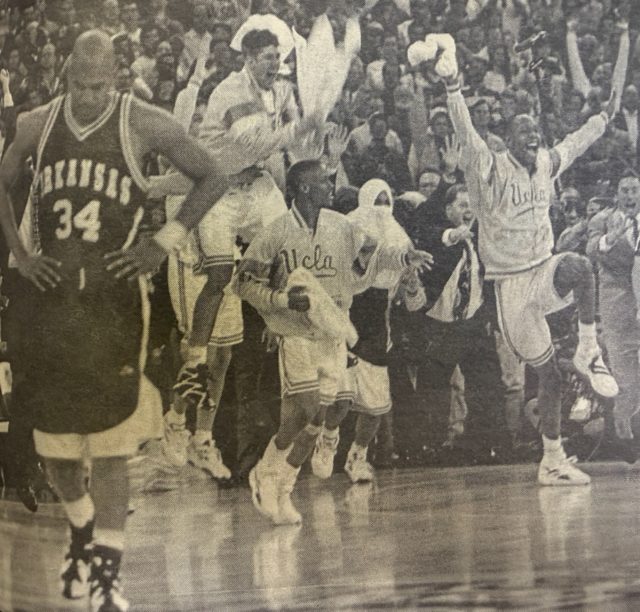
UCLA men’s basketball is officially dancing. And now, coach Mick Cronin’s squad has an opportunity to end the Bruins’ 31-year national title drought. Daily Bruin reporter Badri Viswanathan spoke with members of UCLA’s 1995 national title-winning team to understand what it takes to reach the top.
It was Dec. 3, 1994, and then-No. 5 UCLA had defeated then-No. 3 Kentucky 82-81 at the John Wooden Classic in Anaheim.
The Bruins passed their first test with flying colors, defeating a Rick Pitino-coached juggernaut that would eventually make the Elite Eight and boasted a bevy of future NBA players on game-winning free throws from freshman forward J.R. Henderson.
As the locker room erupted with postgame celebrations, freshman Toby Bailey sat alone in a secluded corner, pouting.
Bailey had played 10 minutes and shot 0-for-2 from the field, scoring just one point.
It was a challenging experience for the young guard, who had expected to contribute more in his second collegiate game.
“I was happy that we won, but I wasn’t happy with the way that I performed,” Bailey said. “When you’re coming from high school, and you’re the best player on the team at all times, if you don’t play well, a lot of times, your team might not win. You feel like you’re letting people down.”
Senior forward Ed O’Bannon, the squad’s leading scorer and rebounder, broke away from the raucous Bruin pack and headed toward Bailey.
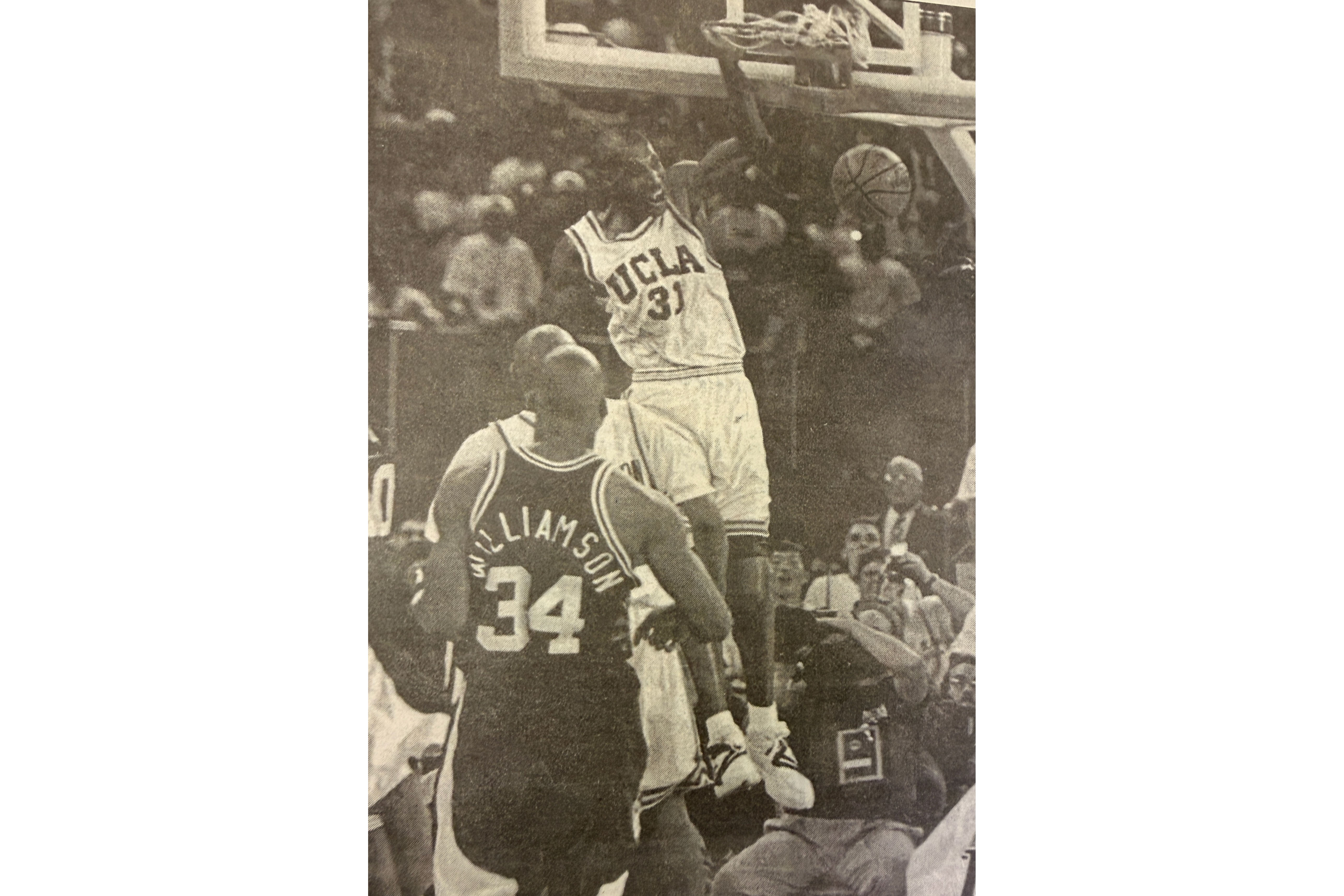
O’Bannon knew Bailey’s feelings all too well.
His squad had been sent home prior to the Final Four in each of his first three collegiate campaigns, including back-to-back eliminations before the Sweet Sixteen.
This was not one of those moments.
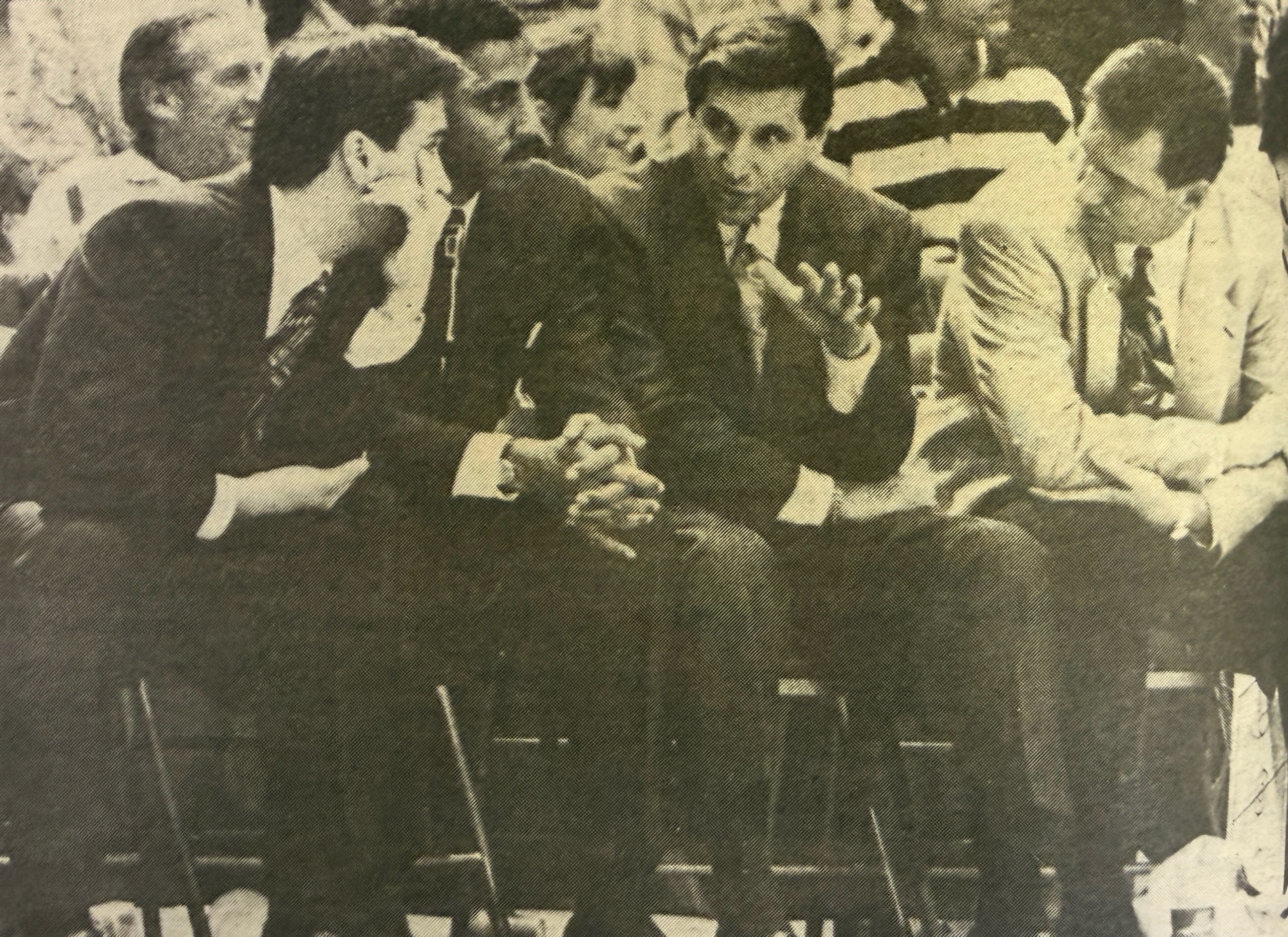
“Ed O’Bannon went over there and grabbed him (Bailey) by the jersey and said, ‘Come over here and get in this celebration,’” said Jim Harrick, the team’s then-head coach. “And boy, he (O’Bannon) just led him (Bailey) like a little puppy dog into that thing and wouldn’t let him not be a part of it.”
The moment was eye-opening for Bailey.
The freshman prioritized winning but still experienced the emotional ebbs and flows from his individual performances.
He needed to tweak his approach.
“As long as the team wins, and you tried your best and tried to contribute,” Bailey said. “It’s a different mentality you got to have. I’m glad that happened early.”
O’Bannon’s message hit especially close to home for the budding guard. Bailey had considered attending Artesia High School in Lakewood, California, when O’Bannon led the school to a state title.
He viewed the senior as family.
“If your big brother is telling you something, you listen,” Bailey said. “All of us from LA looked up to Ed.”
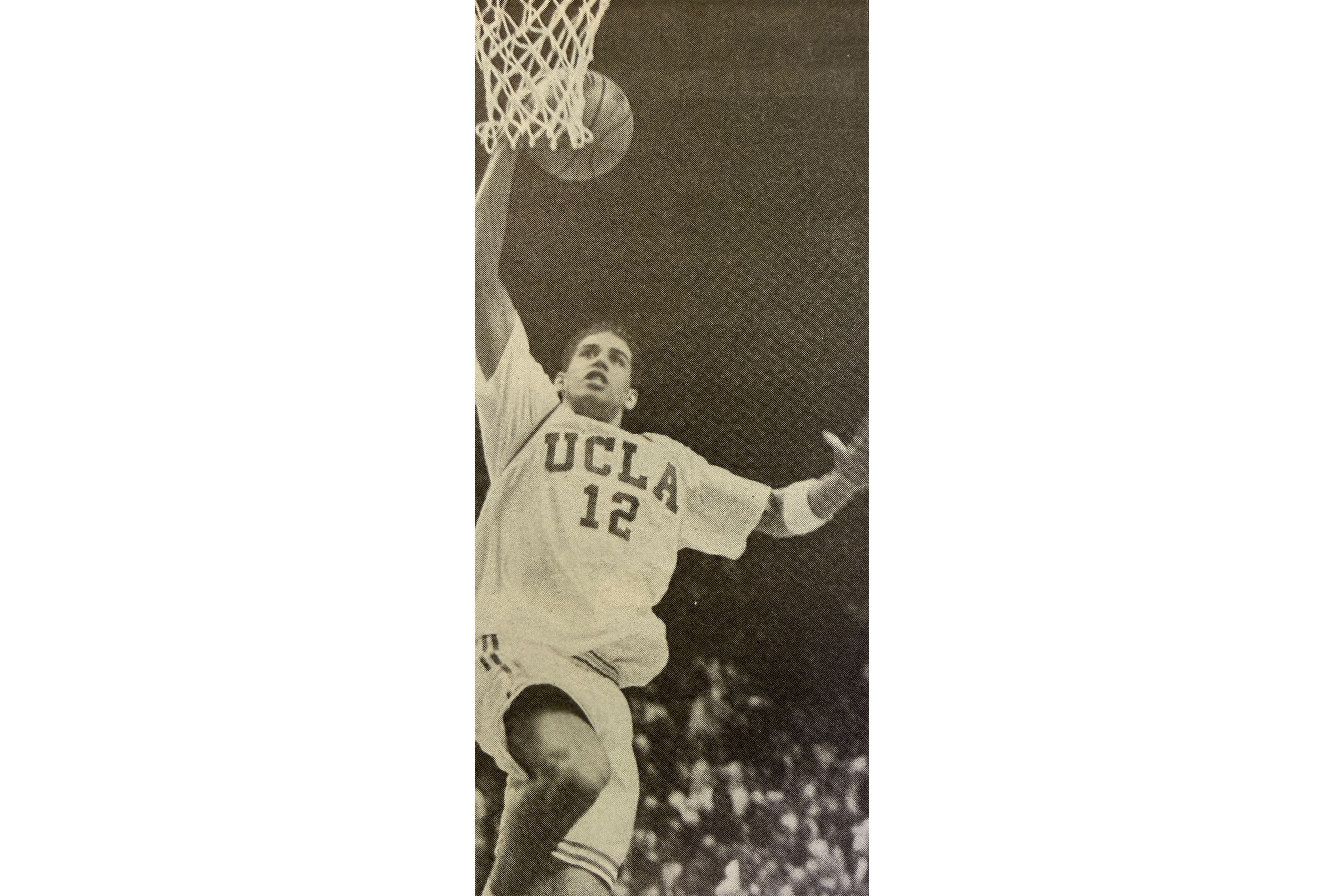
But O’Bannon was not always the vocal type.
That pivot was forged the spring prior, when the No. 5 seed Bruins allowed 112 points and suffered a first-round upset at the hands of No. 12 seed Tulsa.
Harrick said that moment sparked a transformation in his leading scorer, who was previously more hesitant to lead with his voice.
“When I walked into the locker room, Ed O’Bannon had taken command,” Harrick said. “I had been waiting on him to do that. He was a great leader, but it was hard for him. He hadn’t grown into it yet. And after that loss, he grew into being our leader, our supreme leader.”
O’Bannon and the Bruins spent the 1994 offseason eager to get another crack at a title – the last chance for the seniors to reach the mountaintop.
So they created a mantra, one that would unite them and help them eventually reach the summit.
“The first day of conditioning during the summer, at the end of the huddle, we said, ‘One, two, three, Kingdome.’ … That’s where the championship was going to be played,” Bailey said. “That was our singular focus going throughout the season.”
The blend of leadership techniques from three seniors bolstered the impact of the mantra. Guard Tyus Edney’s and center George Zidek’s quiet leadership complemented O’Bannon’s vocal presence.
Together, the trio illustrated a collective title pursuit, encouraging the underclassmen to follow suit, Edney said.
Edney recalled the closeness of the group through adversity, reminiscing on sophomore forward Bob Myers and freshman forward Kris Johnson cracking jokes on the team bus and all the laughs the team shared together.
“I agree we were talented, but how connected we were (was more important),” Edney said. “We had differences in ages and things like that. But when we got on the court, it was like a family playing basketball.”
The seven-man Bruin rotation boasted five players 6-foot-5 or over, which allowed them to command the glass and exploit opposing teams in transition.
“We were more of a defensive rebound and run team, probably the best one I’ve ever had,” Harrick said. “We could cover the floor really well defensively.”
But it was the team’s cohesiveness that allowed the squad to prevail where past teams fell short.
It helped Edney author one of the most iconic buzzer-beaters in basketball history when the Bruins were on the verge of elimination in the NCAA tournament’s second round.
It helped sophomore guard Cameron Dollar fill in for an injured Edney in the national title game and play 36 minutes en route to an eight-assist, four-steal effort.
And it allowed a self-critical freshman to buy into the larger process and blossom into a pivotal piece.
“I gave the team whatever they needed at that point,” Bailey said. “Some nights I got to score more. Some nights I played defense, and other people scored. So it wasn’t all on my shoulders to score all the points. I could let the game come to me.”
Bailey scored 26 points against UConn in the Elite Eight and replicated that output just nine days later against Arkansas in the national championship game.
The final possession of the Bruins’ season came in the Kingdome, where they played keepaway from an aggressive Razorbacks defense as seconds ticked off the clock.
The ball moved from player to player, with all five touching it on the squad’s road to basketball immortality.
A last sequence of connectedness.
“This is what team play is all about,” said sportscaster Jim Nantz as UCLA’s dream season reached its crescendo.
Team play it was.

Comments are closed.