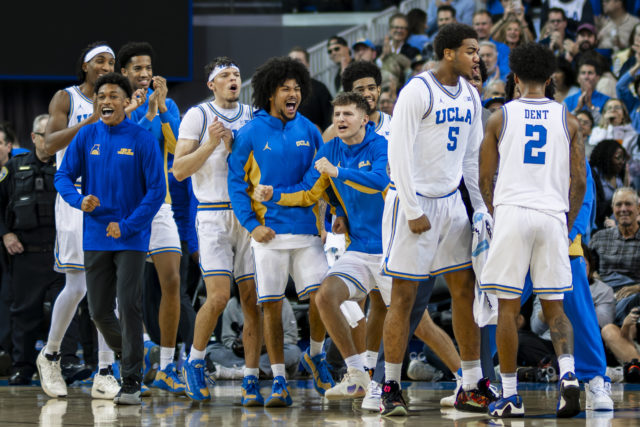
Five people play on the court.
But it is the 10 others on the roster that turn a good team into a great one.
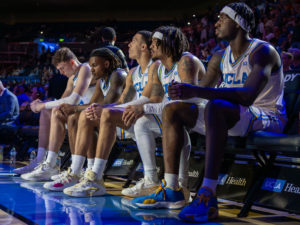
From the sixth man to the No. 15 player on the roster, each individual plays an imperative role in creating and sustaining a championship culture.
And deeper teams dance until the very end.
Teams are not built like the iconic coach Mike Krzyzewski–led Duke squads that barely played six people per game.
Depth defines title-winning squads.
And the Bruins proved the necessity of superior play from the pine during the Big Ten tournament.
“Guys stepped up on our team,” said UCLA men’s basketball coach Mick Cronin after UCLA lost to Purdue in the Big Ten semifinal. “Valiant, valiant effort by some kids that hadn’t played a lot – Brandon Williams, Steve Jamerson, Eric Freeny. Those three guys in particular off the bench probably didn’t play a combined 10 minutes against Purdue last time we played them.”
After senior forward Tyler Bilodeau went down with a knee sprain late in the first half of the quarterfinal matchup against No. 3 seed Michigan State, people already penciled in the Bruins as a first-round exit in March before hearing the injury diagnosis.
And when senior guard Donovan Dent left the semifinal bout with a calf strain, getting the Bruins back to full strength became most people’s talking point when filling out their NCAA Tournament brackets.
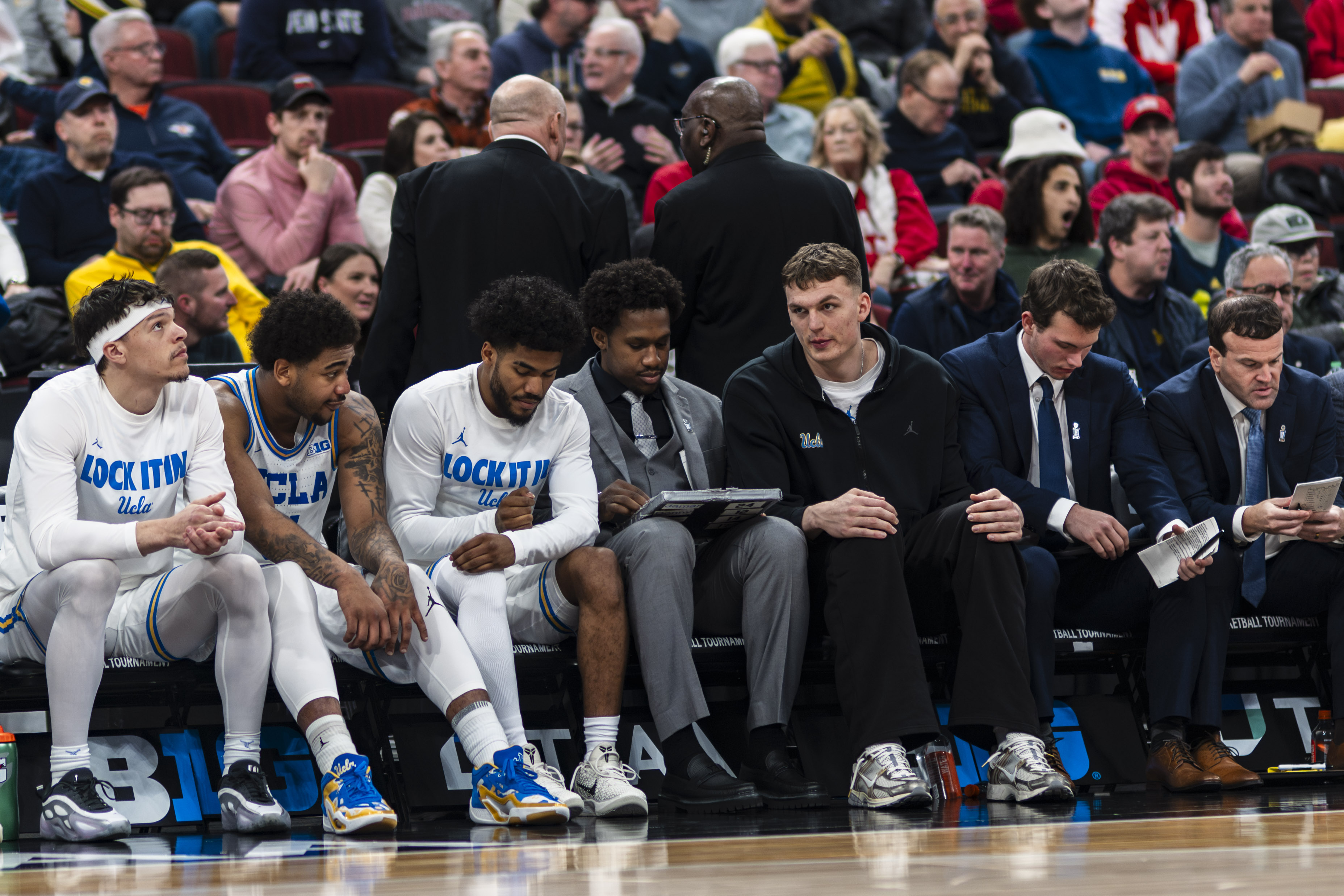
Dent and Bilodeau should return Friday against No. 10 seed UCF, but UCLA’s vulnerability became apparent during the conference tournament – making the team’s depth an important asset to monitor.
“Donnie looks great,” Cronin said Monday. “Tyler needs probably another day or two but no anxiety.”
And after a deep analysis, lack of depth could be the Bruins’ downfall.
Do not get me wrong, if any team lost a player commensurate in ability to Bilodeau or Dent, it would have a crippling effect on the team’s long-term trajectory.
But it remains true that the Bruins’ bench is a question mark, as it has been all season.
“We did some things well, and we got to get a lot better and more production off our bench,” Cronin said after UCLA lost to Arizona on Nov. 14. “Their bench destroyed ours, but I’m guessing Tommy (Lloyd) didn’t start Dell’Orso because he wanted to bring in an offensive player. We also brought in Trent, who’s a good player, and we got to develop our bench.”
With coach Mick Cronin opting for a three-guard lineup – highlighting the Bruins’ five best and most impactful players – junior forward/center Xavier Booker became the first name typically called off the bench.
Booker has shown an elite offensive skillset, raining shots down from deep, attacking the rim when running downhill on back cuts or working in the high post with hook and face-up shots.
The junior is averaging 6.9 points per game on a 55% clip from the field and 41.7% tally from beyond the arc – giving the Bruins a knock-down shooter come tournament time.
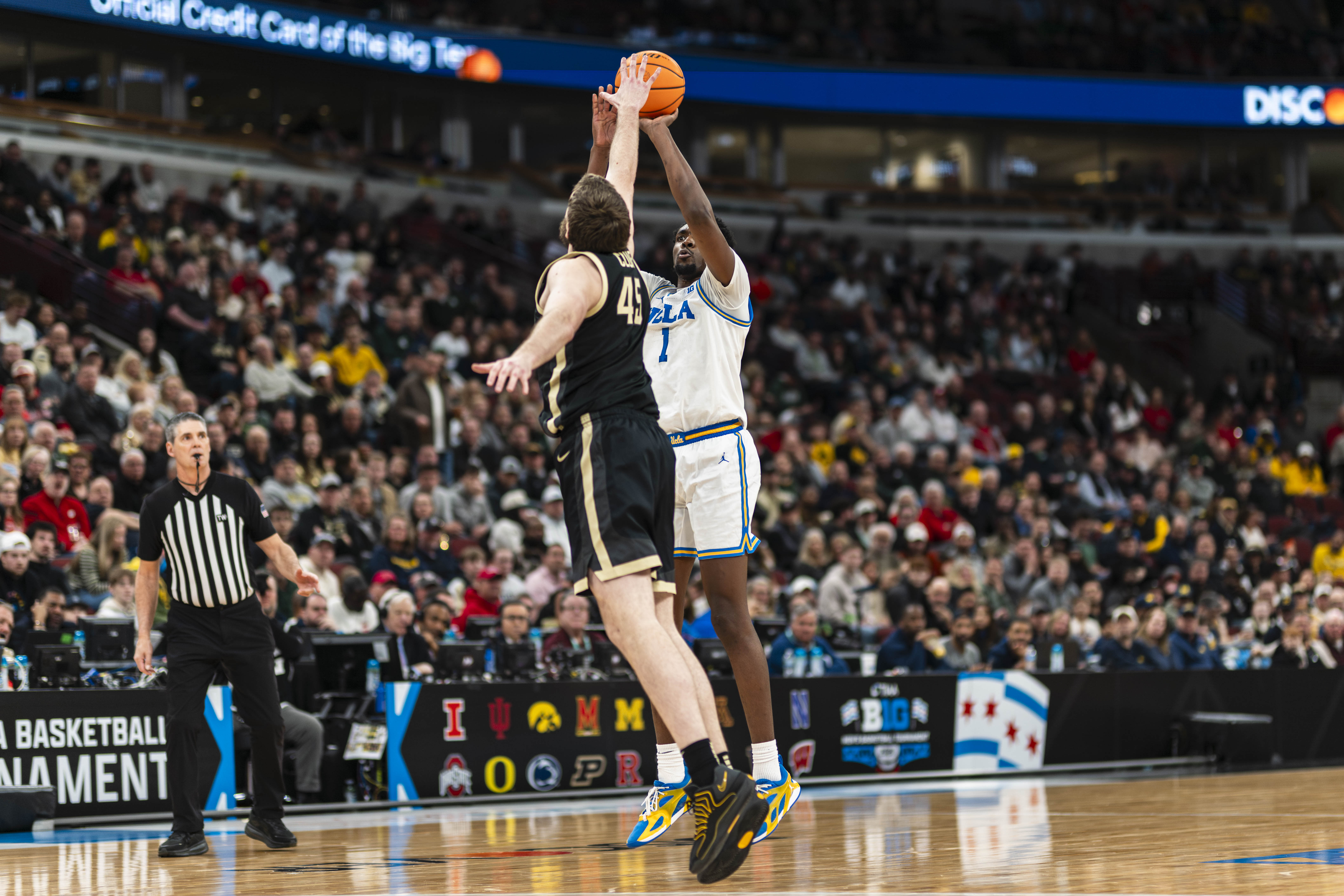
But he has left a lot to be desired defensively, specifically on the glass.
Booker has shown an inability to rebound effectively and defend proficient opposing big men all year. Booker has flashes of good defensive effort, but I still do not trust him to win the boards battle against a good center. The forward/center averages just 3.3 rebounds per game despite playing nearly 20 minutes per contest.
“I love Book, but he’s gotta rebound the ball,” Cronin said. “He gave us some good offense today, but defense and rebounding have got to improve. Him (Steven Jamerson II) and Book played 40 minutes at center, and they had a combined two rebounds. And their 5-man (Cluff) had 14. The five spot was 14 to two, everything else was a wash, so there lies the issue.”
Following Booker off the bench is typically redshirt sophomore guard/forward Brandon Williams, usually replacing Booker, Bilodeau or junior guard/forward Eric Dailey Jr.
Williams consistently brings hustle and energy to the floor at any given time, evidenced by his game against the Spartans when he garnered nine points, four rebounds and three steals.
“Brandon Williams, big night, nine points and four rebounds,” Cronin said after beating Michigan State in the conference tournament. “Obviously, we’ve got to get more out of Xavier Booker and Steve Jamerson next couple of days.”
He gives the Bruins solid defensive pressure around the interior and has the athleticism to keep up with opposing guards on the perimeter.
However, he has a limited offensive skillset. He excels around the rim but is not a proven shooter and does not have an expansive offensive bag.
Redshirt freshman guard Eric Freeny has played more as he has tapped into his potential.
He is an elite one-on-one defender, constantly disrupting opposing offensive schemes and giving UCLA even more guard depth as someone who can guard the opposing team’s best player.
Freeny is also a capable offensive player, shooting efficiently from the corner and off his pull-up jumper and is a formidable rebounder at his size – illustrated by his eight points and five rebounds earned in the Big Ten semifinal against Purdue.
“Eric Freeny’s emergence has helped us with defensive rebounding,” Cronin said Monday. “And guys know that he can play free because we have three guys who can play point guard.”
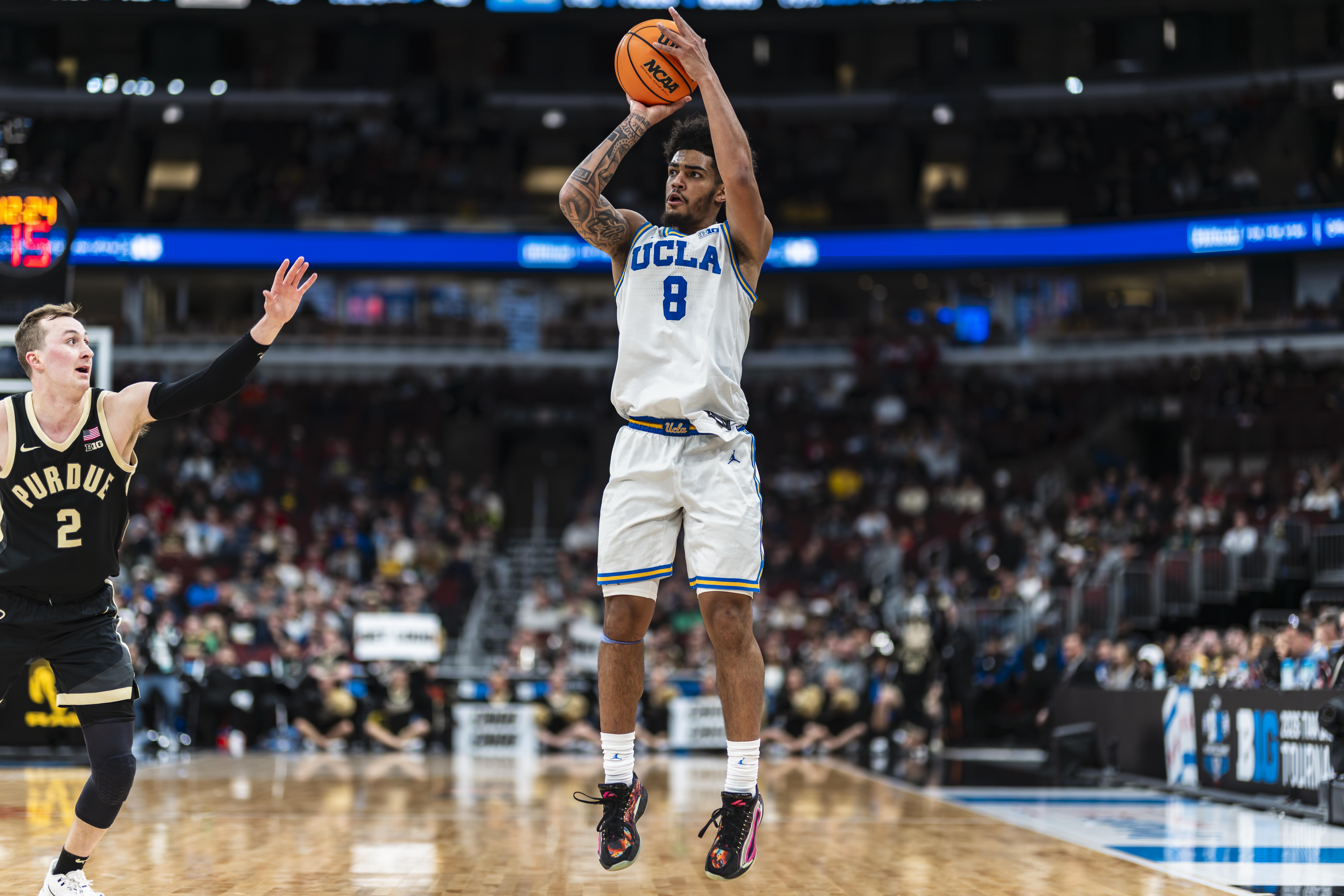
Yet, he has also disappeared at times this season – sometimes due to the limited minutes given to him, seen in his one-minute appearance in a loss to Minnesota.
But as his role increases, he could become more consistent and the exact piece to the puzzle the Bruins need to unlock their full potential.
“His (Freeny’s) toughness. That’s a tough guy right here,” said Dailey Jr. after UCLA beat Nebraska on March 3. “He brings that every day in practice. What we’re seeing is what he does every day. He works hard, he’s in the gym early. All the work that he’s done in the dark is coming to the light. He’s been a great impact player for us in the minutes that he’s been getting.”
Losing his time due to Freeny, fifth-year guard Jamar Brown has been in a slump for months. His 3-point shot looks little like the one the 40%-plus deep shooter from Missouri-Kansas City boasted.
Brown has played more than 20 minutes just five times since the new year and has shot 10-for-44 from beyond the arc since Jan. 3. There is no doubt that Brown has been in a slump since his promising start to the season, and it is unlikely that he will transform into the player many thought he would be when he came to Westwood.
But can Brown continue to help the Bruins outside of scoring?
He still gives the Bruins a defensive spark and is a tenacious rebounder.And even though he has struggled to shoot the ball effectively, he still boasts the shooting capability to force opposing teams to respect his jumper.
Rounding out the substitutions that see credible game time is redshirt senior forward/center Steven Jamerson II, who is the complete opposite of Booker.
He has a raw offensive skillset and only scores off alley-oops or in one-on-one low-post matchups. Outside of his limited offensive capabilities, he is an athletic defender but tends to foul too much.
But after that, no one else contributes meaningful playtime.
And no one on the Bruins’ bench plays more than 20 minutes per game or averages more than seven points.
Games are won and lost at the bench.
And if the Bruins want to make a deep run in the NCAA Tournament, then they are going to have to rely on more than their starting five to rise to the occasion when the lights get bright.
Although UCLA boasts the star power to compete with anyone in the country, it may lack the depth to be a true contender at the Big Dance.

Comments are closed.