

This post was updated April 16 at 8:35 p.m.
The Fowler’s newest exhibit is nothing short of monumental.
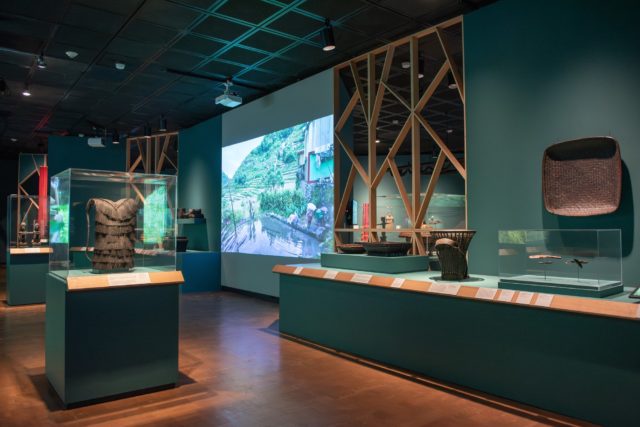
“Mountain Spirits: Rice and Indigeneity in the Northern Luzon Highlands, Philippines” opened at the Fowler Museum on Sunday. The exhibit – which will remain on view through January 2027 – focuses on the Ifugao people, indigenous to northern Luzon. “Mountain Spirits” celebrates Ifugao culture by displaying a variety of the spiritual and secular elements of life to the viewer through a wide range of multimedia pieces.
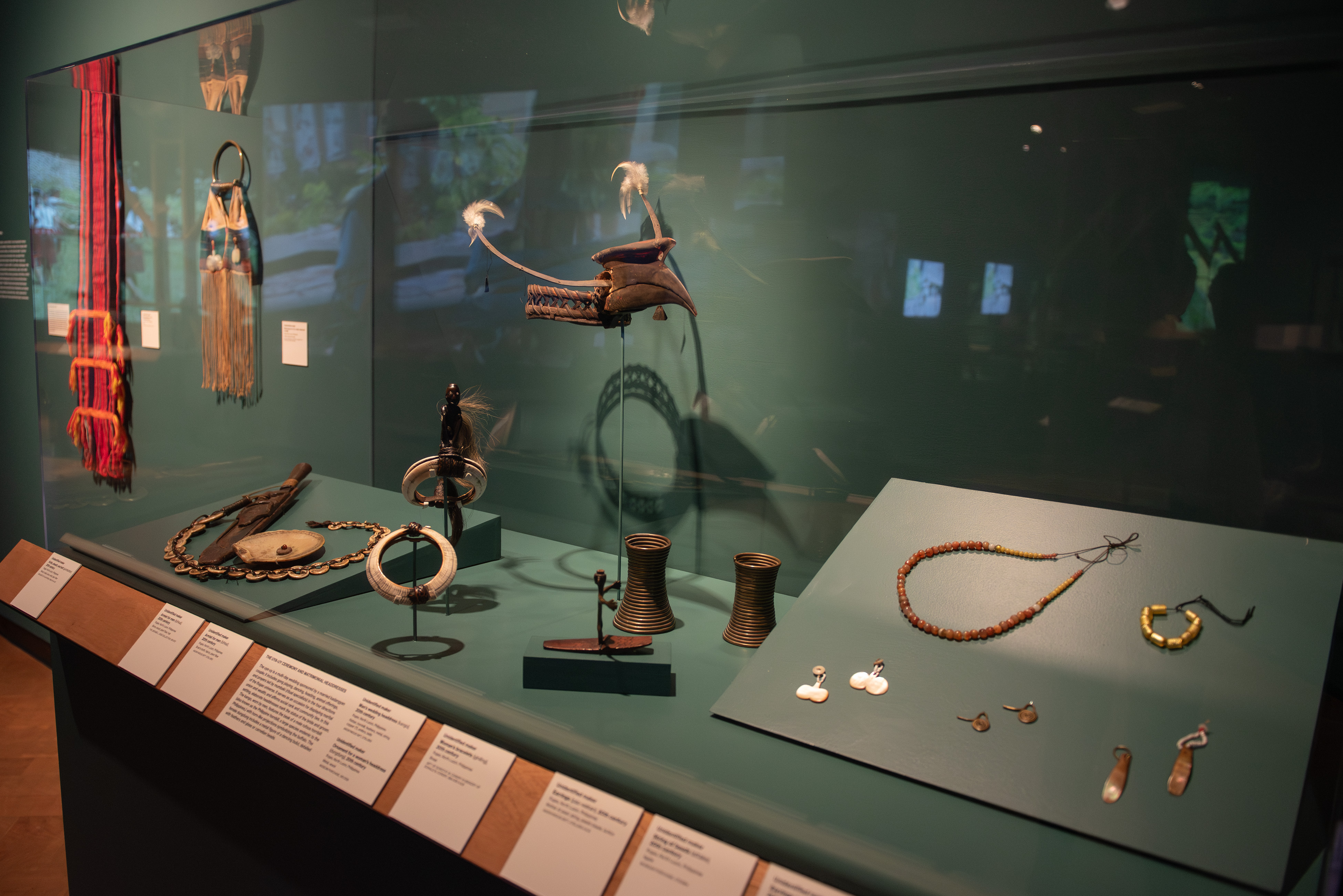
“Mountain Spirits” is tucked between “Intersections: World Arts, Local Lives” and “Reflecting Culture” – the former of which is a part of the museum’s permanent exhibitions. The exhibit includes a substantial collection of Ifugao art across mediums such as basket-weaving, carved figures, textiles, pottery and utensils – demonstrating the interconnectedness of artistry, everyday life and the natural world and its materials in indigenous culture.
Upon entering the exhibit, viewers are graced with a stunning visual pan showing the breathtaking appearance of the mountainscape. The exhibit is consumed with both the eyes and the ears, as the pieces are paired with the sound of water rushing and crickets chirping. The background noise helps create an atmosphere that is tranquil and immersive.
Aligned with the Fowler’s mission of exploring cultural history through art, the new exhibit intertwines the pieces with the social and political history that led to its creation. “Mountain Spirits” discusses the tradition of the mountain-side growing of rice as both an important element of Ifugao culture and a tactical response to colonization.
[Related: College Night at the Getty collages together creativity, music, art]
According to one extended label titled “Ifugao Rice Terraces,” this practice evolved because of 16th-century Spanish colonization to give the Ifugao people more freedom and autonomy, in addition to sustenance. World history is an essential part of the “Mountain Spirits” exhibit, and the consideration of the relationship between colonization and indigeneity helps further elevate the exhibit, creating a final product that is inspirational and educational in equal measure.
“Mountain Spirits” continues to widen the viewer’s horizons through incorporating elements of Ifugao culture from both a spiritual and non-spiritual standpoint. Inherent in the title, through the juxtaposition of “Mountain” and “Spirits,” the exhibit balances the magical and the mundane masterfully.
One standout element of the exhibit was the bululs. According to the museum label, “A Celebrated Pair of Consecrated Bululs,” bululs are wooden figures carved and consecrated in male-female pairs. The significance of bululs is spiritual and practical, as they help bring fruitful harvest and serve as representations of ancestral spirits.
Out of over one thousand spiritual figures in Ifugao culture, bululs are distinct as they are the only ones provided with a physical representation. The bululs are interspersed throughout the exhibit, serving as a charming and engaging through line. They introduce a discussion of various elements of Ifugao culture – from their religious beliefs to their political reactions.
However, one aspect in which the exhibit falls short is composition and spacing. Compared to other Fowler exhibits, such as “Intersections,” which has an open and airy feel, “Mountain Spirits” attempts to combine a vast amount of art and content into a confined and lightless space. While the exhibit has a superb selection of pieces, perhaps the exhibit should have exercised a greater degree of restraint. The end result creates an environment that comes across as more confining than captivating, especially after spending an extensive amount of time browsing.
[Related: ‘The Sea Around Us’ installation, class explore kinship between ocean, humanity]
Still, a fascinating piece in the “Mountain Spirits” collection was a pair of bululs commonly attributed to the carver Taguiling, dating back to the early 1900s. The bululs were modeled after another pair commissioned by Owen Tomlinson, an American Constabulary officer and colonial administrator during a period of colonization by the United States. The bululs are noted to have been carved in Tomlinson’s image, which creates a startling dichotomy with their intended purpose as markers of a fortuitous harvest and points of connection with Ifugao ancestral heritage and religious beliefs. While many depictions of indigenous art are self-contained, “Mountain Spirits” allows the pieces to ebb and flow alongside the cultural context with which they were made.
Another excellent part of the exhibit is the utensils and cutlery, particularly the pieces that infuse anthropomorphic elements into them. Featured along one back wall is a spread of spoons and ladles carved out of wood by many unknown artists during the 20th century. These pieces come in a wide range of shapes, sizes and colors; abstract representations of the face and the body are carved into the handles. Each figure carved into the handle is unique, showing the fluidity between the artistic, natural and mundane world.
“Mountain Spirits” includes a phenomenal collection of indigenous art across a variety of media, paired with elements such as rain sounds and video clips that further enhance the viewing experience. Meanwhile, the political and social background information, provided through museum and wall labels, educates the viewer and elevates the viewing experience. Ultimately, the exhibit elucidates the relationship that the Ifugao people held with art and the natural world, and provides a glimpse into their spiritual worship and everyday lives. However, attempting to fit a large number of pieces into a confined space creates a somewhat stifling and suffocating environment.
While “Mountain Spirits” is monumental in its quality and scope, it is not without its peaks and valleys.




Comments are closed.