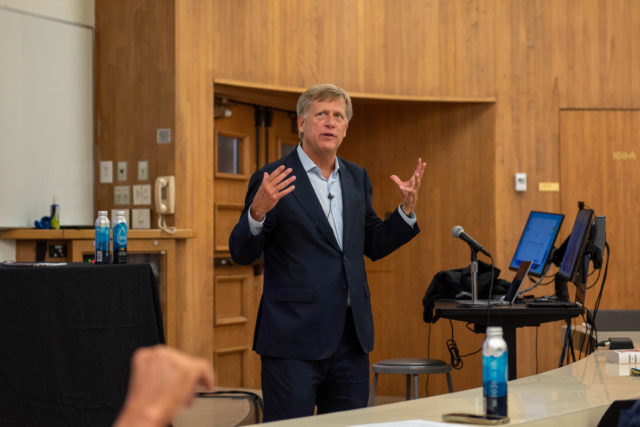
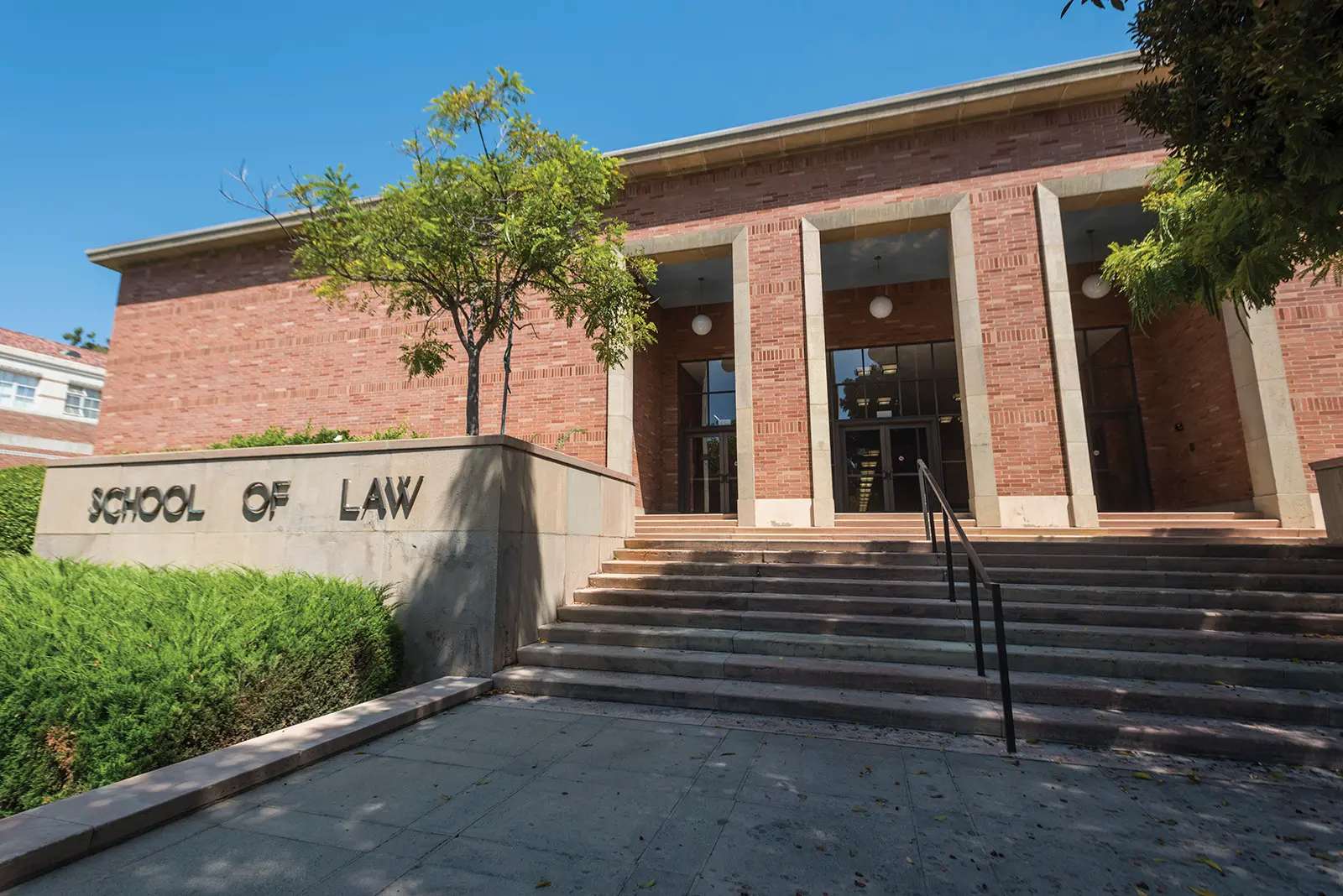
A former United States ambassador to Russia said people should remain hopeful for a more democratic global future in a Thursday talk at the School of Law.
Michael McFaul, who served in the Obama administration for five years, discussed his new book, “Autocrats vs. Democrats: China, Russia, America, and the New Global Disorder” at the event, which was co-organized by the Burkle Center for International Relations and the International and Comparative Law Program.
McFaul said he sees parallels between current global affairs and the Cold War era but that several factors – including the Trump administration’s isolationist policies – distinguish the two periods.
Some of the greatest threats to autocratic leaders are grassroots, pro-democracy movements, he said, pointing to mass protests in Georgia, Serbia and Ukraine in recent years.
“If you think you got problems, and it’s a hard struggle here, try being a democratic activist from Russia or Iran or China,” McFaul said in an interview. “The fact that I interact with them gives me power.”
He said there has been an alarming decline in democratic ideals, both nationally and globally, for more than a decade. McFaul criticized Russia’s 2014 annexation of Crimea, as well as the country’s broader invasion of Ukraine that began in 2022, in which at least 15,000 civilians – including 766 children – have been killed since 2022, according to a United Nations Human Rights report.
He added that he saw Russian President Vladimir Putin’s autocratic worldview firsthand when meeting with him as U.S. ambassador to Russia. McFaul said in the talk that he sympathizes with Ukrainians who lack U.S. allyship and are facing a “forever war.”
McFaul said during the talk that he would give Trump a failing grade as a president who has not learned from the Cold War, adding that he is significantly overspending on military power, destroying foreign alliances within NATO and prioritizing authoritarian leaders over democracy.
He added that when he worked under the Obama administration, there were preemptive safeguards before using presidential power – such as a national security team and thorough evaluations. McFaul said he believes Trump does not have the same safeguards and has personally – along with Congress – failed to fulfill his constitutional duties.
“It’s one thing to have to deal with being attacked and the implications of that, but it’s another thing when you do these things to yourself,” McFaul said.
Current college students view the Cold War era as ancient history, but it provides useful context for today’s political landscape, McFaul said. Despite recent trends, he remains hopeful for a more democratic global future, McFaul added.
McFaul was chosen to speak because of his expertise in global competition, moderator of the event and director of the Burkle Center Kal Raustiala said. He added that this expertise was important given current tensions between the United States and Russia, as well as the U.S. and China.
Janet Headley, a Connecticut local, said she attended the event for advice on navigating what she described as a chaotic Trump administration.
“We’re so divided, and that’s one of the big questions that I keep seeking an answer to, and I don’t know that I’ve heard a solution to,” Headley said.
The power of ordinary people rising up in favor of democracy can be more of a force against authoritarianism than missiles or NATO, McFaul said during the talk.
“Autocrats are still threatened by democratic ideas, democratic leaders and democratic movements,” McFaul said during the talk. “So for Putin, these are the movements, these are the things he’s really afraid of.”

Comments are closed.