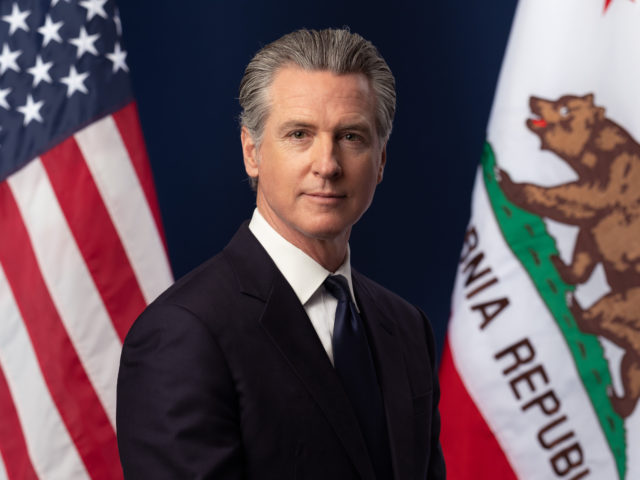
Speculation surrounding California Gov. Gavin Newsom’s potential 2028 presidential run has grown over the past year.
Having served two consecutive four-year terms, Newsom is ineligible to run for governor again, and his term will conclude in early January 2027. Newsom, who sits ex officio on the UC Board of Regents, has not formally declared that he is running for president, despite his increased visibility prompting speculation about whether he is positioning himself for a run at the country’s highest office.
Structural factors have long elevated California’s governors beyond state-level politics, said Thad Kousser, a political science professor at UC San Diego.
“California has always given its governor a large platform,” he said. “Every governor of California has been automatically considered a presidential contender over the last generation.”
California is now the fourth-largest economy in the world, according to a 2025 BBC report. Kousser said California’s size means actions taken by the governor often carry national resonance, regardless of whether a campaign has been declared.
Kousser also said changes in the media landscape have further amplified that reach.
“Social media allows direct communication with your audience without anyone presenting the counterargument,” he said.
A shift toward social media, Kousser said, enables governors to expand their influence and shape how policy disputes are interpreted beyond state borders.
Newsom’s staff closely analyzes the governor’s social media engagement, reflecting a broader awareness of how audiences engage with his actions across today’s fragmented media landscape, said Melanie Mason, a senior political reporter at POLITICO.
“He is more attuned to what the modern media environment is right now than most politicians,” Mason said.
Newsom’s online presence has also drawn attention for its tone and style. His press office has adopted a communication style mirroring President Donald Trump, including the use of all-caps phrasing and emphatic language. In an August 2025 press conference, Newsom said he intentionally followed Trump’s tweeting style to draw greater attention to the president’s use of social media.
Kousser said California plays an important role in resisting the Trump administration, starting even in his first term.
“California, since the day after President Trump was first elected in 2016, has officially declared itself the state of resistance,” Kousser said. “Both in policy and politically, in creating an alternative vision for the nation.”
However, Newsom’s heightened online and media presence has not come without criticism from other politicians.
In January, San Jose Mayor Matt Mahan, a moderate Democrat running for governor, criticized Newsom’s social media strategy in an op-ed for The San Francisco Standard, writing that it prioritizes online attention over substantive policy.
Over the past year, the governor has made efforts to reach a more conservative audience through his online media presence.
In March 2025, Newsom launched his podcast with the intent of interviewing political figures he disagrees with, according to CalMatters. His pilot episode featured late right-wing commentator Charlie Kirk. In the episode, the governor agreed with Kirk on some points and criticized female transgender athletes’ participation in women’s and girls’ sports.
Mason said Newsom intends on expanding his reach by courting conservatives.
“He’s trying to reach a completely different audience,” Mason said. “The intended audience tells me a lot about what his future ambitions are because he seems to be expanding what he wants to be his reach.”
Mason added that even actions Newsom insists are unrelated to presidential ambitions, such as the release of his memoir in February, will be received through that lens.
“It’s being released now into a world where you are a potential presidential candidate, which means it will be received in that context,” she said. “That context really shapes everything.”
Newsom’s increased use of social media has drawn national attention to conflicts between California and the Trump administration. Those disputes have included disagreements over federal policy and funding decisions, including higher education, with direct implications for state institutions such as the University of California system.
Newsom has proposed a $350 million increase in state funding to the UC system following anticipated federal reductions. Newsom said the funding dispute extends beyond UCLA, framing it as part of broader retaliation by the Trump administration against political opposition, according to Politico.
[Related: Proposed state budget includes $350 million increase to UC amid federal cuts]
As Newsom’s national profile grows, that visibility may carry consequences.
In Kousser’s prior research, he found that governors with presidential ambitions sometimes accomplish a smaller share of their legislative agendas because they propose broader or more ambitious measures that are harder to pass.
He said Newsom has largely avoided that pattern by advancing proposals likely to succeed in the state legislature. For example, housing reforms supported by his administration include efforts to streamline environmental review and expand development near transit.
However, operating in a national spotlight can create pressure to pursue more ambitious, nationally-oriented proposals, which may be harder to pass in the state legislature, Kousser said.
At UCLA, students offer differing views on whether his approach reflects policy leadership or political ambition.
Chris Vance, the president of Bruin Republicans, said he views Newsom’s national profile as politically motivated rather than policy-driven.
“I don’t think he does have policy or a platform besides bashing President Trump,” said Vance, a third-year political science student.
Vance said California’s high-speed rail project is an example of a state initiative that he believes won’t be completed.
The project, first approved by voters in 2008, aims to connect San Francisco and Los Angeles with a high-speed train system. The project has exceeded initial cost estimates by tens of billions of dollars and faces ongoing criticism over its timeline. The state recently announced that preparatory work is complete for the first 119 miles of track between Bakersfield and Madera, according to ABC10.
Other students see the governor’s approach as more aligned with California’s interests but still open to scrutiny.
Zachary Hill, the marketing director of Bruin Democrats, said he believes Newsom’s actions reflect both his leadership over the state and his political positioning on a national scale.
“I do think it is quite performative,” said Hill, a third-year communication and public affairs student. “I don’t necessarily think that’s a bad thing because progress is being made in California, and he’s not just abandoning the state purely for his own political gain.”
Hill said education funding is one area where he has concerns about state-level priorities, specifically regarding proposed budget changes affecting public university systems. He said repeated reductions in funding for the UC, CSU and community college systems were frustrating, given earlier expectations for continued support of higher education in California.
[Related: California State Legislature rejects Gov. Gavin Newsom’s proposed UC funding cuts]
Hill said many of Newsom’s policies reflect priorities that extend beyond the state itself.
“A lot of the things he’s doing in California might not just be to benefit folks in California,” he said. “But also to make those things serve as an example to the rest of the nation.”
Hill, however, added that as Newstom transitions to national politics, the focus has started to shift away from passing substantive policy.
“National politics is becoming much more of a theater, compared to focuses on state and local politics, which often focus directly on policy,” Hill said.


Comments are closed.