This post was updated May 7 at 8:43 p.m.
Students will vote on whether or not to approve a $27 quarterly fee that would fund certain ASUCLA programming during the Undergraduate Students Association Council elections from May 8 to 15.
The Bruin Life and Undergraduate Experience Fee referendum – initiated and written by ASUCLA representatives – would implement a new $27 quarterly fee beginning in the fall of 2026. $12 of the fee would be allocated toward ASUCLA operations and programming, including a $1 per hour pay increase for UCLA employees. $3.76 would go toward collaborations between ASUCLA and registered campus groups.
$0.75 would support identity-based Student Media publications, and $3.75 would create a catering fund for student-run events. In compliance with UC policy, 25% of the funds generated will be returned to the student body through financial aid.
All referendums that change student fees must be approved by a majority of voting students – with turnout from at least 20% of eligible voters – according to the USA Election Code. Voting for the 2026 USAC elections will be open on MyUCLA starting May 8 at 8 a.m. and will remain open until May 15 at noon.
The referendum is one of three on the USAC ballot this spring. If all three pass, the proposed ballot referendums could increase student fees by $85.13.
ASUCLA has been under financial pressure in recent months, said Pouria Abbassi, ASUCLA’s chief executive officer, at the April 24 board of directors meeting. ASUCLA’s gross income for March was more than a million dollars lower than expected levels, and February’s was $750,000 below expected levels, Abbassi added at the meeting.
Abbassi said at a February BOD meeting that the elimination of meal swipes at ASUCLA markets cost ASUCLA about $1.8 million.
Sarah Mascarenhas, the editor in chief of FEM Newsmagazine, an ASUCLA-funded feminist magazine, said the publication’s budget was cut by 40% at the end of last year, from $5,000 to $3,000 annually. The ASUCLA Communications Board publishes FEM, other identity-based Student Media newsmagazines, BruinLife and the Daily Bruin.
FEM was missing $1,000 to print its quarterly magazine from its ASUCLA budget and had to spend extra time fundraising for the magazine instead of writing, Mascarenhas added.
While FEM was able to print this year, she said the print magazine could be at risk in the future if its funding situation does not improve.
“FEM spends time doing fundraising and community work in LA,” said Mascarenhas, a fourth-year political science student. “If we’re focused on fundraising our own for ourselves, then that takes away from our capacity to try to outsource and do community organizing and community outreach.”
Mascarenhas said she personally supports the referendum, as it could help pay stipends for FEM’s staff, who are currently unpaid.
However, for Albee Bodle, a fourth-year history student, the referendum’s cost outweighs its benefits. Bodle added that the BLUE fee is too expensive, especially considering the current cost of tuition.
“We already pay a lot in student fees and services, along with the astronomical tuition of the UC system that’s just been going up,” Bodle said.
Melissa Aparicio, an ASUCLA employee at the UCLA Store, said that while a $1 an hour wage increase may seem small, the impact would compound over time and benefit employees across positions.
“Every year, everything gets more expensive,” Aparicio said. “The dollar sounds like a small amount, but it would add up, especially for the people who hold supervisor positions, who are already getting paid more than the normal super employee.”
Aparicio said that if she were not a student worker, she would probably be opposed to the referendum due to its large price tag. However, she added that she has the perspective to understand how important higher compensation is for her fellow employees, she added.
“Even though I’m a senior, if I have the chance to ensure that the other students that are working here get paid more, I would of course do it,” Aparicio said.
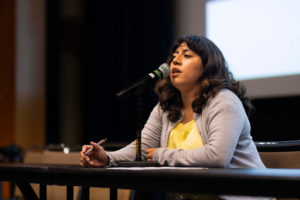
Sarai Rojas, an undergraduate representative for the ASUCLA Board of Directors who represented the BLUE referendum at Thursday’s USAC debates, said the fee is a necessary investment in sustaining campus life as demand for student services continues to grow.
“It ensures that student spaces like Ackerman and Kerckhoff can continue to function and improve, that student organizations can keep hosting events and building community, that student media continues to operate and that student employment remains supported as demand grows,” Rojas said at the debate. “We all benefit from a more connected, supported and vibrant campus – but that takes collective investments.”


Comments are closed.