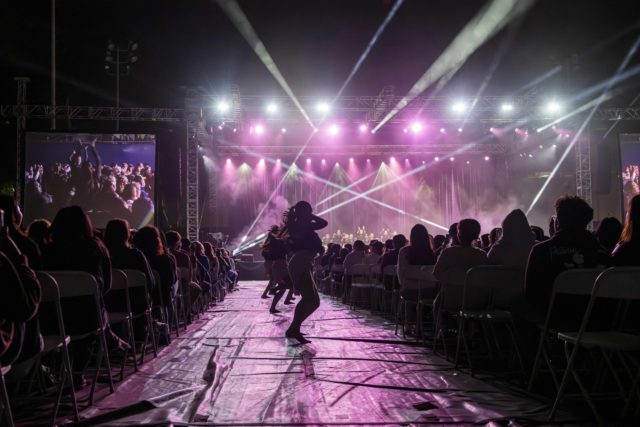
Eighty years is a long time to keep singing.
Since 1945, Spring Sing has been one of UCLA’s most enduring traditions, born from the kind of spirited, chest-puffing fraternity rivalry that only a campus on the cusp of World War II’s end could produce. Eleven groups took to the Royce Hall stage that first year to settle, once and for all, which fraternity group sang best. What followed was decades of growth, reeling in Hollywood Bowl crowds of 15,000, celebrity emcees and contest winners pressed onto albums tucked into yearbooks. Ronald Reagan judged the thing in 1952. That is not a small tradition. That is an institution.
Which makes it all the more worth asking: Why does campus feel so quiet about it?
Spring Sing is here again, and the performers readying themselves for the stage are doing so with the kind of dedication that deserves a packed house. With weeks of rehearsals being at the forefront of their experience, these are students who have committed fully to something, and that commitment shows in every aspect of the production. The Student Alumni Association, which has organized the event since 1986 with an express goal of reflecting the diversity of today’s Bruins, has built something genuinely worth attending. Spring Sing, when experienced, delivers. There is something singular about watching a fellow student command a stage with the kind of confidence most people spend entire careers chasing – about being in a crowd that, for one evening, is reminded of what this university is actually full of: people with something to say and the skill to say it in four-part harmony.
[Related: Mark Foster receives 2026 Spring Sing George and Ira Gershwin Award]
And yet, the loudest voices surrounding this year’s show belong almost exclusively to the students performing in it. Among older students – those who have been on campus long enough to have developed a relationship with its traditions – the enthusiasm has been notably harder to find. The organic, peer-to-peer excitement that turns a campus event into a cultural moment? That particular frequency has gone a little quiet.
There is a generational transmission problem with traditions, and Spring Sing may be caught squarely in the middle of one. First-year students arrive with no inherited reverence for an 80-year-old competition they have never heard of, and, if the upperclassmen around them are not grabbing friends by the shoulders and insisting they simply must go, then the event risks becoming something only its participants and their immediate circles truly inhabit. A tradition sustained by performers alone is not quite a tradition but instead a rehearsal.
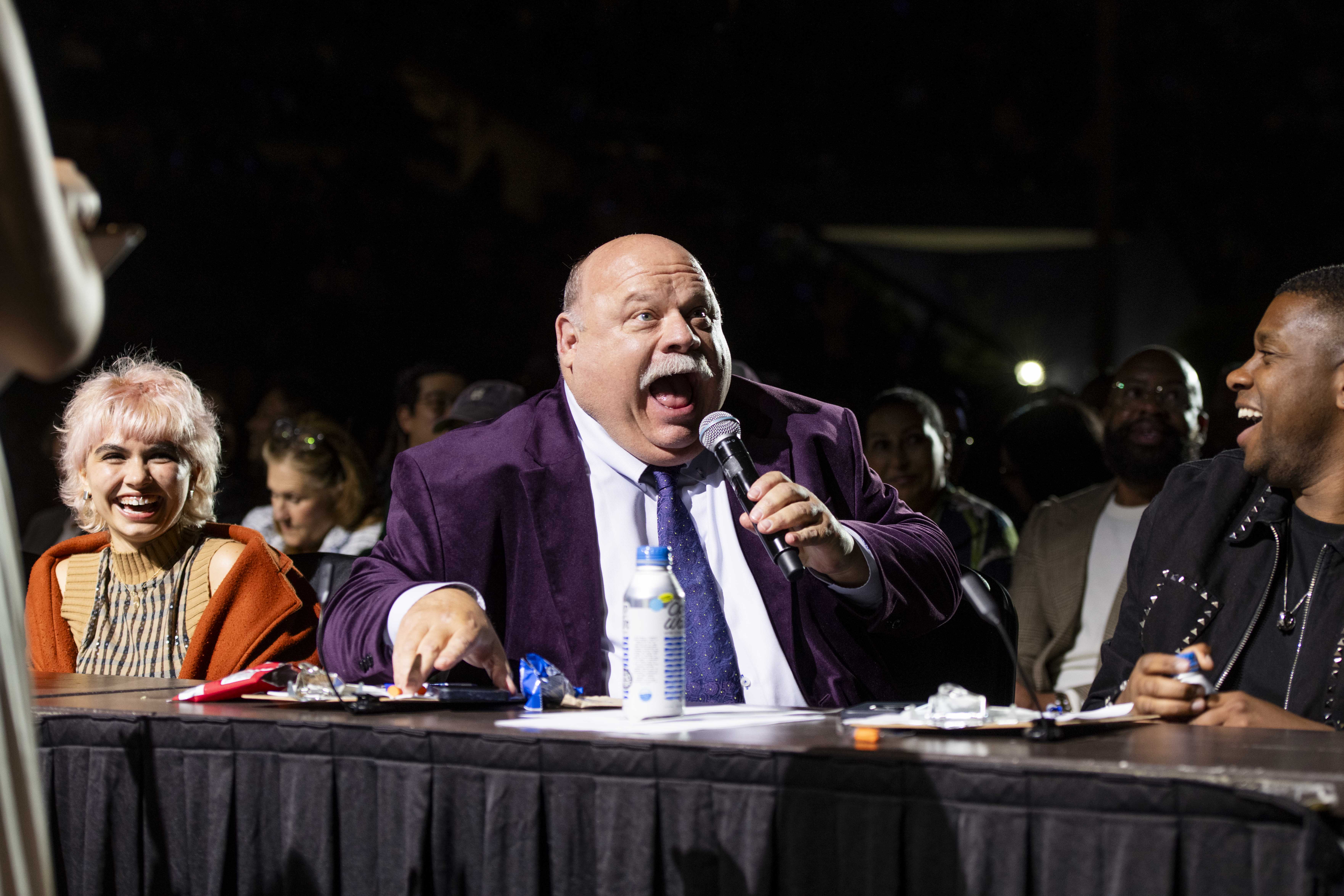
But there is a meaningful difference between an event that is good and one that feels alive in the cultural consciousness of a campus. The version of Spring Sing that packed the Hollywood Bowl had weight beyond its runtime.
The throughline of Spring Sing’s history is resilience. It has survived the demolition of an outdoor theater, a decade-long dormancy and the kind of institutional amnesia that comes with a student body that turns over every four years. When Pauley Pavilion opened in 1966, the event came back to campus. When interest faded after 1967, student and alumni energy revived it a decade later. Every time Spring Sing has gone quiet, something has pulled it back.
[Related: Spring Sing 2025]
That pattern suggests the tradition carries enough weight to endure another quiet chapter. But endurance is not the same as vitality, and, right now, Spring Sing deserves more than just endurance. It deserves the kind of collective excitement that made 15,000 people drive to the Hollywood Bowl on a spring evening because missing it was simply not an option.
The performers have done their part. They have shown up, put in the work and earned the stage they are about to stand on.
The rest of campus still has time to show up too.

Comments are closed.