This post was updated May 21 at 8:46 p.m.
UCLA students are no strangers to surveillance.
One stroll down Bruin Walk is all the proof you need. In the midst of shouts and political debates, students also dodge flocks of electric bikes ridden by UCLA’s Public Safety Aides.
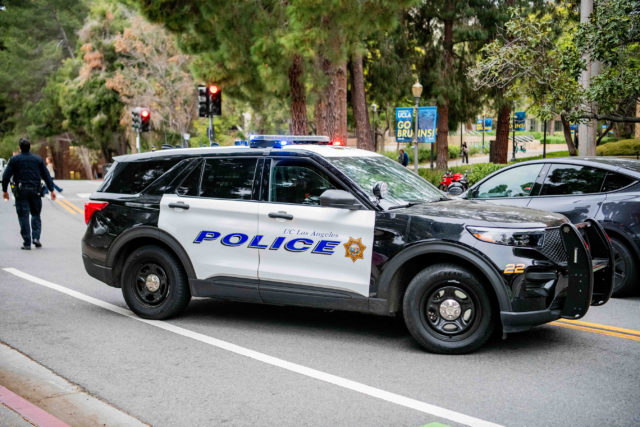
PSAs are the lesser-trained surveillance officers that assist the UC Police Department in patrolling and non-critical cases. Likewise, Community Service Officers are the liaisons between students and the police department, according to the CSO website. UCPD officers, who are often granted the privilege of a squad car and less-than-lethal munitions, similarly surveil the UCLA campus and are responsible for arrests and apprehensions.
A recent review of data by the Daily Bruin found UCPD disproportionately stops Black and Hispanic people, specifically men. Black and Hispanic people were stopped in over half of UCPD stops between July 2024 and July 2025, despite making up only 27.5% of the student body and being less than a quarter of Westwood’s population.
[Related: Data shows UCPD disproportionately stops Black, Hispanic people, raising concerns]
UCPD must take a two-pronged approach to enhance campus safety. The department needs to address reports of biased policing and initiate a greater dialogue with the UCLA community to remedy these issues and prove internal changes are taking place.
Overpolicing on campus can instill fear in students due to UCPD’s long history of racialized policing. Thus, law enforcement should not have a sustained presence on college campuses. UCPD must withdraw their stationed police officers, especially considering reports of biased policing, and reduce PSA and CSO activity.
UCPD should instead listen to students and focus on their concerns, such as adequate emergency services.
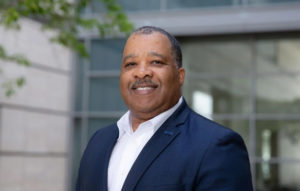
Terence Keel, a professor of African American studies and human biology and society, said he noticed an uptick in armed law enforcement activity at UCLA after the 2024 Palestine solidarity encampments.
“The increased presence of law enforcement after the encampments have been alarming for faculty and students,” he said. “I’ve actually been pulled over and stopped a few times by campus police.”
Each student deserves equal access to success, yet UCPD, PSAs and CSOs cultivate an uncertain campus environment for students seeking an education and exercising their right to protest. Although biased policing is not a new phenomenon to many communities of color, students should not be paying for extra barriers to their education.
Joy Shin, a second-year civil engineering student, said she noticed an increase in CSOs on campus this year compared to last year. She added she sees officers circling campus on bikes multiple times a day.
The university sees student activism as dangerous. When students challenge the university’s daily operations, UCLA responds with greater surveillance to quell their complaints, instead of addressing the source of their protests.
Reports of biased policing follow UCPD’s increased presence on campus.
Keel said studies show overpolicing and surveillance is correlated with adverse health outcomes, specifically for communities of color. These health adversities can include mental illness and elevated stress hormones, which can weaken the endocrine and immune systems, all impacting student performance, Keel added.
There should not be persistent police activity on the UCLA campus. Instead, UCPD should redirect their attention to providing satisfactory emergency services.
Noah Kim, a second-year computer science student, said he noticed inadequate UCPD responses after robberies or break-ins on the Hill.
If UCPD wants to enhance safety, they should listen to where students need it the most.
“There needs to be an oversight committee that involves students and faculty,” Keel said. “The student body has a right to demand certain kinds of accountability of law enforcement.”
Richard Mejia, the director of emergency communications and information for the Office of Campus and Community Safety, said in an emailed statement that UCPD is committed to bias-free policing and ensures they review stop data to make sure they are equitably serving the Westwood community.
“We also understand that data alone does not address concerns around trust,” Mejia added in the statement. “UCPD has regular engagement with student organizations, and campus partners.”
But this engagement is clearly not enough. The UCLA community needs proper mechanisms to hold UCPD accountable when its work defies student safety.
Law enforcement, PSAs and CSOs should not be stationed on campus if they are failing to meet student needs.
When measures intended for safety instead cause fear, they are not effective.

Comments are closed.