This post was updated May 28 at 12:08 a.m.
Subtle memory-related brain changes in people with neurological disorders may be reversible before full cognitive decline occurs, underscoring the importance of early detection, UCLA researchers said at a May 15 conference.
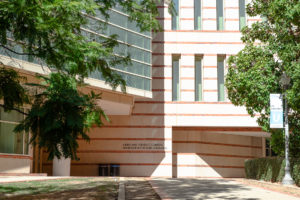
About 100 attendees participated in High-Tech and Neurological Disorders at UCLA’s fourth annual Neurological Disorders Awareness Night, which brought clinicians, students and community members together to discuss aging and memory. The event – held in the Neuroscience Research Building – featured presentations from UCLA faculty.
Charlene Guo, a third-year neuroscience student and HAND’s education director, introduced several local and student-run organizations at the event, including Parkinson’s Community Los Angeles, Brain Wave, Synapse and the Neuroscience Undergraduate Society.
Tiffany Chen, a third-year medical student at the David Geffen School of Medicine and founder of HAND at UCLA, said the organization chose this year’s theme because topics related to memory, Alzheimer’s disease and dementia are becoming more relevant as the United States population continues to age. Community partners are focused on making complex scientific concepts accessible to students and families at the event, she added.
“NDAN offers this rare space for patients to see their clinicians outside of the clinic space to bring their family, their caregivers, and to not feel judged as they ask a bunch of questions and learn about the latest research,” Chen said.
Members brainstormed themes for the event before holding a general vote during winter quarter, Guo said.
“After we picked the theme, everything kind of fell into place,” Guo added. “We tried to have everyone confirmed by then, so that we could really just focus on advertising for the rest of spring quarter.”
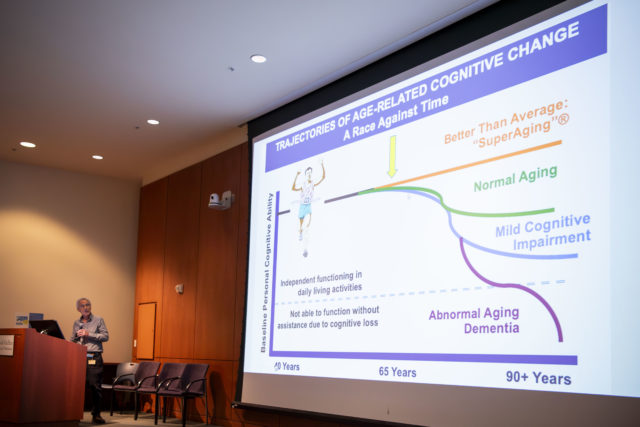
Dr. Jeff Bronstein, the director of the Movement Disorders Program at UCLA, opened the speaker portion by discussing the difference between normal cognitive aging and neurological disease. He said during a panel that normal aging can involve gradual declines in processing speed, working memory and executive function, while other forms of knowledge and experience – including procedural memory – can remain stable or improve.
Bronstein, a neurologist at UCLA Health, added that exercise can help slow aging and disease progression, while social engagement, continuous learning and getting enough sleep may help preserve brain function by supporting cognitive reserve and clearing toxic proteins from the brain.
“If you’ve retired, volunteer, make sure you go to social gatherings, keep in touch with family and friends,” Bronstein said. “That builds that cognitive reserve and will help your brain age slower.”
Stephanie Leal, the director of UCLA’s Neuroscience of Memory, Mood, & Aging Laboratory, said in a panel that general memory can remain relatively stable with age. However, detailed memory – such as distinguishing between similar experiences – could begin declining earlier.
She added that detecting Alzheimer’s early on is crucial to preventing more serious cognitive decline. Some brain changes may occur before disease symptoms are visible, Leal said.
“We might be able to reverse the subtle changes that are happening in the hippocampus with age,” Leal said. “Once you get to the Alzheimer’s stage though, the cells are gone, so that’s why it’s really important to intervene early.”
Jonathan Wu, a second-year biology student who attended the event, said his favorite part of the event was a speaker’s discussion of how forgetfulness can be a normal part of aging, but people should understand the difference between typical aging and potential warning signs of neurological disease.
“I would definitely attend more,” Wu said. “It was just overall really educational, and then fun to talk with other people, look at the research presentations.”
Wu added that a Parkinson’s disease simulation at the event changed his understanding of the disease by showing how it can affect a person’s daily life.
Chen said the event has become more organized since its first year because HAND previously built the program from scratch, designing promotional materials, recruiting speakers and ordering food. She added that the current planning process involves months of logistical work from HAND’s leadership team and members.
Guo said aging and memory disorders are relevant to college students because aging affects everyone and many students have family members experiencing cognitive decline. She added that students should learn about healthy habits and risk reduction earlier in life, as new interventions help people live longer.
Wu said conversations about aging can help the general public understand it as a natural process, while also recognizing how age-related changes may affect older adults’ daily lives.
“It’s best to start now and be aware of your own healthy habits, but these habits can be implemented at any time,” Guo said. “The main goal is to just reduce the risk.”
Chen said she hopes attendees learned about the resources available to them and feel more comfortable reaching out to the organizations at the event. Seeing many people come and take away something from the event was a sign of success, she added.
“Once people get that face-to-face interaction, they hopefully feel more comfortable attending the events,” Chen said. “I hope students and attendees today take away the knowledge and share it with fellow students, family members and just help each other.”


Comments are closed.