This post was updated July 12 at 10:37 p.m.
The FIFA World Cup has always been as much a spectacle of sound as of sport.
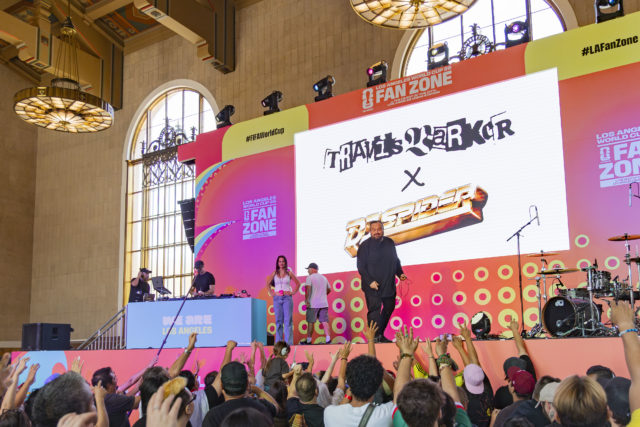
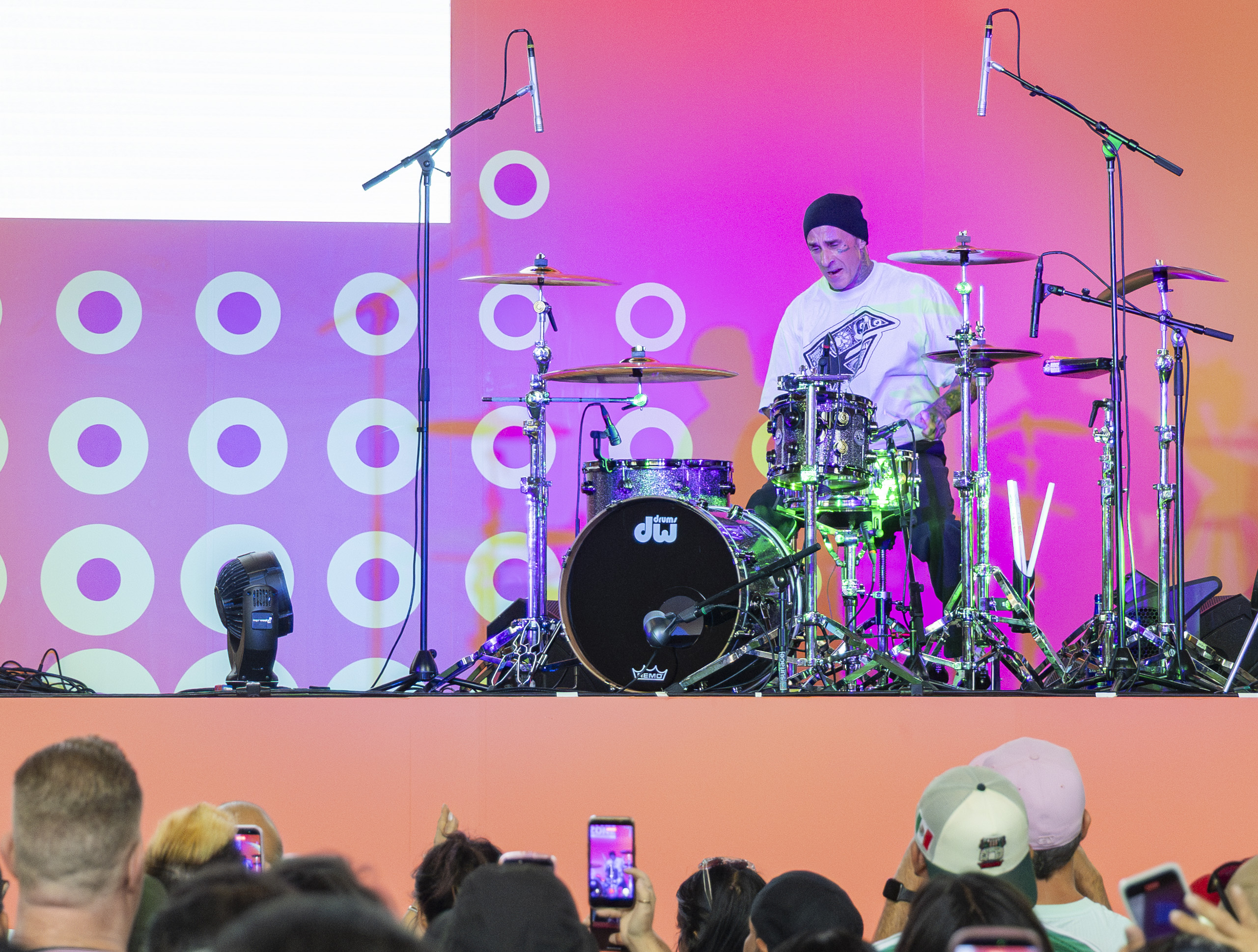
That spectacle echoed through Los Angeles when nearly 50,000 fans flooded into Union Station for the Los Angeles World Cup 26 Fan Zone from June 25-28. They sang, danced and cheered, turning the transit hub into a temporary stadium as drums drowned out departing trains. Similar scenes have engulfed LA. Supporters of different national teams compose a chorus of languages and songs. Chants such as “¡Coreano, hermano, ya eres Mexicano!” (Korean person, brother, you are now Mexican!) unite on-pitch rivals.
Those chants are only part of the tournament’s soundtrack. While the World Cup is officially structured around matches, scorelines and star players, it is the songs – official tournament anthems and spontaneous, fan-driven chorus – that encode cultural memory. Music functions as the event’s emotional infrastructure, bringing people together before the first kick and lingering after the final whistle.
[Related: Gallery: Shakira resumes her US tour at the Intuit Dome with classic hits, new songs]
The 2010 World Cup culminated in Spain’s maiden victory and a dramatic shirt-tearing celebration from midfielder Andrés Iniesta. Yet it is almost impossible to discuss the tournament without recalling the vuvuzela, a vibrant plastic horn with a constant buzz that became one of the most recognizable sounds of South African stadiums. Similarly, Shakira’s inescapable “Waka Waka (This Time For Africa),” which peaked at No. 2 on Billboard’s Hot Latin Songs chart and No. 38 on the Billboard Hot 100, remains just as inseparable from the event.
“Waka Waka” opens with bright Afro-pop guitar, claps and distant chants in a refrain that conjures the joyful playfulness of the South Africa 2010 tournament. Four years later, during Brazil’s 2014 World Cup – a tournament underscored by triumph and heartbreak – the Colombian singer’s “La La La (Brazil 2014)” shifted into pounding percussion-centered pop. The track was engineered for stadium scale and repetition. Set against Brazil’s eventual 7-1 semifinal loss at the Mineirão, the refrain hummed celebration yet shadowed the devastation of a shattered home title dream.
By then, FIFA had spent over two decades attempting to formalize a global soundtrack for the event. The association has regularly commissioned an official World Cup song since the 1990s. In 2022 and 2026 editions, that strategy has expanded from a single official song and playlist to a curated, multi-track album.
Even as the format evolved, a recognizable formula of upbeat melodies, multilingual hooks and repetitive refrains continued. Many of these global anthems have outlasted the final itself, mixing a musical identity that preserves the tournament’s emotional effect.
But FIFA’s consistent formula has not guaranteed consistent impact. Most official tracks fade, absorbed into the spectacle’s background noise. Though the songs may be crafted for global appeal, they often struggle to attach themselves to a specific emotional moment.
Singles such as “Waka Waka” remain an exception. While FIFA’s brief may have guided its structure, its resonance stems from Shakira’s grounding in Colombian and Afro-Caribbean rhythms, delivering a sonic identity that feels authentic rather than manufactured.
Not all official attempts succeed in this way. The Official FIFA World Cup 2026 Album bridges artists across Latin, Afrobeats and global pop genres. Yet critics argue that the soundtrack lacks identity and deviates from the World Cup’s traditional emphasis on diversity. For example, Jelly Roll and Carín León’s track “Lighter” received pushback for its country refrains that highlight individualistic, Christian redemption instead of universal community celebration.
In the gap that can exist between intention and reception, fan culture takes over. “Waka Waka” may have been the official centerpiece of 2010, but the supporters in the stadiums of Johannesburg and Cape Town turned the track into something more meaningful: a dance, a chant and a reflex after goals and upsets. Beyond those 90 minutes, the fans briefly agreed on a rhythm they collectively crafted.
That contrast between engineered anthems and organic sound has defined football culture for over a century.
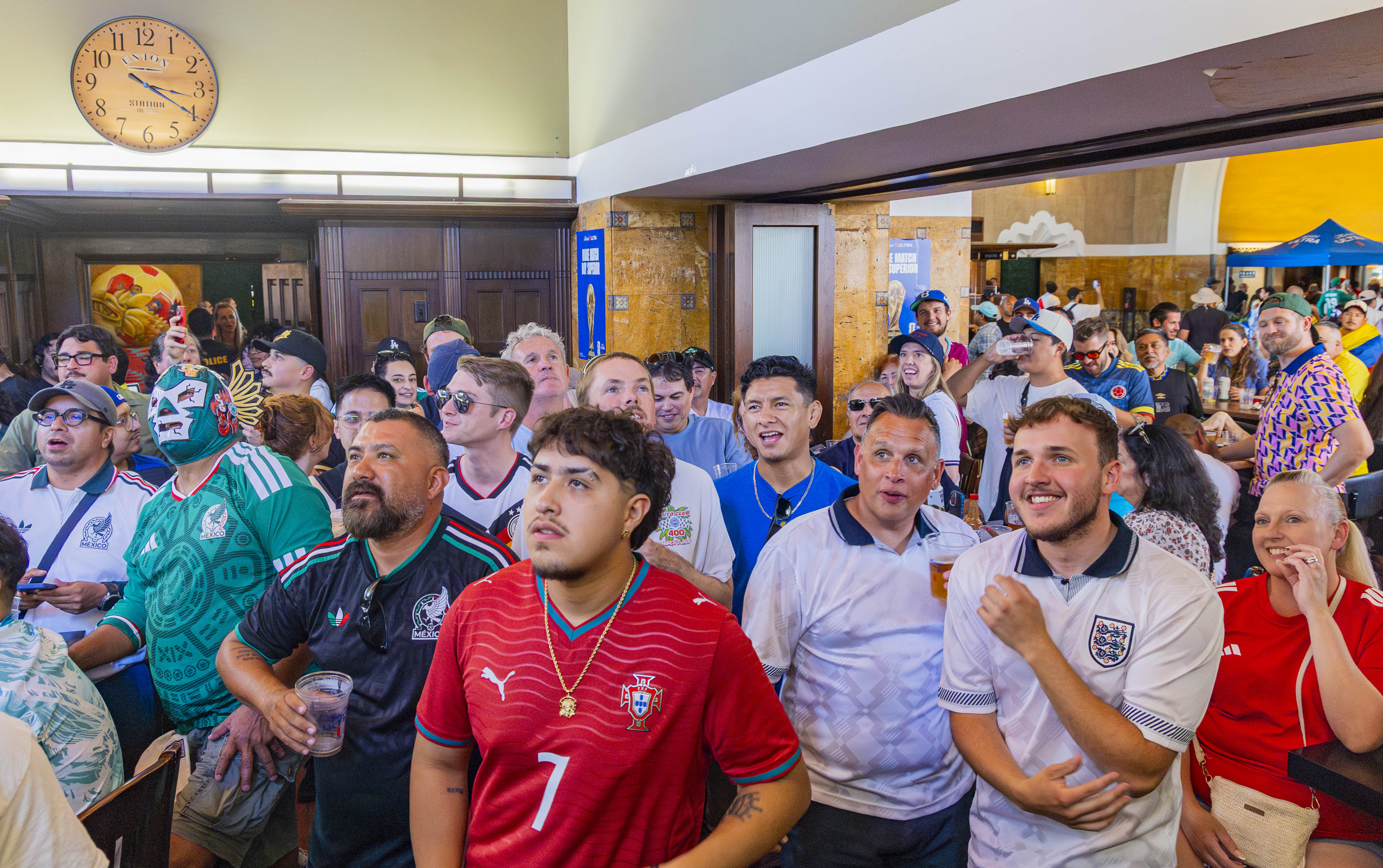
Fans of the beautiful game have been singing terrace tunes and roaring chants since the 1890s. Later, improved railways in the 1960s enabled fans to attend away games, as the rise of pop music – notably Beatlemania – spurred the emergence of organized chants in England. Pub songs morphed into stadium orchestras of irony, aggression, absurdity and support. Today, “Sweet Caroline” at Wembley Stadium feels like an inevitable set piece of a Three Lions fixture.
In Japan, the Samurai Blue supporters have developed coordinated, often drum-accompanied chants such as “Vamos Nippon!” – an amalgamation of Japanese and Spanish – that echo throughout matches. The result is a stadium soundscape driven by collective composition.
Music also finds a way to escape the match entirely. Players become unofficial features on the tournament’s unofficial album, contributing to the scoreline and soundtrack. For example, as Lionel Messi lifted the 2022 trophy, “Muchachos” became Argentina’s anthem – an entire country rewriting its identity through song. “Muchachos” did not stay in Qatar. It replayed on social media, in stadiums, in bars and at public watch parties. The chorus of hope, an end to the country’s nearly 40-year World Cup drought, became inseparable from the competition itself.
[Related: Gallery: Next stop: World Cup fever hits Union Station in a sea of jerseys]
That same fan-driven sound continues with traditions such as Argentina’s “El Bombo del Tula” drum still traveling across generations and appearing at 2026 World Cup matches. The bass instrument connects past tournaments with the current global stage.
But the World Cup’s soundscape is not confined to national victories or stadium showdowns.
That music spills into the streets. It radiates across fan zones. The echoes of refrains hummed on couches and melodies collectively sung at neighborhood watch parties define the tournament’s reach. In an increasingly globalized, always-online present, those notes travel faster and further, morphing each match into part of a shared, real-time global broadcast of emotion.
Ultimately, the World Cup is not experienced as a sequence of isolated fixtures. Goals determine outcomes. But it is the anthems, chants, claps and collective noise that inscribe memory – what lingers, what transcends and what turns ninety minutes into something far larger than a match.




Comments are closed.