This post was updated July 26 at 8:17 p.m.
The November election could shake up California’s approach to AI regulation, experts said.
Gov. Gavin Newsom has signed three executive orders on AI since 2023 which direct state agencies to study the technology and its economic impacts. All three executive orders are largely regulatory and work to ensure AI is being used responsibly by the government.
The executive orders are influencing the way schools, employers and government bodies interact with and regulate AI, professors said. However, because they are Newsom-signed executive orders rather than laws, Californians should see them as a reflection of the current governor rather than a long-term state strategy, they added.
“Executive orders really have limited reach and enforceability, and also, an executive order can be reversed by the next administration,” said Alex Alben, a lecturer at the UCLA School of Law. “These executive orders, while they’re fine as a blueprint and maybe an intention of where government policy will go, they are pretty limited in scope in terms of their effectiveness and the impact that they’re going to have in the lives of people in California.”
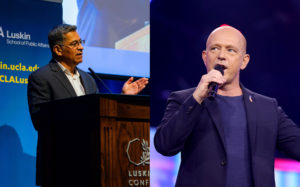
State executive orders must align with the state constitution and can be overturned with judicial review – or if a new executive order is signed, which may happen with a change in governor. Gov. Newsom will turn over the position to either Democrat Xavier Becerra or Republican Steve Hilton, who advanced to a November general election, come January.
[Related: Xavier Becerra, Steve Hilton progress to general election for California governor]
Newsom’s first executive order, signed in September 2023, directs state agencies and departments to research AI, draft reports on its benefits and risks and issue AI guidelines for public and private organizations.
The second order, signed in March, updates the State Digital Strategy to find opportunities to strengthen accountability and transparency. It also creates new AI certifications for companies and creates guidelines for government employees to safely use generative AI.
California has been less aggressive about its investments in AI than the private sector, but that might not be a negative thing, said UCLA Law professor Andrew Selbst.
“Requiring that people adopt technology before we know what it’s good for or what it’s bad at is a recipe for disaster,” he said. “It makes sense that the government is a little bit slower to adopt this technology than the private sector has proven to be.”
The third executive order, signed in May, encourages state agencies, experts and universities to examine AI’s potential disruptions to the workforce. It also mandates research into expanding and strengthening existing worker protections, and creating AI training programs and guidelines for universities.
Steve Zipperstein, an adjunct assistant professor of public policy, said these training programs are crucial for the current job market. Preparing students to know how to use AI will help them both secure jobs after graduating and keep their positions as AI evolves.
“Students need to learn how to use AI. They need to be prepared once they graduate and go into the workforce with the skills necessary to show their employers,” Zipperstein said. “All universities need to train students to help students be prepared for a future world in which AI skills will be an essential ingredient for success in the workforce.”
While the May executive order does expand research, Alben said he’s hesitant to believe it will make a real difference.
“I’m a little bit skeptical about whether a government task force or agency is actually going to have the staffing and the expertise to add a meaningful perspective to what is happening in the labor force as a result of AI adoption, but I could be proven wrong,” Alben said.
The current job market for recent graduates is the worst it has been in years, with unemployment rates for new graduates up by 1.6 percentage points from three years ago, according to the Stanford Institute for Economic Policy Research. The research found that a decline in job opportunities for young workers showed correlation with employers replacing entry-level jobs with AI.
Hilton, a political commentator, said in an emailed statement that California’s early legislative laws on AI regulations could slow down innovation.
However, Hilton added that, if elected, he plans to set some guardrails, including those that protect children from AI, prevent fraud and safeguard intellectual property. But he also wants to ensure that all jobs involving AI – such as manufacturing, energy, infrastructure, computing and software – are done in California.
Hilton said in the statement that his plan also includes expanding energy infrastructure to meet AI needs and preparing Californian students and workers for changes in the workforce through education programs.
Becerra, a former United States Secretary of Health and Human Services, did not respond to a request for comment. He believes AI has the potential to improve the lives of California residents, but worries its rapid growth comes at the cost of certain groups, according to his campaign website.
Becerra also plans to track AI’s economic impact, expand AI literacy and use AI to target issues including homelessness, healthcare and climate adaptation, according to his website. He also wants to support California’s data centers that use clean energy.
“I do hope that whoever is the next governor will make AI legislation a priority, will work closely with the state legislature to get this right, and again, will involve in the process of doing so the most important voices, including students,” Zipperstein said.


Comments are closed.